The Fractured Entangled Representation Hypothesis (Intro)

The Fractured Entangled Representation Hypothesis (Intro)

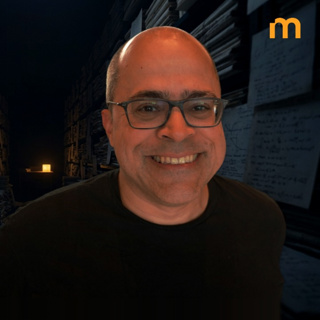
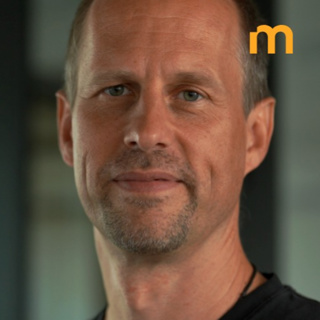
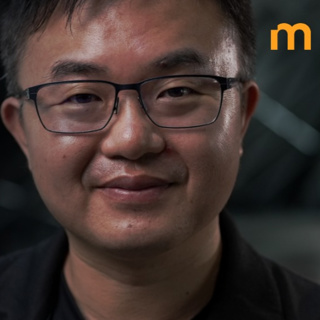
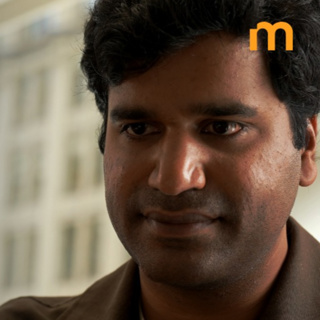
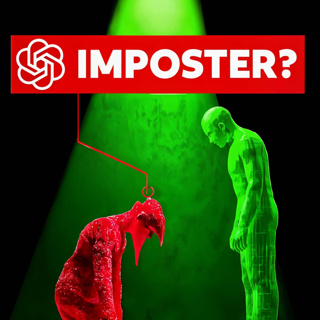
What if today's incredible AI is just a brilliant "impostor"? This episode features host Dr. Tim Scarfe in conversation with guests Prof. Kenneth Stanley (ex-OpenAI), Dr. Keith Duggar (MIT), and Arkash Kumar (MIT).While AI today produces amazing results on the surface, its internal understanding is a complete mess, described as "total spaghetti" [00:00:49]. This is because it's trained with a brute-force method (SGD) that’s like building a sandcastle: it looks right from a distance, but has no real structure holding it together [00:01:45].To explain the difference, Keith Duggar shares a great analogy about his high school physics classes [00:03:18]. One class was about memorizing lots of formulas for specific situations (like the "impostor" AI). The other used calculus to derive the answers from a deeper understanding, which was much easier and more powerful. This is the core difference: one method memorizes, the other truly understands.The episode then introduces a different, more powerful way to build AI, based on Kenneth Stanley's old experiment, "Picbreeder" [00:04:45]. This method creates AI with a shockingly clean and intuitive internal model of the world. For example, it might develop a model of a skull where it understands the "mouth" as a separate component it can open and close, without ever being explicitly trained on that action [00:06:15]. This deep understanding emerges bottom-up, without massive datasets.The secret is to abandon a fixed goal and embrace "deception" [00:08:42]—the idea that the stepping stones to a great discovery often don't look anything like the final result. Instead of optimizing for a target, the AI is built through an open-ended process of exploring what's "interesting" [00:09:15]. This creates a more flexible and adaptable foundation, a bit like how evolvability wins out in nature [00:10:30].The show concludes by arguing that this choice matters immensely. The "impostor" path may be hitting a wall, requiring insane amounts of money and energy for progress and failing to deliver true creativity or continual learning [00:13:00]. The ultimate message is a call to not put all our eggs in one basket [00:14:25]. We should explore these open-ended, creative paths to discover a more genuine form of intelligence, which may be found where we least expect it.REFS:Questioning Representational Optimism in Deep Learning:The Fractured Entangled Representation HypothesisAkarsh Kumar, Jeff Clune, Joel Lehman, Kenneth O. Stanleyhttps://arxiv.org/pdf/2505.11581Kenneth O. Stanley, Joel LehmanWhy Greatness Cannot Be Planned: The Myth of the Objectivehttps://amzn.to/44xLaXKOriginal show with Kenneth from 4 years ago:https://www.youtube.com/watch?v=lhYGXYeMq_EKenneth Stanley is SVP Open Endedness at Lila Scienceshttps://x.com/kenneth0stanleyAkarsh Kumar (MIT)https://akarshkumar.com/AND... Kenneth is HIRING (this is an OPPORTUNITY OF A LIFETIME!)Research Engineer: https://job-boards.greenhouse.io/lila/jobs/7890007002Research Scientist: https://job-boards.greenhouse.io/lila/jobs/8012245002Tim's Code visualisation of FER based on Akarsh repo: https://github.com/ecsplendid/ferTRANSCRIPT: https://app.rescript.info/public/share/YKAZzZ6lwZkjTLRpVJreOOxGhLI8y4m3fAyU8NSavx0

Tämä jakso on lisätty Podme-palveluun avoimen RSS-syötteen kautta eikä se ole Podmen omaa tuotantoa. Siksi jakso saattaa sisältää mainontaa.

Jaksot(260)

Stealing Reasoning Traces from Proprietary LLM APIs — Ilia Shumailov & Alexander Panfilov

Stealing Reasoning Traces from Proprietary LLM APIs — Ilia Shumailov & Alexander Panfilov

Tim Scarfe speaks with Ilia Shumailov and Alexander Panfilov about their paper, Stealing Reasoning Traces from Proprietary LLM APIs.The core bug sounds deceptively simple: providers return encrypted r...

22 Elo 49min

Every Exponential Ends — Silicon Valley Forgot — Adam Becker

Every Exponential Ends — Silicon Valley Forgot — Adam Becker

Astrophysicist Adam Becker, author of "What Is Real?", joins Tim Scarfe to take apart the futures Silicon Valley keeps selling: the 2045 singularity, mind uploading, Mars colonies, and the AI apocalyp...

20 Elo 1h 18min

AI Is Learning at the Wrong Level of Abstraction — Matthieu Wyart

AI Is Learning at the Wrong Level of Abstraction — Matthieu Wyart

This episode is sponsored by Notion. Learn more about Notion's Developer Platform today at https://notion.com/mlstWhy can deep networks discover abstractions that shallow models miss? Statistical phys...

10 Elo 1h 18min

How Researchers Test AI for Hidden Goals — Apollo Research

How Researchers Test AI for Hidden Goals — Apollo Research

Can an AI do the right thing for the wrong reason? Tim Scarfe speaks with Apollo Research’s Alexander Meinke, Axel Højmark and Jérémy Scheurer about Measuring Reward-Seeking via Contrastive Belief Upd...

31 Heinä 1h 18min

Why a Nation Can't Outsource Its Frontier AI - Alistair Pullen (Cosine AI)

Why a Nation Can't Outsource Its Frontier AI - Alistair Pullen (Cosine AI)

This episode is sponsored by Notion. Learn more about Notion's Developer Platform today at https://notion.com/mlstBritain's most capable coding model can't be exported, and that ban is the whole reaso...

13 Heinä 55min

 The Benchmark With No Instructions — ARC-AGI-3 (winning team!)

The Benchmark With No Instructions — ARC-AGI-3 (winning team!)

Tim Scarfe travels to Zurich to sit down with the Tufa Labs ARC-AGI-3 team — founder Benjamin Crouzier, with Jeroen Cottaar, Dries Smit, Stefano Viel and Michal Tesnar — to work out what their leaderb...

1 Heinä 1h 24min

The Thermodynamic AI Computing Chip - Thomas Ahle

The Thermodynamic AI Computing Chip - Thomas Ahle

Thomas Ahle wants Normal Computing to be the Lovable for chip design: type your intent, and a swarm of agents carries it from design through optimisation, formalisation and verification to tape-out. T...

28 Kesä 1h 2min

He won a Nobel here for AlphaFold. Then he left. - John Jumper

He won a Nobel here for AlphaFold. Then he left. - John Jumper

This episode is sponsored by Notion. Learn more about Notion's Developer Platform today at https://notion.com/mlstProtein folding stalled biology for fifty years. A sequence of amino acids dictates a ...

22 Kesä 53min