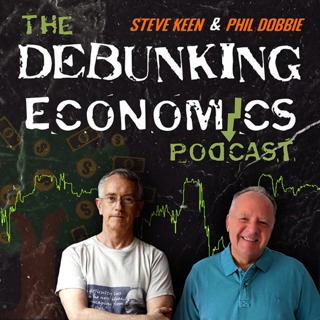
The always moving equilibrium
Equilibrium is a fantasy—and this conversation explains why. Phil and teve explore how the belief that markets naturally self-correct has shaped economic policy, contributed to the failure to anticipa...
16 Syys 36min
What did Keating do for Australia?
Paul Keating is often sold as the man who modernized Australia - but what if the reforms that made him legendary also helped create the financialized, boom-and-bust economy we live with today? Steve a...
9 Syys 42min
The risks of hedging
In this episode, Prof Steve Keen and host Phil explore the complexities of hedging, its applications, pitfalls, and its impact on markets and the economy.Hedging, rife in the financial and commercial ...
2 Syys 28min
Burnham on Buying British
The UK Prime Minister Andy Burnham has said he wants government departments to focus on buying British, The UK state spends roughly £300bn to £400bn a year on public procurement—and currently treats i...
25 Elo 40min
Ways to foster innovation
Unless you are one of the tech bros, it is difficult for anyone to push on with innovative ideas, probably why the world seems reliant on the US for the next big thing. If you not running a Megacap ge...
18 Elo 39min
Do we actually need bonds?
There’s only one reason a government issues bonds. It’s so their account with the central bank is not overdrawn. It’s only regulation that stops the central bank from saying a rapidly expanding defici...
13 Elo 40min
A reality check on bonds and government spending
A listener (Doug) left a comment on YouTube saying I assume Phil intends to play "devil's advocate" when he speaks as though taxes are necessary for money issuance by governments with sovereign curren...
4 Elo 53min
AI, inequality and basic income
Phil happened upon a book to Australian economist Joshua Gans (and Andrew Leigh) called Innovation & Inequality – how to create a future that is more Star Trek than Terminator. He discusses some of th...
29 Heinä 44min