Managing labour mobility for Solomon Islands: a conversation with Christina Marau
Devpolicy Talks11 Heinä 2025

Managing labour mobility for Solomon Islands: a conversation with Christina Marau

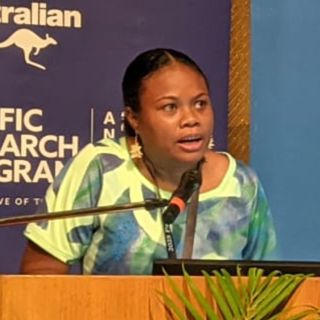
Christina Marau, Director for Labour Mobility at the Solomon Islands Ministry of Foreign Affairs and External Trade, provides an insider's perspective on how Pacific labour mobility schemes operate in practice. Drawing on her experience managing a system that handles thousands of applications and maintains a database of 6,500 work-ready candidates, Marau explains how Solomon Islands has become one of the most successful participants in Australia's Pacific Australia Labour Mobility (PALM) scheme and New Zealand's Recognised Seasonal Employer (RSE) program. She discusses the economic imperative driving participation — with remittances reaching $475 million SBD in 2024 — while addressing practical challenges from managing worker expectations to preventing absconding. Marau then shares her vision for expanding labour mobility opportunities throughout the Pacific region.

The episode opens with Marau explaining why labour mobility has become a national priority for Solomon Islands. With a minimum wage of just $8 SBD (approximately A$1.60) and the government struggling to create sufficient employment for trained youth, the opportunity to work in Australia and New Zealand at vastly higher wages represents a transformative economic opportunity. This economic imperative drives remarkable participation rates — when Solomon Islands opened recruitment for just two weeks in 2023, it received 12,000 applications, eventually registering 8,000 into its "work-ready pool" database that now holds 6,500 candidates.

Marau outlines how Solomon Islands has developed one of the most systematic approaches to labour mobility in the Pacific. Unlike countries relying on agents or direct recruitment, Solomon Islands uses a centralised government-managed system supported by Australian government funding through the Department of Foreign Affairs and Trade. This includes face-to-face interviews, biometric data collection and careful screening — a labour-intensive process that took two years to complete for the 2023 cohort but ensures transparency and maintains the country's strong reputation with employers. The system has evolved since Solomon Islands joined Australia's seasonal worker program in 2012 and New Zealand's RSE in 2008, with particular growth during COVID when the country's lack of community transmission allowed continued worker mobilisation.

Economic impact emerges as a central theme, with remittances reaching $475 million SBD in 2024. However, Marau expresses concern about avoiding a "remittance trap", noting that returning workers tend to invest in basic ventures like transport services rather than larger businesses due to limited financial management skills and a challenging business environment. Other persistent challenges include low female participation at just 14% across programs, managing the tension between international opportunities and domestic labour needs, and preventing worker absconding which threatens Solomon Islands' reputation.

The conversation reveals how Solomon Islands navigates the complex governance of these schemes. While supporting the single-employer model in Australia's PALM scheme for long-term placements, Marau sees merit in New Zealand's more flexible joint ATR [Agreement to Recruit] system for seasonal work. She describes engaging with Australian and New Zealand governments through multiple channels — from day-to-day dialogue with DFAT posts to formal processes like the Pacific Labour Mobility Annual Meeting that Solomon Islands will host in November 2025. Policy changes require patience as proposals work through multiple bureaucratic levels.

Looking forward, Marau discusses an ambitious growth target of 16,000 workers by 2028 and emerging opportunities beyond traditional markets. Solomon Islands has pioneered an intra-Pacific labour mobility pilot with Niue and sees potential for formal arrangements with other Pacific nations where workers already go informally. She emphasises the importance of maintaining program integrity through careful pre-departure briefings and support systems while acknowledging ongoing challenges like helping workers access Australian superannuation and creating pathways for skills gained abroad to benefit the domestic economy.

The episode concludes with Marau's reflections on research and evidence-building, advocating for locally engaged research that provides essential context for policy decisions. Her team of 20 staff (split between the labour mobility unit and DFAT-funded support program) represents a significant investment in managing these transformative but complex schemes that she describes as providing opportunities that are literally changing lives across Solomon Islands.

Devpolicy Talks is the podcast of the Australian National University's Development Policy Centre.

Read and subscribe to our daily blogs at devpolicy.org.

Learn more about our research and join our public events at devpolicy.anu.edu.au.

Follow us on Twitter, Facebook, LinkedIn and Instagram for latest updates on our blogs, research and events.

You can send us feedback, and ideas for episodes too, to devpolicy@anu.edu.au.

Tämä jakso on lisätty Podme-palveluun avoimen RSS-syötteen kautta eikä se ole Podmen omaa tuotantoa. Siksi jakso saattaa sisältää mainontaa.

Jaksot(360)

Murder in the Pacific: Matt Francis on aid and agency in Vanuatu

Murder in the Pacific: Matt Francis on aid and agency in Vanuatu

In this episode, Gordon Peake speaks with the pseudonymous crime writer Matt Francis about the Murder in the Pacific series, four novels set across the provinces of Vanuatu and featuring Sergeant Geor...

3 Elo 58min

The Memorandum of Understanding podcast archive is now in this feed, filed under 2021

The Memorandum of Understanding podcast archive is now in this feed, filed under 2021

Gordon Peake's Memorandum of Understanding documentary podcast series, while produced by the Development Policy Centre, was formerly separate from Devpolicy Talks. Its back catalogue has now been adde...

1 Elo 1min

Humanitarianism and public health: an interview with Rick Brennan

Humanitarianism and public health: an interview with Rick Brennan

Rick Brennan, an Australian emergency physician appointed a Member of the Order of Australia in 2025, recounts the pivotal early decision that shaped his professional life — choosing public health and...

4 Heinä 50min

2026 aid budget breakfast

2026 aid budget breakfast

Recorded the morning after the 2026–27 federal budget, this first episode of the 2026 season brings you the Development Policy Centre's fourteenth annual aid budget breakfast, hosted by Devpolicy Blog...

15 Touko 58min

Navigating China and the Global South: a conversation with Eric Olander

Navigating China and the Global South: a conversation with Eric Olander

Eric Olander, Editor-in-Chief of the China Global South Project, offers a nuanced perspective on China’s engagement with developing countries across Africa, Southeast Asia, Latin America and the Pacif...

15 Joulu 20251h 34min

Pacific democracy: global indices and lived realities

Pacific democracy: global indices and lived realities

This episode explores the state of democracy in the Pacific, focusing on a joint report by International IDEA and the Australia National University's Department of Pacific Affairs (DPA). The report, r...

6 Joulu 20251h 18min

Global public goods and the architecture of cooperation: a conversation with Inge Kaul

Global public goods and the architecture of cooperation: a conversation with Inge Kaul

Inge Kaul, pioneering development economist and architect of the global public goods framework, discusses her groundbreaking work on international cooperation and development financing in this 2015 in...

14 Marras 20252h 12min

Water, climate and adaptation: a conversation with Dr Aditi Mukherji

Water, climate and adaptation: a conversation with Dr Aditi Mukherji

Dr Aditi Mukherji, Principal Scientist at the International Livestock Research Institute and coordinating lead author of the Intergovernmental Panel on Climate Change's water chapter, discusses her ca...

1 Marras 202535min

Suosittua kategoriassa Politiikka ja uutiset

uutiscast
aikalisa
politiikan-puskaradio
ootsa-kuullut-tasta-2
rss-ootsa-kuullut-tasta
otetaan-yhdet
rss-vaalirankkurit-podcast
rss-podme-livebox
rss-seksicast
tervo-halme
rikosmyytit
aihe
the-ulkopolitist
rss-bimbolia
rss-asiastudio
rss-vain-talouselamaa
rss-raha-talous-ja-politiikka
rss-merja-mahkan-rahat
et-sa-noin-voi-sanoo-esittaa
rss-50100-podcast