
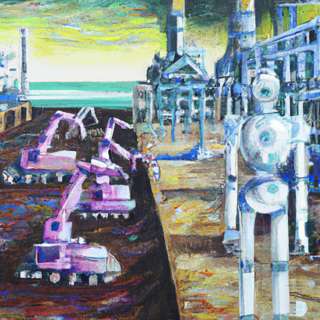
Rebuilding after apocalypse: What 13 experts say about bouncing back
80,000 Hours Podcast15 Heinä 2025

Rebuilding after apocalypse: What 13 experts say about bouncing back

What happens when civilisation faces its greatest tests?

This compilation brings together insights from researchers, defence experts, philosophers, and policymakers on humanity’s ability to survive and recover from catastrophic events. From nuclear winter and electromagnetic pulses to pandemics and climate disasters, we explore both the threats that could bring down modern civilisation and the practical solutions that could help us bounce back.

Learn more and see the full transcript: https://80k.info/cr25

Chapters:

  • Cold open (00:00:00)
  • Luisa’s intro (00:01:16)
  • Zach Weinersmith on how settling space won’t help with threats to civilisation anytime soon (unless AI gets crazy good) (00:03:12)
  • Luisa Rodriguez on what the world might look like after a global catastrophe (00:11:42)
  • Dave Denkenberger on the catastrophes that could cause global starvation (00:22:29)
  • Lewis Dartnell on how we could rediscover essential information if the worst happened (00:34:36)
  • Andy Weber on how people in US defence circles think about nuclear winter (00:39:24)
  • Toby Ord on risks to our atmosphere and whether climate change could really threaten civilisation (00:42:34)
  • Mark Lynas on how likely it is that climate change leads to civilisational collapse (00:54:27)
  • Lewis Dartnell on how we could recover without much coal or oil (01:02:17)
  • Kevin Esvelt on people who want to bring down civilisation — and how AI could help them succeed (01:08:41)
  • Toby Ord on whether rogue AI really could wipe us all out (01:19:50)
  • Joan Rohlfing on why we need to worry about more than just nuclear winter (01:25:06)
  • Annie Jacobsen on the effects of firestorms, rings of annihilation, and electromagnetic pulses from nuclear blasts (01:31:25)
  • Dave Denkenberger on disruptions to electricity and communications (01:44:43)
  • Luisa Rodriguez on how we might lose critical knowledge (01:53:01)
  • Kevin Esvelt on the pandemic scenarios that could bring down civilisation (01:57:32)
  • Andy Weber on tech to help with pandemics (02:15:45)
  • Christian Ruhl on why we need the equivalents of seatbelts and airbags to prevent nuclear war from threatening civilisation (02:24:54)
  • Mark Lynas on whether wide-scale famine would lead to civilisational collapse (02:37:58)
  • Dave Denkenberger on low-cost, low-tech solutions to make sure everyone is fed no matter what (02:49:02)
  • Athena Aktipis on whether society would go all Mad Max in the apocalypse (02:59:57)
  • Luisa Rodriguez on why she’s optimistic survivors wouldn’t turn on one another (03:08:02)
  • David Denkenberger on how resilient foods research overlaps with space technologies (03:16:08)
  • Zach Weinersmith on what we’d practically need to do to save a pocket of humanity in space (03:18:57)
  • Lewis Dartnell on changes we could make today to make us more resilient to potential catastrophes (03:40:45)
  • Christian Ruhl on thoughtful philanthropy to reduce the impact of catastrophes (03:46:40)
  • Toby Ord on whether civilisation could rebuild from a small surviving population (03:55:21)
  • Luisa Rodriguez on how fast populations might rebound (04:00:07)
  • David Denkenberger on the odds civilisation recovers even without much preparation (04:02:13)
  • Athena Aktipis on the best ways to prepare for a catastrophe, and keeping it fun (04:04:15)
  • Will MacAskill on the virtues of the potato (04:19:43)
  • Luisa’s outro (04:25:37)

Tell us what you thought! https://forms.gle/T2PHNQjwGj2dyCqV9

Content editing: Katy Moore and Milo McGuire
Audio engineering: Ben Cordell, Milo McGuire, Simon Monsour, and Dominic Armstrong
Music: Ben Cordell
Transcriptions and web: Katy Moore

Jaksot(332)

Preventing an AI-related catastrophe (Article)

Preventing an AI-related catastrophe (Article)

Today’s release is a professional reading of our new problem profile on preventing an AI-related catastrophe, written by Benjamin Hilton. We expect that there will be substantial progress in AI in t...

14 Loka 20222h 24min
#138 – Sharon Hewitt Rawlette on why pleasure and pain are the only things that intrinsically matter

#138 – Sharon Hewitt Rawlette on why pleasure and pain are the only things that intrinsically matter

What in the world is intrinsically good — good in itself even if it has no other effects? Over the millennia, people have offered many answers: joy, justice, equality, accomplishment, loving god, wisd...

30 Syys 20222h 24min
#137 – Andreas Mogensen on whether effective altruism is just for consequentialists

#137 – Andreas Mogensen on whether effective altruism is just for consequentialists

Effective altruism, in a slogan, aims to 'do the most good.' Utilitarianism, in a slogan, says we should act to 'produce the greatest good for the greatest number.' It's clear enough why utilitarians ...

8 Syys 20222h 21min

#136 – Will MacAskill on what we owe the future

#136 – Will MacAskill on what we owe the future

People who exist in the future deserve some degree of moral consideration.The future could be very big, very long, and/or very good.We can reasonably hope to influence whether people in the future exi...

15 Elo 20222h 54min

#135 – Samuel Charap on key lessons from five months of war in Ukraine

#135 – Samuel Charap on key lessons from five months of war in Ukraine

After a frenetic level of commentary during February and March, the war in Ukraine has faded into the background of our news coverage. But with the benefit of time we're in a much stronger position to...

8 Elo 202254min
#134 – Ian Morris on what big-picture history teaches us

#134 – Ian Morris on what big-picture history teaches us

Wind back 1,000 years and the moral landscape looks very different to today. Most farming societies thought slavery was natural and unobjectionable, premarital sex was an abomination, women should obe...

22 Heinä 20223h 41min
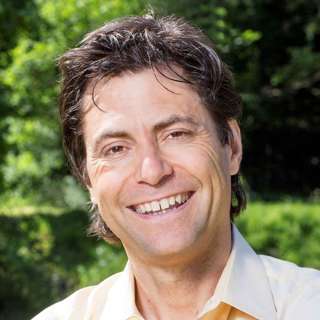
#133 – Max Tegmark on how a 'put-up-or-shut-up' resolution led him to work on AI and algorithmic news selection

#133 – Max Tegmark on how a 'put-up-or-shut-up' resolution led him to work on AI and algorithmic news selection

On January 1, 2015, physicist Max Tegmark gave up something most of us love to do: complain about things without ever trying to fix them. That “put up or shut up” New Year’s resolution led to the firs...

1 Heinä 20222h 57min

#132 – Nova DasSarma on why information security may be critical to the safe development of AI systems

#132 – Nova DasSarma on why information security may be critical to the safe development of AI systems

If a business has spent $100 million developing a product, it's a fair bet that they don't want it stolen in two seconds and uploaded to the web where anyone can use it for free. This problem exists...

14 Kesä 20222h 42min

Suosittua kategoriassa Koulutus

rss-murhan-anatomia
psykopodiaa-podcast
voi-hyvin-meditaatiot-2
adhd-podi
rss-liian-kuuma-peruna
rss-tietoinen-yhteys-podcast-2
rss-niinku-asia-on
rss-valo-minussa-2
rss-rahamania
kesken
rss-arkea-ja-aurinkoa-podcast-espanjasta
rss-vapaudu-voimaasi
rahapuhetta
jari-sarasvuo-podcast
psykologia
rss-uskonto-on-tylsaa
ihminen-tavattavissa-tommy-hellsten-instituutti
rss-hereilla
kehossa
rss-narsisti