Hybrid Quantum-Classical Computing: Bridging Worlds, Merging Opposites | Quantum Computing 101
Quantum Computing 10128 Heinä 2025

Hybrid Quantum-Classical Computing: Bridging Worlds, Merging Opposites | Quantum Computing 101

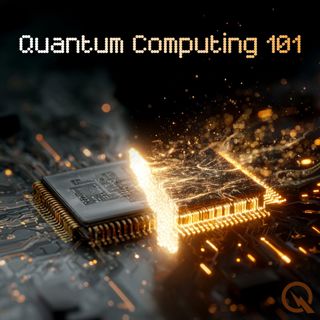
This is your Quantum Computing 101 podcast.

Picture this: July 24th, 2025—a date quantum technologists have been buzzing about. In just 48 hours, I watched as the headlines emerged: new billion‑dollar bets, flawless quantum links, and the kind of breakthroughs that redefine both possibility and ambition. But today, I want to draw your focus to something that lives at the intersection of practical necessity and visionary potential: hybrid quantum‑classical solutions. I’m Leo, your Learning Enhanced Operator, and this is Quantum Computing 101.

This week’s most electrifying development comes courtesy of a collaboration between Keio and Waseda Universities in Japan. Their research turned heads by presenting a hybrid optimization method that elegantly solves one of quantum computing’s thorniest problems. Let me set the stage: you’ve got a massive, tangled optimization problem—think global supply chains or complex energy grids. Pure quantum machines, like D-Wave’s latest Advantage2 annealer, promise revolutionary speed, but their hardware can’t swallow problems of this scale whole.

The trick? Use the brute force of classical algorithms as a prelude. Before the quantum hardware even hums to life, simulated annealing—a kind of calculated shrinking—prunes the problem down, stripping away noise and narrowing what you send to the quantum machine. Now, when the quantum annealer takes over, it’s dealing with a manageable, well‑shaped puzzle. The result is not just a technical compromise, but a synergy: classical rigor coupled to quantum creativity produces solutions that consistently outperform either approach on its own.

Walking into a hybrid computing facility these days feels like stepping across a threshold between worlds. The server rooms, bright and humming, house lines of classical processors tirelessly prepping data—in the next room, the lights dim and you hear the low hiss of cryogenic cooling as quantum processors, cocooned in gold‑plated isolation chambers, prepare to dance on the edge of physical law. Germany’s Leibniz Supercomputing Centre is a model of this new duality, its rooms split by temperature, magnetism, and philosophy.

This balance—much like deploying ironclad firewalls while transmitting quantum‑secure messages, as demonstrated last week by Eleni Diamanti’s team in France—reminds me of our own need, as humans, to blend logic and imagination. When NVIDA announced its coupling of QPUs and GPUs, it became clear: mastery in this field demands we bridge old and new, tradition and disruption.

As I see it, hybrid quantum-classical computing is less a technical compromise and more a metaphor for our times. We live in an era defined by merging opposites—AI with human intuition, global digital infrastructure rooted in physical communities, quantum possibility woven into classical certainty. If you feel a resonance, so do I.

Thanks for joining me, Leo, on Quantum Computing 101. Got questions, or a topic you want unraveled? Email me any time at leo@inceptionpoint.ai. Subscribe for more real‑time revolutions in quantum tech—and remember, this has been a Quiet Please Production. For more, check out quiet please dot AI.

For more http://www.quietplease.ai


Get the best deals https://amzn.to/3ODvOta

This content was created in partnership and with the help of Artificial Intelligence AI

Jaksot(285)

Euro-Q-Exa Unveiled: How 54 Qubits Just Merged With Classical Supercomputing to Crack Real World Problems

Euro-Q-Exa Unveiled: How 54 Qubits Just Merged With Classical Supercomputing to Crack Real World Problems

This is your Quantum Computing 101 podcast.Imagine this: just two days ago, on February 16, 2026, researchers at Spain's CSIC and Delft University of Technology cracked the code on reading Majorana qu...

18 Helmi 3min

Quantum Hybrids Crack the Code: How IBM's QeMCMC Solves Problems Classical Computers Can't Touch

Quantum Hybrids Crack the Code: How IBM's QeMCMC Solves Problems Classical Computers Can't Touch

This is your Quantum Computing 101 podcast.Imagine this: just days ago, on February 11, 2026, researchers at QuTech in Delft and CSIC in Spain cracked the readout code for Majorana qubits in a Nature ...

16 Helmi 3min

Quantum Goes Sovereign: How Hybrid SuperQ Hubs and Majorana Qubits Are Cracking the Code in 2026

Quantum Goes Sovereign: How Hybrid SuperQ Hubs and Majorana Qubits Are Cracking the Code in 2026

This is your Quantum Computing 101 podcast.Imagine this: just days ago, on February 11, 2026, researchers at QuTech in Delft unveiled single-shot parity readout for Majorana qubits in Nature—a breakth...

15 Helmi 3min

Quantum Meets Classical: How QACG Framework Solves Impossible Problems Without Waiting for Perfect Qubits

Quantum Meets Classical: How QACG Framework Solves Impossible Problems Without Waiting for Perfect Qubits

This is your Quantum Computing 101 podcast.Picture this: you're standing in a laboratory where quantum and classical computing shake hands like old rivals finally recognizing each other's worth. That'...

13 Helmi 3min

IBM's 117-Qubit Breakthrough: How Quantum-Classical Hybrids Are Solving Real Problems Today

IBM's 117-Qubit Breakthrough: How Quantum-Classical Hybrids Are Solving Real Problems Today

This is your Quantum Computing 101 podcast.Imagine this: just days ago, on February 10th, IBM Quantum researchers Kate V. Marshall, Daniel J. Egger, and Michael Garn unveiled a quantum-classical hybri...

11 Helmi 2min

H-QNN Breakthrough: How WiMi's Hybrid Quantum Neural Network Just Turbocharged AI Image Recognition in 2026

H-QNN Breakthrough: How WiMi's Hybrid Quantum Neural Network Just Turbocharged AI Image Recognition in 2026

This is your Quantum Computing 101 podcast.Imagine this: just days ago, on February 6th, WiMi in Beijing unveiled their Hybrid Quantum-Classical Neural Network—H-QNN for short—and it's rewriting the r...

9 Helmi 4min

Hybrid Quantum Computing Breakthrough: How D-Wave and Anduril Boosted Missile Defense by 12 Percent in 2025

Hybrid Quantum Computing Breakthrough: How D-Wave and Anduril Boosted Missile Defense by 12 Percent in 2025

This is your Quantum Computing 101 podcast.Imagine this: just days ago, on February 6th, D-Wave, Anduril, and Davidson Technologies unveiled a quantum-classical hybrid powerhouse that shredded missile...

8 Helmi 3min

Quantum GPUs Unleashed: How IBM Shattered the Speed Barrier in Hybrid Computing

Quantum GPUs Unleashed: How IBM Shattered the Speed Barrier in Hybrid Computing

This is your Quantum Computing 101 podcast.Imagine this: just yesterday, on February 6th, USTC researchers in Hefei unveiled a scalable quantum repeater building block using long-lived trapped-ion mem...

6 Helmi 3min

Suosittua kategoriassa Politiikka ja uutiset

uutiscast
aikalisa
ootsa-kuullut-tasta-2
politiikan-puskaradio
rss-ootsa-kuullut-tasta
tervo-halme
rss-pinnalla
rss-podme-livebox
otetaan-yhdet
aihe
rss-asiastudio
the-ulkopolitist
rss-ulkopoditiikkaa
et-sa-noin-voi-sanoo-esittaa
rss-raha-talous-ja-politiikka
radio-antro
lotta-paakkunainen
rss-kaikki-uusiksi
rss-merja-mahkan-rahat
rss-girls-finish-f1rst