
Large Language Models and Emergence: A Complex Systems Perspective (Prof. David C. Krakauer)

Large Language Models and Emergence: A Complex Systems Perspective (Prof. David C. Krakauer)

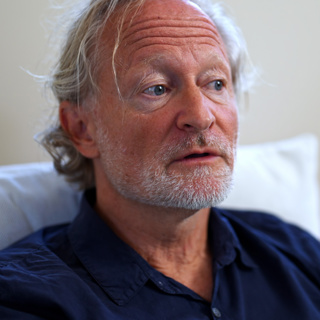
Prof. David Krakauer, President of the Santa Fe Institute argues that we are fundamentally confusing knowledge with intelligence, especially when it comes to AI.


He defines true intelligence as the ability to do more with less—to solve novel problems with limited information. This is contrasted with current AI models, which he describes as doing less with more; they require astounding amounts of data to perform tasks that don't necessarily demonstrate true understanding or adaptation. He humorously calls this "really shit programming".


David challenges the popular notion of "emergence" in Large Language Models (LLMs). He explains that the tech community's definition—seeing a sudden jump in a model's ability to perform a task like three-digit math—is superficial. True emergence, from a complex systems perspective, involves a fundamental change in the system's internal organization, allowing for a new, simpler, and more powerful level of description. He gives the example of moving from tracking individual water molecules to using the elegant laws of fluid dynamics. For LLMs to be truly emergent, we'd need to see them develop new, efficient internal representations, not just get better at memorizing patterns as they scale.


Drawing on his background in evolutionary theory, David explains that systems like brains, and later, culture, evolved to process information that changes too quickly for genetic evolution to keep up. He calls culture "evolution at light speed" because it allows us to store our accumulated knowledge externally (in books, tools, etc.) and build upon it without corrupting the original.


This leads to his concept of "exbodiment," where we outsource our cognitive load to the world through things like maps, abacuses, or even language itself.


We create these external tools, internalize the skills they teach us, improve them, and create a feedback loop that enhances our collective intelligence.


However, he ends with a warning. While technology has historically complemented our deficient abilities, modern AI presents a new danger. Because we have an evolutionary drive to conserve energy, we will inevitably outsource our thinking to AI if we can. He fears this is already leading to a "diminution and dilution" of human thought and creativity. Just as our muscles atrophy without use, he argues our brains will too, and we risk becoming mentally dependent on these systems.


TOC:

[00:00:00] Intelligence: Doing more with less

[00:02:10] Why brains evolved: The limits of evolution

[00:05:18] Culture as evolution at light speed

[00:08:11] True meaning of emergence: "More is Different"

[00:10:41] Why LLM capabilities are not true emergence

[00:15:10] What real emergence would look like in AI

[00:19:24] Symmetry breaking: Physics vs. Life

[00:23:30] Two types of emergence: Knowledge In vs. Out

[00:26:46] Causality, agency, and coarse-graining

[00:32:24] "Exbodiment": Outsourcing thought to objects

[00:35:05] Collective intelligence & the boundary of the mind

[00:39:45] Mortal vs. Immortal forms of computation

[00:42:13] The risk of AI: Atrophy of human thought


David Krakauer

President and William H. Miller Professor of Complex Systems

https://www.santafe.edu/people/profile/david-krakauer


REFS:

Large Language Models and Emergence: A Complex Systems Perspective

David C. Krakauer, John W. Krakauer, Melanie Mitchell

https://arxiv.org/abs/2506.11135


Filmed at the Diverse Intelligences Summer Institute:

https://disi.org/

Tämä jakso on lisätty Podme-palveluun avoimen RSS-syötteen kautta eikä se ole Podmen omaa tuotantoa. Siksi jakso saattaa sisältää mainontaa.

Jaksot(271)

What Most People Get Wrong About Evolution | Akarsh Kumar

What Most People Get Wrong About Evolution | Akarsh Kumar

A lot of people in AI treat evolution as a dumb fallback, basically random search for when you can't take a gradient. Akarsh Kumar thinks that is wrong. Selection hangs on to partial solutions, so mut...

10 Loka 47min

How a Voice Agent Learns the Rhythm of Conversation — Shawn Wen

How a Voice Agent Learns the Rhythm of Conversation — Shawn Wen

Tsung-Hsien (Shawn) Wen, CTO of PolyAI, tells Tim Scarfe why voice agents are harder than text agents. Voice adds time, and a good conversation depends on adapting to the person on the line, not just ...

1 Loka 1h 10min

Who Checks a Proof No Human Can Read? — Leo de Moura

Who Checks a Proof No Human Can Read? — Leo de Moura

Leonardo de Moura created Lean and co-created Z3. ---This episode is sponsored by Parallel.Parallel, where agents find answers: web search, extraction and deep research APIs built for AI agents.Start ...

30 Syys 1h 14min

When AI Research Starts Moving Faster Than Human Research - Zhengyao Jiang

When AI Research Starts Moving Faster Than Human Research - Zhengyao Jiang

Weco let an AI coding agent rewrite the harness around another agent for eight days: its code, prompts and tools, while the underlying language model stayed fixed. Tim Scarfe asks Weco co-founder Zhen...

26 Syys 43min

How Deep Learning Finally Cracked Messy Tables - Frank Hutter

How Deep Learning Finally Cracked Messy Tables - Frank Hutter

Frank Hutter, co-founder of Prior Labs, talks about TabPFN, a tabular foundation model that makes predictions in a single forward pass, and the research behind it.TabPFN is pre-trained on synthetic da...

23 Syys 1h 53min

Why Scaling Prediction Cannot Create Intelligence - Alexander Mattick

Why Scaling Prediction Cannot Create Intelligence - Alexander Mattick

Alexander Mattick is a researcher at Fraunhofer IIS and a PhD researcher at the University of Technology Nuremberg (UTN), and a regular on Yannic Kilcher's Discord. He first came on MLST in 2022, afte...

21 Syys 2h 14min

How Physical AI Learns Across Language, Video and Action — Ming-Yu Liu

How Physical AI Learns Across Language, Video and Action — Ming-Yu Liu

The car making a left turn at the start of this episode was never filmed. Cosmos 3 generated it. Ming-Yu Liu, who leads the Cosmos research at NVIDIA, explains how one model can describe a video, gene...

15 Syys 25min

Speech Recognition Is Not a Solved Problem — Pavan Kumar Reddy

Speech Recognition Is Not a Solved Problem — Pavan Kumar Reddy

Pavan Kumar Reddy leads audio research at Mistral AI. He joins Tim Scarfe for a deep technical tour of Voxtral — and explains why the frontier of deployed voice is still a cascade of specialised model...

14 Syys 1h 42min