Quantum-Classical Hybrids: Unleashing the Power of Intertwined Computing

Quantum-Classical Hybrids: Unleashing the Power of Intertwined Computing

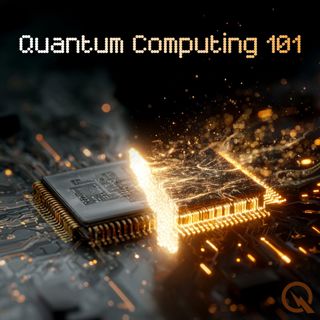
This is your Quantum Computing 101 podcast.

Modern quantum computing feels a bit like standing at the event horizon of a black hole—time and space stretched to their limits, the rules of the old world no longer strictly applying. Today, on Quantum Computing 101, I’m Leo, your Learning Enhanced Operator, and I want to pull you right into the swirling currents of this week’s most electrifying breakthrough: quantum-classical hybrid solutions.

Let’s go straight to the heart of this revolution. Just yesterday, IonQ, in partnership with Oak Ridge National Laboratory and the U.S. Department of Energy, announced a milestone: using a hybrid quantum-classical approach to tackle the notorious Unit Commitment problem for power grids. Picture this: rows of humming quantum devices at IonQ, cooled nearly to absolute zero, working in tandem with room-temperature server clusters. The problem—the optimal scheduling of 26 power generators across 24 hours—would melt down the patience of most classical supercomputers. But by distributing the work, IonQ’s 36-qubit Forte system takes the pieces that are most entangled with quantum weirdness, and leaves the data-heavy preparation and post-processing to the classical side. Like musicians in a perfectly conducted orchestra, each member plays its part, their harmonies creating solutions that neither could achieve alone.

It’s not just academic curiosity—this approach directly addresses real, costly inefficiencies. According to the U.S. Energy Information Administration, over 60% of energy used in power generation is lost. Efficient scheduling—especially when integrating renewable resources—could save billions and decarbonize the grid faster. IonQ CEO Niccolo de Masi described this as a milestone for real-world impact, and as these systems scale to hundreds, then thousands of qubits, experts like Dr. Suman Debnath at ORNL are eager to test for that elusive “quantum advantage,” where classical computers simply can’t keep up.

This isn’t a one-off. Today’s news also spotlights Spectral Capital of Seattle. They’ve already delivered more than 100 innovations integrating hybrid quantum-classical algorithms into AI models across telecom, fraud detection, and messaging platforms. The secret is a feedback loop: the classical machine preps the data and analyzes the results, while the quantum processor swiftly boosts the hardest subproblems—like finding hidden patterns in a chaotic dataset. Their CEO, Jenifer Osterwalder, calls these hybrids “force multipliers”—slashing cloud costs by up to 40% and unlocking instant, smarter decisions in the enterprise space.

Watching quantum and classical technologies intertwine, I’m reminded of the delicate balance underpinning the quantum world itself—superposition’s ambiguity, entanglement’s invisible threads. Today, as these fields converge, we’re not just bending the rules: we’re inventing new games entirely.

Thanks so much for joining me. If quantum curiosity is burning, or you have a topic you want discussed, send an email to leo@inceptionpoint.ai. Don’t forget to subscribe to Quantum Computing 101. This has been a Quiet Please Production—find out more at quietplease.ai. Stay entangled, and see you next time.

For more http://www.quietplease.ai


Get the best deals https://amzn.to/3ODvOta

This content was created in partnership and with the help of Artificial Intelligence AI

Jaksot(285)

Euro-Q-Exa Unveiled: How 54 Qubits Just Merged With Classical Supercomputing to Crack Real World Problems

Euro-Q-Exa Unveiled: How 54 Qubits Just Merged With Classical Supercomputing to Crack Real World Problems

This is your Quantum Computing 101 podcast.Imagine this: just two days ago, on February 16, 2026, researchers at Spain's CSIC and Delft University of Technology cracked the code on reading Majorana qu...

18 Helmi 3min

Quantum Hybrids Crack the Code: How IBM's QeMCMC Solves Problems Classical Computers Can't Touch

Quantum Hybrids Crack the Code: How IBM's QeMCMC Solves Problems Classical Computers Can't Touch

This is your Quantum Computing 101 podcast.Imagine this: just days ago, on February 11, 2026, researchers at QuTech in Delft and CSIC in Spain cracked the readout code for Majorana qubits in a Nature ...

16 Helmi 3min

Quantum Goes Sovereign: How Hybrid SuperQ Hubs and Majorana Qubits Are Cracking the Code in 2026

Quantum Goes Sovereign: How Hybrid SuperQ Hubs and Majorana Qubits Are Cracking the Code in 2026

This is your Quantum Computing 101 podcast.Imagine this: just days ago, on February 11, 2026, researchers at QuTech in Delft unveiled single-shot parity readout for Majorana qubits in Nature—a breakth...

15 Helmi 3min

Quantum Meets Classical: How QACG Framework Solves Impossible Problems Without Waiting for Perfect Qubits

Quantum Meets Classical: How QACG Framework Solves Impossible Problems Without Waiting for Perfect Qubits

This is your Quantum Computing 101 podcast.Picture this: you're standing in a laboratory where quantum and classical computing shake hands like old rivals finally recognizing each other's worth. That'...

13 Helmi 3min

IBM's 117-Qubit Breakthrough: How Quantum-Classical Hybrids Are Solving Real Problems Today

IBM's 117-Qubit Breakthrough: How Quantum-Classical Hybrids Are Solving Real Problems Today

This is your Quantum Computing 101 podcast.Imagine this: just days ago, on February 10th, IBM Quantum researchers Kate V. Marshall, Daniel J. Egger, and Michael Garn unveiled a quantum-classical hybri...

11 Helmi 2min

H-QNN Breakthrough: How WiMi's Hybrid Quantum Neural Network Just Turbocharged AI Image Recognition in 2026

H-QNN Breakthrough: How WiMi's Hybrid Quantum Neural Network Just Turbocharged AI Image Recognition in 2026

This is your Quantum Computing 101 podcast.Imagine this: just days ago, on February 6th, WiMi in Beijing unveiled their Hybrid Quantum-Classical Neural Network—H-QNN for short—and it's rewriting the r...

9 Helmi 4min

Hybrid Quantum Computing Breakthrough: How D-Wave and Anduril Boosted Missile Defense by 12 Percent in 2025

Hybrid Quantum Computing Breakthrough: How D-Wave and Anduril Boosted Missile Defense by 12 Percent in 2025

This is your Quantum Computing 101 podcast.Imagine this: just days ago, on February 6th, D-Wave, Anduril, and Davidson Technologies unveiled a quantum-classical hybrid powerhouse that shredded missile...

8 Helmi 3min

Quantum GPUs Unleashed: How IBM Shattered the Speed Barrier in Hybrid Computing

Quantum GPUs Unleashed: How IBM Shattered the Speed Barrier in Hybrid Computing

This is your Quantum Computing 101 podcast.Imagine this: just yesterday, on February 6th, USTC researchers in Hefei unveiled a scalable quantum repeater building block using long-lived trapped-ion mem...

6 Helmi 3min

Suosittua kategoriassa Politiikka ja uutiset

uutiscast
aikalisa
ootsa-kuullut-tasta-2
politiikan-puskaradio
rss-ootsa-kuullut-tasta
tervo-halme
rss-pinnalla
rss-podme-livebox
otetaan-yhdet
rss-asiastudio
aihe
et-sa-noin-voi-sanoo-esittaa
the-ulkopolitist
radio-antro
rss-vaalirankkurit-podcast
rss-ulkopoditiikkaa
rss-mina-ukkola
rss-girls-finish-f1rst
linda-maria
rss-raha-talous-ja-politiikka