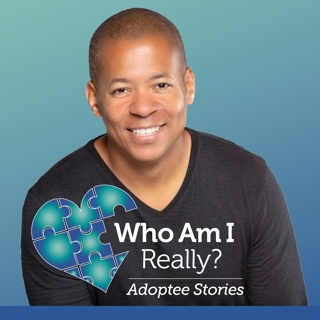
022 – I’m Still On This Journey, Using My Experience to Help Others
Who Am I Really?22 Kesä 2019

022 – I’m Still On This Journey, Using My Experience to Help Others

Marni grew up in Madison, WI in a transracial family that lived a predominantly white community. Everywhere they went, they were stared at for the heterogeneity they brought to the community. The attention their family received was a constant reminder of their own racial diversity, but Marni’s father seemed to have wise and crafty ways to turn the tables to make his own children feel more comfortable. Still, Marni’s family had some internal dysfunction that fed her desire to search for her biological family always wanted to find her biological family. Initially, she thought things with her biological mother were going to be great, but it turned out that her biological father was the one she had the deepest connection to. Marni makes her living supporting foster youth in the Washington, DC area, pulling from her own experiences as an adoptee to uplift others.

Read Full Transcript

Marni: 00:06 Maybe, just maybe all of this has led to a place where I am stable emotionally. I’m okay with talking about everything as it relates to my journey and why not use that as a backbone of strength to give back and help others.

Voices: 00:27 Who am I? Who am I? Who am I? Who am I? Who am I? Who am I? Who am I?

Damon: 00:38 This is who am I really a podcast about adoptees that have located and connected with their biological family members. I’m Damon Davis and today my guest is Marni. She grew up in Madison, Wisconsin, in a transracial family that lived in a predominantly white community, but everywhere they went, they were stared at, the attention their family received was a constant reminder of their racial diversity, but her father seemed to have wise and crafty ways to turn the tables to make his own children feel more comfortable. Still Marni always wanted to find her biological family, so on her 21st birthday, that’s exactly what she began to do. Initially, she thought things with her biological mother, were going to be great. But it turned out that her biological father was the one that she truly had a connection with. I asked Marni to tell me what life was like as an adoptee in her family and in her community. Marni recalls her childhood as one challenged by racial identity. Her family was racially diverse in, in Madison, Wisconsin in the 1970s, the kind of racial diversity and integration that her family showed was far from the norm and their families stood out in their community.

Marni: 01:53 We had a rainbow coalition, if you will, of a family in the early seventies in Madison, Wisconsin, which wasn’t exactly popular. And although my parents did, I think, everything they could to normalize something that really was not normal by society standards, it was still rough because we would go places and people’s jaws would drop. My family is, um, pretty into outdoor sporting. Um, for example, camping, canoeing, and in Wisconsin there’s lovely lakes and forests and such to hike through in the northern part of the state and in the northern part of the state, there’s no diversity of any kind. And so because that’s something that our family did recreationally, we spent a lot of time in northern Wisconsin in the summers and such. And there’s one particular story that I remember when we went into a restaurant, northern Wisconsin and literally walked in and all of the forks just dropped on the plates and everyone stared at us and it was very uncomfortable.

Marni: 02:55 I was maybe five years old and I just kept looking at my dad to see how he was responding because it was quite frankly a little scary. And we sat down, my dad reassured us it was fine, and everyone just kept staring. And my dad said, look at their shoes, just stare at people’s shoes. And I thought, okay, if dad says so we’re going to stare at shoes, so we’re all staring at people’s shoes. And one by one, people start kind of out of the corner of their own eyes looking down at their feet. And then we kinda started snickering and, and I, my father never ever said anything about that incident ever again. And it was years later that I realized the brilliance of my father because it was as silly for them to be looking at us as it was silly for us to look at their shoes. And so I use that as an illustrative story because it’s an example of how my parents very pragmatically took on the world because they decided to take on a colorful family.

Damon: 03:52 that’s fascinating. And that is really brilliant, right in the moment saying, you know what, if they want to stare at us, we’ll stare back at them and we’ll see who feels sillier. Because the honest truth is you guys are in the world, you can’t change it. And, and their, you know, lack of exposure to people of color shouldn’t mean that you guys should feel uncomfortable. That’s, that was pretty brilliant. Their family structure was really complicated amidst the adoptions. There was also divorce. And remarriage, adding step siblings to the mix. Siblings will always have some kind of rivalry with one another, but Marni experienced racism even within the sibling structure.

Marni: 04:28 One of my older sisters who is also biracial, black, white, but she is much darker complected than I am. She taunted me for my entire childhood and and would often times make comments about the fact that I was so fair complected and make up rhymes and stories and jingles about how fair complected I was, like to the point where I would blend into snow. And it’s interesting because I didn’t really get that racism like the black on black hate race stuff until much later in life. When I went to Howard University and it was, I think that it really came out of the fact that when we would go places as a whole unit, we were obviously different. But if I went some place with my parents, independent of my black siblings, I was treated completely differently and my sister knew that and she saw that, from afar. And you know, like going into restaurants when we were teenagers and my older brother and sister who are darker complected, the host is not even recognizing that they’re with us and wanting to seat them separately as if they’re a couple. And so my sister just resented me so much because I was the other black kid, but yet I got treated differently.

Damon: 05:41 Mhm. Wow.

Marni: 05:42 And then honestly I just, I’d have to own and admit that I used that to my advantage.

Damon: 05:47 In what way?

Marni: 05:48 because I, well I use it in the advantage of being able to fit in socially growing up because sometimes I just got really sick of the fact that we always had questions and stares and everywhere we went it was always, you know, why is your hair like that? Or is, how can that be your sister? That’s not really your brother. And if I could escape being around the different looking family structure, then I definitely would use it for my advantage to, to hang out with different kinds of peer groups. Like all white

Damon:

Tämä jakso on lisätty Podme-palveluun avoimen RSS-syötteen kautta eikä se ole Podmen omaa tuotantoa. Siksi jakso saattaa sisältää mainontaa.

Jaksot(287)

140 - I Wanted To Be My True Self

140 - I Wanted To Be My True Self

Darryl, from Australia, admits he had a challenging childhood from his relationship with his adoptive father, to their family's need to move around a lot because they were so poor, and his experience ...

28 Maalis 45min
139 -A Sense Of Peace And Calm

139 -A Sense Of Peace And Calm

Wendy, from Minnesota, had a lot of information about her natural mother and assumed the woman would want to know her, but that wasn't the case. They corresponded once, solely for her natural mother t...

14 Maalis 38min
144 – Gullah Girl

144 – Gullah Girl

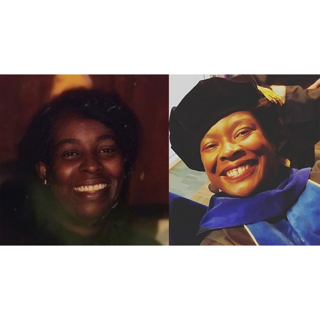
Brandi, who called me from myrtle Beach, South Carolina, is an inquisitive person adopted in to a family with a history of scholars, which is rare for a black family in the south. DNA led Brandi to a ...

7 Maalis 28min

143 - He Really Stepped Up

143 - He Really Stepped Up

When Susan, from Irving, Texas, found her natural mother, she learned she was conceived in transit when two young lives collided, then never saw one another again. Her birth mother's life seemed too ...

28 Helmi 42min

136 – Your Absence Has Gone Through Me

136 – Your Absence Has Gone Through Me

To date, I’ve only interviewed a few guests who weren't adoptees, and this will be another one. Today you're going to meet Anne-Marie from Southern California who drafted an impassioned submission to ...

21 Helmi 1h 26min

134 – Destined To Be Unique

134 – Destined To Be Unique

Liz, from Michigan, grew up in a neighborhood full of adoptees, so it wasn’t until years later in the Dominican Republic teaching a class with a lot of adoptees in it that her own adoption sunk in. Af...

14 Helmi 51min
127 – I Think I Was Afraid Of Knowing

127 – I Think I Was Afraid Of Knowing

Jim, who now lives in Delaware, said growing up he had no desire to search for his first family. After his parents passed and he found his adoption name change form, his feelings about a search change...

7 Helmi 46min
141 - That Wasn't The Real Me

141 - That Wasn't The Real Me

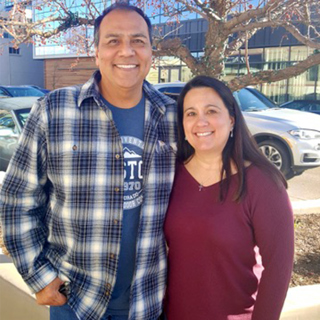
Gloria called me from Texas where she grew up with Mexican parents. In younger days she tried to find the ways she looked like her family. In adulthood, following the whim of some co-workers, Gloria d...

31 Tammi 56min

Suosittua kategoriassa Koulutus

rss-murhan-anatomia
psykopodiaa-podcast
kesken
ilona-rauhala
adhd-podi
psykologia
rss-vapaudu-voimaasi
rss-arkea-ja-aurinkoa-podcast-espanjasta
rss-laadukasta-ensihoitoa
rss-koira-haudattuna
voi-hyvin-meditaatiot-2
jari-sarasvuo-podcast
rss-hereilla
rss-liian-kuuma-peruna
rss-loyda-voimasi
filocast-filosofian-perusteet
aamupore
rss-xamk-podcast
rss-spessu
rss-tietoinen-yhteys-podcast-2