


ST 108: Day Trading Stocks - Part 3
In this conversation, Krish Palaniappan discusses trading activities observed in the market, focusing on three key securities: Palantir, Tesla, and Meta. He explains the significance of a triple witching day, analyzes the daily performance of these stocks, and highlights the volatility during the first hour and last 30 minutes of trading. The discussion also covers fluctuations in stock prices and trading volumes, providing insights for day traders and investors. In this conversation, Krish Palaniappan delves into the intricacies of trading volume and its implications for day trading. He discusses various trading tools, analyzes the trading volumes of major stocks like Palantir, Tesla, and Meta, and highlights the significance of understanding trading patterns. The conversation emphasizes the importance of being informed about market dynamics and the challenges of day trading, while also encouraging listeners to explore further educational resources. Prerequisites This is a follow up to the 2 courses below. https://products.snowpal.com/p/day-trading-stocks-part-1?utm_source=publication-search https://products.snowpal.com/p/day-trading-stocks-part-2?utm_source=publication-search Snowpal Products Backends as Services on AWS Marketplace Mobile Apps on App Store and Play Store Web App Education Platform for Learners and Course Creators
19 Maalis 202553min
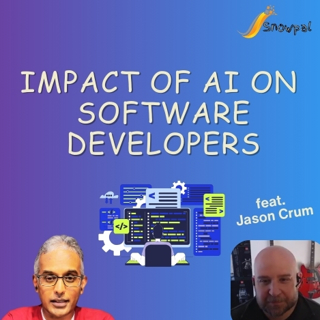
Impact of AI on Software Developers (feat. Jason Crum)
In this conversation, Krish Palaniappan and Jason Crum discuss the impact of AI on software development, exploring skepticism towards AI predictions, societal implications, and the future of jobs. They delve into corporate spending on AI, the quality of content generated by AI, and the importance of talent acquisition in tech companies. The discussion highlights the dual perspectives of developers and non-developers regarding AI's role in their professional and personal lives, emphasizing the need for adaptation in a rapidly changing technological landscape. Takeaways AI is predicted to take over many developer tasks. Skepticism exists regarding the timeline of AI advancements. Investment in AI is driven by fear of missing out. Companies are hiring top talent to leverage AI effectively. Repetitive tasks are most susceptible to AI automation. Quality of AI-generated content is a concern. The future of jobs in AI is uncertain and complex. AI tools can enhance productivity for developers. Corporate spending on AI is a significant trend. Automating tasks can save time, but AI tools may not always deliver expected results. Understanding the underlying technology is crucial when using AI tools. AI's ability to create is limited by existing data and patterns. Reliance on AI tools can lead to a decline in critical thinking skills. Creativity in art and music may not be fully replicable by AI. AI can assist in repetitive tasks but may struggle with complex problem-solving. Human intuition and reasoning are still essential in many fields. Relying too much on AI can diminish our intellectual engagement. Small businesses can thrive with fewer resources due to AI. The disparity between the wealthy and the poor may worsen with AI. Meaningful contributions to society are essential in a tech-driven world. Adapting to change is crucial in the workforce, particularly with evolving technologies. Continuous learning is essential to remain relevant in the job market. AI is transforming job roles, especially in areas that are repetitive and easily automated. Developing a diverse skill set can enhance job security and marketability. Being creative and standing out is vital in a world where everyone has access to the same tools. Chapters 00:00 Introduction to AI's Impact on Software Development 03:01 Skepticism Towards AI Predictions 06:03 Dual Perspectives: Developer vs. Non-Developer 08:54 Societal Implications of AI 12:14 The Future of Jobs in AI 14:53 Investment Trends in AI 18:13 Content Quality and AI's Role 20:53 Corporate Spending on AI 24:05 Talent Acquisition in Tech Companies 27:00 The Role of Repetitive Tasks in AI Adoption 36:48 Automating Media Management with Python 40:48 Challenges in AI-Assisted Coding 44:42 The Future of Jobs in the Age of AI 49:53 Creativity and AI: A Complex Relationship 57:51 The Role of Intellect in a Tech-Driven World 01:12:40 Navigating the Reliability of AI Tools 01:15:10 The Rise of Small Businesses in the AI Era 01:19:49 Geographical Disparities in AI Impact 01:23:51 Geopolitical Implications of AI and Job Displacement 01:30:53 The Role of Meaningful Contribution in a Tech-Driven World 01:47:54 Miscommunication and Cultural Context 01:49:12 Adapting to Change in the Workforce 01:51:10 The Impact of AI on Job Security 01:53:01 Skills for the Future: Learning and Adaptation 01:54:34 Exploring Global Perspectives and Personal Aspirations 02:03:20 The American Spirit: Hard Work and Risk-Taking 02:09:52 Closing Thoughts: Being a Producer, Not a Consumer
18 Maalis 20252h 15min

Investing in Restaurant Stocks (focus on SG, CAVA and SHAK)
In this episode, Krish Palaniappan discusses the dynamics of investing in the food industry, focusing on three specific companies: Shake Shack, Cava, and SweetGreen. He provides insights into their recent stock performance, the factors influencing price fluctuations, and the importance of understanding the market landscape. He emphasizes the risks associated with trading and the value of personal experience in making investment decisions. Takeaways Shake Shack, Cava, and Sweetgreen are discussed as food industry securities. Price fluctuations can indicate market trends and company performance. Understanding the food industry is crucial for investors. Different investors have varying approaches to stock selection. Personal experience with companies can inform investment decisions. Market trends can impact multiple companies in the same industry. The importance of analyzing a company’s growth potential and competition. Chapters 00:00 Introduction to the Podcast and Disclaimer 02:54 Exploring Food Industry Securities 05:52 Analyzing Price Fluctuations in Food Stocks 09:14 Investor Perspectives on Food Companies 12:06 Conclusion and Course Offerings
19 Helmi 202515min

Immigrating to USA
In this episode, Krish Palaniappan shares his personal insights on the complexities of US immigration. He emphasizes that immigration should be viewed as a privilege rather than a right, discussing the challenges and realities faced by immigrants. He encourages listeners to appreciate the opportunities available in the US while acknowledging the need for improvements in the immigration system. The conversation highlights the importance of respect, gratitude, and understanding in the immigration process, urging a balanced perspective on the experiences of immigrants. Takeaways Immigration is a privilege granted by a country, not a right. The immigration process can be lengthy and complex, often taking years. Many immigrants contribute positively to society, even if not at the highest levels. Comparing immigration systems globally reveals that many countries have stricter processes. Respect and gratitude for the immigration system are essential for a harmonious society. Life is not fair, and sometimes qualified individuals may not succeed in immigrating. The odds of becoming a highly successful immigrant are low for most. Good people should have a legal path to immigration, and improvements are needed. Understanding the immigration process can help alleviate frustrations. The journey of immigration can be painful, but patience is crucial. Chapters 00:00 Introduction to Immigration Perspectives 02:53 The Privilege of Immigration 06:11 The Reality of Immigration Processes 09:05 Comparative Immigration Experiences 11:54 The Importance of Respect and Gratitude 14:48 Conclusion and Call for Understanding
25 Tammi 202518min
Credibility needs to be built both by individuals and communities
In this episode, Krish Palaniappan discusses the recent layoffs at Apple, which were not due to employee performance but rather a scam involving misuse of a grant program. He reflects on the cultural implications of such news, particularly for Indian engineers, and emphasizes the importance of credibility and integrity in the tech industry. Krish shares insights on how individual actions can impact perceptions of entire communities and stresses the need for maintaining a good reputation in professional settings. Takeaways Layoffs in tech are often misunderstood and misreported. Cultural identity can influence perceptions in the workplace. Credibility is a crucial asset for engineers. Negative news can affect the reputation of entire communities. Maintaining integrity is essential for personal and professional growth. The tech industry faces challenges in hiring due to credibility issues. Good impressions are vital for future opportunities. Honesty in professional representation is non-negotiable. The actions of a few can impact the many in a global context. Future discussions will return to technical topics. Chapters 00:00 Introduction to the Podcast and Topic 01:30 Layoffs at Apple: A Deeper Look 04:00 Cultural Implications of the Layoffs 10:11 The Importance of Credibility in Engineering 15:51 Maintaining Integrity and Reputation
21 Tammi 202519min
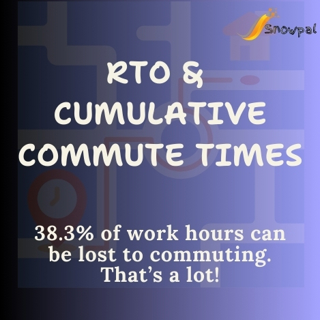
RTO & Cumulative Commute Times
In this episode, Krish Palaniappan discusses the concept of “coffee badges” in the context of the return to office (RTO) debate. He explores the implications of commuting, productivity, and the quality of life for employees, particularly in the tech industry. The conversation highlights the challenges of mandatory office attendance and the potential benefits of remote work, while also considering the impact on company culture and employee satisfaction. Takeaways Coffee badges refer to employees who come to the office briefly. The return to office debate raises questions about productivity. Commuting can take up a significant amount of time. 38.3% of work hours can be lost to commuting. Quality of life is affected by commuting time. Companies need to consider employee satisfaction. Remote work can lead to better work-life balance. Different companies have different cultures and needs. It’s important to find what works for your team. Employee retention is linked to job satisfaction. Chapters 00:00 Introduction to Coffee Badges 01:53 The Return to Office Debate 06:06 The Commute Conundrum 11:56 Quantifying Commute Time 17:58 Quality of Life and Work 24:07 Final Thoughts and Company Culture
17 Tammi 202527min
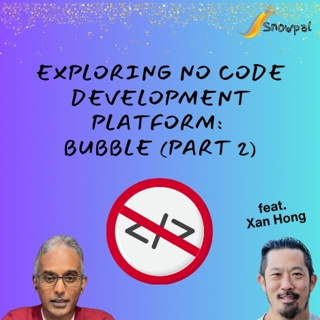
(Part 2) Exploring No Code Development Platform: Bubble (feat. Xan Hong)
In this episode, Xan Hong, a no-code development expert, guides Krish Palaniappan through the process of building a simple to-do application using Bubble. They explore the user interface, create workflows, and discuss the transition from web-based to native app development. The conversation emphasizes practical application, collaboration, and the importance of getting a functional product up and running before focusing on aesthetics. They explore the Bubble platform, discussing its no-code capabilities, data management, plugin integrations, and design systems. They reflect on the learning curve associated with Bubble, the potential for AI integration, and the future of no-code platforms in the context of evolving technology. The discussion highlights practical applications, user experiences, and the importance of adapting to new tools in software development. Takeaways • No-code development can significantly reduce costs for clients. • Understanding the user interface is crucial for effective app development. • Starting with a functional prototype is more important than aesthetics. • Bubble allows for both web and native app development. • Dynamic elements enhance user interaction in applications. • Workflows are essential for managing data and user actions. • Testing and debugging are critical steps in the development process. • Collaborative development can enhance the learning experience. • Data management is key to maintaining application functionality. • User feedback is vital for refining app features. • Bubble allows users to create applications without writing code. • Understanding the platform’s structure is crucial for effective use. • Data management in Bubble includes both data and metadata. • Plugins enhance functionality but vary in quality. • Design systems can be created and reused within Bubble applications. • APIs can be integrated to extend application capabilities. • The learning curve for Bubble can be steep for new users. • AI integration presents new challenges for no-code platforms. • Building meaningful projects can enhance the learning experience. • No-code platforms are evolving with the introduction of AI technologies. Chapters 00:00 Introduction to No Code Development 02:55 Exploring Bubble's User Interface 05:52 Creating a To-Do Application 09:10 Understanding Native App Development with Bubble 11:58 Dynamic Elements and User Interaction 15:07 Workflow Creation and Data Management 17:52 Testing and Debugging the Application 20:47 Collaborative Development and Sharing 24:01 Data Management and Deletion Functionality 38:49 Navigating the Bubble Platform 40:46 Understanding Data Management and Metadata 42:49 Exploring Plugins and Third-Party Integrations 45:35 Design Systems and Reusability in Bubble 48:30 Connecting APIs and Backend Functionality 53:44 Recap of Building a To-Do App 55:11 Reflections on No-Code Development 01:01:43 The Learning Curve of Bubble 01:08:14 The Future of AI in No-Code Platforms
15 Tammi 20251h 19min
(Part 1) Exploring No Code Development Platform: Bubble (feat. Xan Hong)
In this episode, Xan Hong shares his journey into the world of no-code development, highlighting the challenges faced by non-technical founders and the flexibility offered by platforms like Bubble. The conversation explores the evolving landscape of software development, the importance of creativity in problem-solving, and the impact of no-code solutions on traditional development roles. San emphasizes the need for adaptability in a rapidly changing technological environment and discusses the value of a well-rounded skill set in today’s market. They delve into the intricacies of no-code platforms, particularly focusing on Bubble. They discuss backend workflows, API integration, and the advantages of no-code solutions for MVP development. The conversation also explores how no-code platforms can be utilized in various business contexts, from startups to large enterprises, and the future landscape of software development in relation to AI-generated code. Xan shares real-life case studies demonstrating the effectiveness of no-code solutions, while Krish raises thought-provoking questions about the evolving role of coding in the tech industry. Takeaways • No-code platforms like Bubble can save significant development costs. • Learning data structuring is crucial for using no-code tools effectively. • Bubble offers flexibility but has a steeper learning curve than other platforms. • Creativity is essential in problem-solving with no-code solutions. • Developers may feel threatened by the rise of no-code tools. • Adaptability is key in the fast-changing tech landscape. • A combination of business and technical skills is valuable in development. • Clients appreciate understanding their needs during the development process. • Problem-solving skills are more important than technical skills alone. • No-code platforms can expose backends as APIs. • No backend server is needed for user management. • No-code solutions can significantly reduce development time. • Enterprises can save millions by transitioning to no-code. • Startups can validate ideas quickly using no-code tools. • No-code platforms are more accessible for non-technical users. • AI-generated code may not always be the best solution for MVPs. • The perception of no-code limitations is often exaggerated. • Education in tech is shifting towards practical problem-solving. • No-code tools can complement traditional coding practices. Chapters 00:00 Introduction to No-Code Development 02:57 San's Journey into No-Code Development 06:02 Challenges of Starting Without a Technical Background 08:54 Exploring No-Code Platforms: Bubble vs Others 11:57 The Flexibility and Limitations of No-Code Solutions 14:54 Creativity in Problem Solving with No-Code 17:56 The Impact of No-Code on Traditional Development 21:01 Navigating the Future of Software Development 23:53 The Value of a Well-Rounded Skill Set 27:07 Client Perspectives on No-Code Development 30:04 Hands-On with Bubble: Features and Functionality 38:41 Exploring Backend Workflows and API Integration 45:10 Understanding No-Code Solutions for MVP Development 50:14 No-Code Platforms in Different Business Contexts 54:47 The Future of No-Code vs. AI-Generated Code 01:08:56 Closing Thoughts on No-Code and Personal Insights
15 Tammi 20251h 12min

