
Black Women and Barriers to Leadership in ABA: Session 151 with Dr. Nasiah Cirincione-Ulezi
In Session 151, I chat with Dr. Nasiah Cirincione-Ulezi about a range of topics, but we spent the majority of the time discussing her recent paper in Behavior Analysis in Practice titled: Black Women and Barriers to Leadership in ABA. Nasiah is the CEO of two organizations, Ulezi, LLC and Pivot 2 Inclusion. If you haven't read her paper yet, please pause this show and go do so. It's a sobering account of some of the struggles faced by Black women in our field. Nasiah highlights her findings in this conversation, so I don't want to spoil them here in the introduction, so let's just say it's unsettling, yet necessary to hear about some of the challenges faced by Black women in our field. Fortunately, Nasiah discusses some potential solutions, and more generally, provides us with some things to think about moving forward. In this episode, we also discussed her upcoming keynote address at this year's Virginia ABA conference, which is scheduled for April 16th and 17th. VABA is offering this event as both an in-person conference as well as a virtual experience. It you'd like to learn more, go to Virginiaaba.org, and if you sign up, use the code GOMBU to save at registration. We closed the show out with a brief discussion of what behaviorally-based life-coaching looks like, as that's a service that Nasiah has been offering for some time. And then she closes the show with some outstanding advice for Behavior Analysts of all experience levels. Here are the links to the resources we discussed: Ulezi LLC and Pivot 2 Inclusion. Virginia ABA 2021 Conference. Blog post by Shawn T. Capell: The current status of African Americans within the field of Applied Behavior Analysis. Humble Behaviorism (Neuringer, 1991). Nasiah's YouTube channel, Ulezi the Advocate. I hope you enjoy this conversation as much a I did, and thanks so much for supporting the show! This podcast is brought to you with support from: Gateway Learning Group, and their Autism Leadership Academy. Designed for new Regional Directors, the Autism Leadership Academy develops motivated BCBAs into successful leaders in the autism field. If you're interested in running your own regional center and want to learn the skills to do so successfully, check out gatewaylg.com/BOP. Note: Immediate openings available in Texas. BCBAs across the U.S. are encouraged to apply! Consider joining the BOP Patreon. Patreon members get early access to podcasts, bonus podcast material, discounts on CEU events from FTF and other continuing ed purveyors, occasional Zoom hangouts, and more!
8 Maalis 20211h 17min
A Conversation with Vince Carbone: Session 150
In Session 150 of The Behavioral Observations Podcast, I got a chance to finally interview Dr. Vince Carbone. In our conversation we covered a lot of interesting topics. Instead of covering the ins and outs of Verbal Behavior - the topic it's fair to say that Vince is best known for - we talked about the history and evolution of the field of Behavior Analysis. Specifically, we discussed how he transitioned from aspiring baseball player to Psychology student, what the field was like when he first got started, his early career experiences in the Juvenile Justice and public education systems, and why he started the Carbone clinics. We spend a fair amount of time on his ideas for sustainably growing an ABA practice, including how he built a pipeline of exceptional clinicians and some of the challenges he sees in the field as a whole. Vince also shared many anecdotes from his various interactions with B.F. Skinner. Additionally, Vince shared his thoughts on the recent passing of Jack Michael. Here are a few references that were mentioned in the show: Why are we not acting to save the world? Reflections on Behaviorism and Society. The B.F. Skinner Foundation. Carbone and Lynch (1982). The Functional Analysis of Behavior in a Juvenile Detention Facility. Vince will be giving two talks at the 2021 Verbal Behavior Conference, which is on April 22-23, and is brought to you by my friends at the Central Texas Autism Center. There will be many other great speakers at the conference as well, and like last year, they invited me to facilitate a panel discussion, so if you'd like to learn more, click here to learn more. If you decide to register, use the code Podcast10 to save 10% at checkout! Today's episode is brought to you with the generous support of the following: Essential For Living. The Essential for Living is the most comprehensive life skills curriculum and teaching handbook on the market today. It is designed for both children and adults with moderate-to-severe disabilities, including, but not limited to autism. The EFL is extraordinarily helpful in guiding the instruction of all adults with moderate-to-severe intellectual disabilities. To learn more, go to essentialforliving.com, and if you decide to purchase any EFL materials, use the code BOEFL to save 10% off your order now through the end of March! How-to-ABA. Being a BCBA can be lonely and overwhelming. At howtoaba.com, we help BCBA's feel supported and confident by providing easy to access printables, CEU's and a collaborative community. Also, your monthly pro membership includes access to CEU's! Along with the community of over 1000 ABA professionals, howtoaba.com will help you save time, feel confident and master what you love! For more information, Go to howtoaba.com/joinbxresource. When you join today and use code BOP, you'll receive 10% off a yearly subscription (includes CEU's!). Behavioral Observations Patreon. A lot of folks have been joining the BOP Patreon Group since its launch in January. So if you're interested in getting awesome discounts for professional development from FTF, accessing an ad-free podcast feed, listening to bonus patrons-only content, and more, head over to patreon.com/behavioralobservations.
1 Maalis 20211h 13min
Looking Back on the Beginning: Session 1 Five Years Later
I've known that the 5th anniversary of the podcast has been coming up for quite some time now, and I've been wracking my brain on how best to commemorate this milestone. After considering a few different options, I eventually decided that there was no better place to start than by looking back at the first episode of Behavioral Observations, my interview with Dr. Greg Hanley. In this episode, we discussed the origins of what is now called the Practical Functional Assessment approach, back when it was referred to as the IISCA. I wanted to replay this show for a few reasons. First, even though the PFA process has gone through many refinements over the last few years, in this episode, Greg describes the factors that led him to deviate from the Standard Functional Analysis procedure. I think that part of the show on its own is worth revisiting. The second reason for sharing this conversation again is that every day new listeners are coming in contact with the show. While I get emails from some of them who tell me that they binge the back catalog, with nearly 150 shows, I don't expect that everyone is going to subject themselves to that. Lastly, this particular episode is the most downloaded episode when compared to all the other shows I've published. As of this writing, the show has been downloaded over 56,000 times. About 15,000 times more than the second-most downloaded show (which by the way, is Session 7, again with Greg... want to guess who's in the third-most downloaded show?). So for all those reasons and more, I hope you enjoy this episode, whether it is for the first time, or if you're dusting it off for a re-listen. On a broader note, I'd like to talk for a minute about my thoughts on the show turning five. It's not an understatement when I tell you that creating this podcast has been a life-changing experience for me. Most certainly life-changing in a professional sense, and very likely from a personal one as well. With regard to the former, starting the show really re-energized my passion for the field at a time when I was teetering on the brink of burnout (before burnout became a fashionable term). With regard to the latter, I've met several hundred people and made some amazing friends throughout this journey. And when milestones like these come up, it is incredibly overwhelming to think through all of the people who've helped me make this show happen. First, there are so many people who have been listeners and supporters since Session 1. People who've listened to every single episode... all of my filler words, awkward silences, vocal fry, the whole nine yards. I once had someone actually take data on my filler words and would send it to me from time to time. That's dedication! All kidding aside, this show would've quietly faded out over time if it wasn't for the support and encouragement from you, the listener. I'm also grateful to everyone who shares episodes with friends and co-workers. And of course supervisors and professors who who force their mentees and students to consume this content. It is both amazing and gratifying that this fun side project is helping people learn more about the science we all know and love. I've had countless people and organizations support the show financially, whether by purchasing CEUs*, subscribing to my Patreon membership, sponsoring episodes, or inviting me to speak at events. To be perfectly candid, the ability to generate some revenue from Behavioral Observations allows me to put more time into the show, and I'm grateful for everyone who has helped me do just that. It is always a danger to list specific people to thank in situations like these, as it is all too easy to inadvertently leave someone out. As such, I've chosen to limit my shoutouts to one person in particular: my friend John Corley. John is not a Behavior Analyst, but he is a programmer and all around tech-savvy guy. I shared the idea of a podcast with him over a few beers, and he relentlessly encouraged me to follow through with it. In fact, he helped me set up my website, the podcast's RSS feed, showed me the basics of GarageBand, and lots more. He remains on standby to me whenever I have a bug or glitch that needs sorting out. John Corley and me ~ 2017 So huge thanks to both John, and everyone else who has played a part in getting this show to nearly 2.5 million downloads in these last five years. I could say thank you a million times and it wouldn't be enough. I look forward to sharing these conversations with you for the next five years and beyond! The 2021 Virginia Association for Behavior Analysis Conference! This year's VABA conference is April 15th and 16th. While this will be a safe and socially-distanced in-person event, it will also be available online, so don't worry if you're not local to the Virginia area. If you do sign up for it, use the promo code, GOMBU - a nod to conference sponsor, Mary Baldwin University, to save at checkout. Also, I'm throwing a 5-year anniversary sale for all BOP CEU events. Get 55% off all CEU events by using the promo code "fiveyears." This offer expires at the end of February, 2021. Don't need CEU's, but want to get ad-free podcasts, access to bonus content, member Q & A zooms, and more? Consider joining the BOP Patreon Group. For more info, check out patreon.com/behavioralobservations!
22 Helmi 20211h 5min
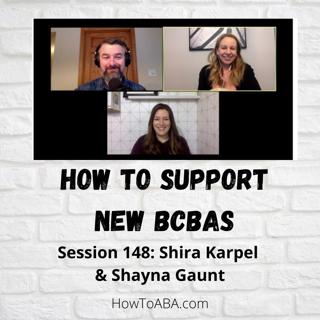
How to Support New BCBAs: Session 148 with Shira and Shayna from HowToABA.com
So the title of this show may be a bit of a misnomer. Let me explain... In Session 148, Shira Karpel and Shayna Gaunt, founders of HowToABA.com, join me to talk about one of my favorite topics: supporting the newly-minted BCBA. As you might know by now, that's very often my closing question of the podcast. In this episode however, we pretty much spent the entire time talking about strategies for helping early-career professionals succeed. So what is the misnomer all about? As it turns out, the advice that Shira and Shayna provided - on topics ranging from obtaining mentorship to setting professional boundaries - is helpful for BCBA's of all experience levels. Moreover, Shira and Shayna created HowToABA.com to provide materials and continuing education opportunities for BCBA's, as well as a supportive community of like-minded practitioners. And in this episode, they share their experiences and insight and address the following: Common challenges faced by newly-minted BCBA's (and how to address them). Common mistakes early-stage practitioners make. Strategies to establish professional boundaries. What practitioners are looking for in their Continuing Education. Why they started HowToABA.com. The ABA Forum that they're hosting. It's a virtual 3-night event where they bring together recognized speakers in the field who will share on different topics in Behavior Analysis - from supervision to ethics and social skills and everything in between. Again, despite the headline, there's something in this episode for everyone. Also, I want to note that we had some intermittent Zoom connectivity challenges, and Shira's audio flaked in and out in a few spots. I chose not to edit those segments out because I think she was still able to make her points known, and thankfully, we were able to resolve it as the show went on. Here are links to some of the things we discussed: The HowToABA.com homepage (and if you sign up for the BxResource, use code BOP to save 10%). The ABA Forum registration page. Surveys of the use (or lack thereof) Functional Analysis by practitioners (Oliver, Pratt, and Normand, 2015; Roscoe, et al., 2015). Great article about setting boundaries and avoiding burnout. And here's another perspective. Today's episode is brought to you by: The 2021 Virginia Association for Behavior Analysis Conference! This year's VABA conference is April 15th and 16th. While this will be a safe and socially-distanced in-person event, it will also be available online, so don't worry if you're not local to the Virginia area. If you do sign up for it, use the promo code, GOMBU - a nod to conference sponsor, Mary Baldwin University, to save at checkout. HRIC Recruiting. Barb Voss has been placing BCBAs in permanent positions throughout the US for just about a decade, and has been in the business more generally for 30 years. When you work with HRIC, you work directly with Barb, thereby accessing highly personalized service. So if you're about to graduate, you're looking for a change of pace, or you just want to know if the grass really is greener on the other side, head over to HRIColorado.com to schedule a confidential chat right away. Also, I'm throwing a 5-year anniversary sale for all BOP CEU events. Get 55% off all CEU events by using the promo code "fiveyears." This offer expires at the end of February, 2021. Don't need CEU's, but want to get ad-free podcasts, access to bonus content, member Q & A zooms, and more? Consider joining the BOP Patreon Group. For more info, check out patreon.com/behavioralobservations!
18 Helmi 202159min
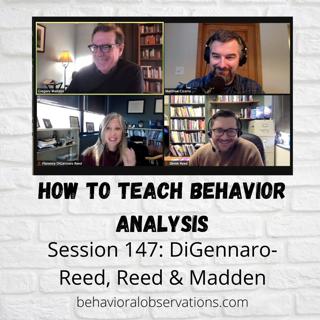
How To Teach Behavior Analysis: Session 147 with DiGennaro-Reed, Reed, and Madden
In this episode of Behavioral Observations, I chat with Drs. Florence DiGennaro-Reed, Derek Reed, and Gregory Madden. While we talked a bit about their new book, An Introduction to Behavior Analysis, we framed the discussion around the process of teaching itself, textbook notwithstanding. Before getting into the content itself, let me introduce our guests: Dr. DiGennaro-Reed is an Associate Professor in and Chairperson of the Department of Applied Behavioral Science at the University of Kansas where she directs the Performance Management Laboratory and Performance Management Center. Her research examines effective and efficient staff training and performance improvement practices. She also conducts translational research in on-campus laboratory facilities. Dr. Derek Reed is a familiar voice to long-time BOP listeners. He is, among other things, an Associate Professor in the Department of Applied Behavioral Science at the University of Kansas where he directs the Applied Behavioral Economics Laboratory. Dr. Gregory Madden teaches and conducts research at Utah State University. Here is an excerpt of his bio in his own words: "I am a Professor in the Department of Psychology. I teach PSY1400/1410, which is the introductory course in behavioral processes. Topics range from free will to interventions designed to treat depression and drug dependence. I also teach an upper-division course on applying behavior-change technology to workplace settings." It turns out that they've been working on this book for roughly six years. We talked about why they thought a new ABA text was necessary, what makes this book stand apart from other really good ones that are out there, and how they attacked the massive challenge that is the writing process itself. Along the way, we ended up getting into what makes for good university instruction, the need (perceived or otherwise) to "sell" students on Behavior Analysis, and lots of other interesting nuggets and tips for those who have the important task of teaching the next generation of behavior analysis students. As such, I think there are a lot of meta-lessons embedded in this episode that are relevant whether or not you teach this material. Here are the links for this episode: An Introduction to Behavior Analysis * (Madden, Reed, and DiGennaro-Reed, 2021). Studyblue.com (online flashcard maker that was referenced). A blog post explaining what Habit Stacking is, based on the book * by S.J. Scott. Derek Reed on Session 17 and Session 113 on the BOP. LeBlanc, Heinicke, and Baker (2012). Expanding the Consumer Base for Behavior-Analytic Services: Meeting the Needs of Consumers in the 21st Century. This podcast is brought to you with support from: If you want to study ABA and Positive Behavior Supports at a top-notch setting in Europe, then look no further than the Tizard Center at the University of Kent. Since 1986, they've been training professionals to support individuals with disabilities. Their primary focus has always been promoting values-based and ethical approaches to supporting people with intellectual and developmental disabilities. If you would like to learn more about ABA and PBS training on an international stage, check out www.tizard.org. Gateway Learning Group, and their Autism Leadership Academy. Designed for new Regional Directors, the Autism Leadership Academy develops motivated BCBAs into successful leaders in the autism field. If you're interested in running your own regional center and want to learn the skills to do so successfully, check out gatewaylg.com/BOP. Note: Immediate openings available in Texas. BCBAs across the U.S. are encouraged to apply! Behavior University. Their mission is to provide university quality professional development for the busy Behavior Analyst. Learn about their CEU offerings, including their brand new 8-hour Supervision Course, as well as their RBT offerings over at behavioruniversity.com/observations. Consider joining the BOP Patreon. Patreon members get early access to podcasts, bonus podcast material, discounts on CEU events from FTF and other continuing ed purveyors, occasional Zoom hangouts, and more!
10 Helmi 20211h 14min
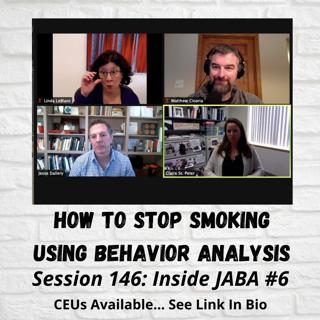
Inside JABA #6: How to Stop Smoking Using Behavior Analysis
In the sixth edition of the Inside JABA Series, I'm joined by Inside JABA regulars Drs. Linda LeBlanc and Claire St. Peter, as well as Dr. Jesse Dallery, to talk about the paper he and his colleagues published in the latest issue of the Journal of Applied Behavior Analysis. This paper fits nicely in JABA's ongoing series on Public Health and Telehealth, and is a great example of the potential for Behavior Analysis to be used for so much more than the type of work many BCBAs are doing currently. As Linda states during the show, "public health is all around us," and that public health challenges, at the end of the day, are behavioral in nature. As an aside, if you're not currently subscribed to JABA, you can do so here. Here are some of the topics we discussed: The current scope of cigarette smoking in the United States. How cigarette smoking occurs disproportionately in individuals of lower socio-economic status. Previous research in the contingency management (CM) of cigarette smoking. The logistical challenges of previous work in CM. How Jesse and his research team addressed these challenges in the current study by developing a mobile system of carbon monoxide sampling. The relationship between the literatures of CM and Delay Discounting, and more generally, Behavioral Economics (I couldn't' help myself from butting in and asking a few questions about this). Here are the links to papers, podcasts, apps, and other resources we talked about: mMotiv8: A smartphone-based contingency management intervention to promote smoking cessation. Dallery, Stinson, Bolivar, Modave, Salloum, Mendoza Viamontes, and Rohilla (2020). Quitbet (smoking cessation app). Smokefree.gov (smoking cessation resources from the US Federal Government). Jesse's homepage at the University of Florida. Previous episodes discussing Behavioral Economics: Session 11 (Dr. Erin Rasmussen), Session 17 & Session 113 (Dr. Derek Reed), and Session 99 (Dr. David Cox). New Evidence That Cigarette Smoking Remains the Most Important Health Hazard (Schroeder, 2013). As with previous Inside JABA Series Podcasts, this one is eligible for BACB approved Continuing Education, click here to learn more! While we're on the topic of CEUs, allow me to suggest subscribing to the Behavioral Observations' Patreon page, where enrolled patrons get access to discounts in the BOP CEU store, as well as other purveyors of behavior analytic training. To learn more, head over to patreon.com/behavioralobservations!
1 Helmi 20211h 9min
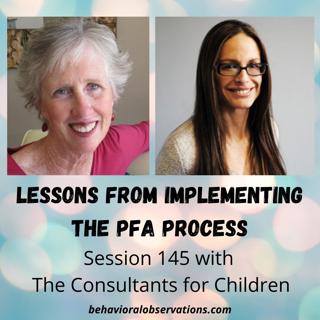
Lessons from Implementing the PFA Process: Session 145 with The Consultants for Children
In Session 145, I speak with Deidre Sturm and Anne Denning from The Consultants for Children, an agency that supports individuals with ASD based out of Colorado. Together, Anne and Deidre tell the story of how they completely revamped their agency's approach to supporting individuals with problem behavior. After not seeing much success with their existing functional assessment practices, they dove deep into the work of Dr. Greg Hanley and his colleagues. After taking all the online professional development that's available on the IISCA or PFA approach, Deidre and Anne, along with the rest of their colleagues at The Consultants for Children, began slowly rolling out this process on an agency-wide basis. During this conversation, we cover how they got started, what they've learned from implementing these procedures "in the real world" – especially in the context of telehealth – and lots more. Here are the links to the resources we discuss: FTF Behavioral Consultants' online course library (Patron discount available!). Greg's companion website, Practical Functional Assessment. The IISCA App. Cusp Emergence University (Dr. Camille Kolu's online training resources for Trauma Informed Care). CEU's from The Behavioral Observation Podcast (Patron discount available!). Greg Hanley's appearances on the BOP. Camille Kolu's appearance on the BOP. WYZE Indoor Cameras (Amazon associate link). Children's Habilitation Rehabilitation Program Waiver (CHRP; State of Colorado). As an aside, an ad-free version show has already been shared with members of my Patreon group, which you can learn more about at patreon.com/behavioralobservations. Also, if you're a member of the All-Access Patron Tier or above, you have access to 20% discount codes to FTF's online trainings. There are more benefits available too, but this one alone is literally worth the cost on its own. Session 145 is also brought to you with support from: Gateway Learning Group, and their Autism Leadership Academy. Designed for new Regional Directors, the Autism Leadership Academy develops motivated BCBAs into successful leaders in the autism field. If you're interested in running your own regional center and want to learn the skills to do so successfully, check out gatewaylg.com/BOP. Note: Immediate openings available in Texas. BCBAs across the U.S. are encouraged to apply! HRIC Recruiting. Barb Voss has been placing BCBAs in permanent positions throughout the US for just about a decade, and has been in the business more generally for 30 years. When you work with HRIC, you work directly with Barb, thereby accessing highly personalized service. So if you're about to graduate, you're looking for a change of pace, or you just want to know if the grass really is greener on the other side, head over to HRIColorado.com to schedule a confidential chat right away.
21 Tammi 20211h 7min
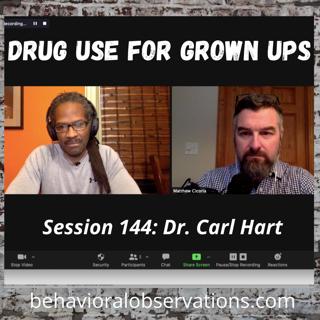
Drug Use for Grown Ups: Session 144 with Carl Hart
I've been wanting to interview Dr. Carl Hart ever since I first heard him speak at the 2015 Mass ABA conference. Put differently, when asked who would be a 'bucket list' interview, Carl Hart was usually the first name that I answered with. Ever since learning about Carl's work, I've admired his ability and willingness to advance science-based arguments in the popular press media. If this is your first time hearing his name, let me share a little of his background information. Carl is the Ziff Professor of Psychology at Columbia University, where he's been researching the behavioral and neuropharmacological effects of psychoactive drugs in humans for nearly 20 years. Carl's research, along with his personal experience and observations, has shaped an honest and refreshing point of view as to how society treats the behavior of drug taking, and what we need to do in terms of changing public policies in this area. Even if you disagree with his main thesis, I encourage you to listen all the way through our interview. Personally, I have my own homework to do in terms of thinking through whether the full legalization of all classes of drugs is a good idea, but I think in general, it's good to challenge our assumptions and views, even if only periodically. One of the other things that I like about Carl is that he has been successful in communicating complex and nuanced scientific findings in the area of mass media. He's been featured in the op-ed pages of major newspapers and on network television. Carl has also been a guest on The Joe Rogan Experience, which is, by audience standards, very likely the largest podcast out there right now. Even more impressive though is how Carl has taken the time to share his views in popular press books. His first book, High Price, was a New York Times bestseller, and I have no doubt that Drug Use for Grown Ups will meet or exceed the success of it. Long story short, I think there are lessons for dissemination we can all learn from him. Here are the links to the various sources we mentioned: Carl's latest book, Drug Use for Grown Ups: Chasing Liberty in the Land of Fear. His debut book, High Price: A Neuroscientist's Journey of Self-Discovery that Challenges Everything You Know About Drugs and Society. The Declaration of Independence. The Harrison Narcotics Tax Act of 1914. Carl's website. Carl's Twitter. Carl's appearances on the JRE. The difference between a Coroner and Medical Examiner. Today's episode is brought to you with the generous support of the following: Behavior University. Their mission is to provide university quality professional development for the busy Behavior Analyst. Learn about their CEU offerings, including their brand new 8-hour Supervision Course, as well as their RBT offerings over at behavioruniversity.com/observations. How-to-ABA. Being a BCBA can be lonely and overwhelming. At howtoaba.com, we help BCBA's feel supported and confident by providing easy to access printables, CEU's and a collaborative community. Also, your monthly pro membership includes access to CEU's! Along with the community of over 1000 ABA professionals, howtoaba.com will help you save time, feel confident and master what you love! For more information, Go to howtoaba.com/joinbxresource. When you join today and use code BOP, you'll receive 10% off a yearly subscription (includes CEU's!). The long-awaited Behavioral Observations Patreon. For the last few years, I've run a private membership group on my website, and I'm excited to announce that I'm transitioning this over to the Patreon platform. There are several different options based on your needs and budget, so if you're interested in getting awesome discounts for professional development from Greg Hanley's company, FTF, accessing an ad-free podcast, listening to bonus patrons-only content, and more, head over to patreon.com/behavioralobservations.
12 Tammi 20211h 1min