
32: NH ABA 2017 Speakers, Hanley, Sundberg and More!
Today's show is a little different than they typical episode. On September 30th, 2017, the New Hampshire Association for Behavior Analysis will be hosting its 3rd annual conference (tickets are available here). In order to promote this event, and more generally, highlight the great work that NH ABA does, I put together a sequence of five mini-interviews with all of the conference speakers. This year's line-up is great. We will feature a Keynote address from Dr. Greg Hanley, and a closing Distinguished Speaker presentation from Dr. Mark Sundberg. Between these talks, we'll hear from Dr. Derek Reed, Caitlin Kirkwood, and Michael Miklos. In this episode, you'll hear about what they will talk about, but you can also click here to access the conference brochure. The conference is a fantastic value. The early-bird price of $99 gets you 6.5 CEU's, a buffet lunch (yes, there is a free lunch), and opportunities to meet and network with fellow behavior analysts. The early bird price is available through August 31st, but if I had to guess, the event is going to sell out prior to that. As such, if you're considering attending, I recommend picking up your tickets right away. Click here to access the online portal to make that happen. In this episode, I've asked each speaker to recommend readings, websites, and other resources to check out. Here are those references in the approximate order in which they are mentioned in the episode. From Greg's interview: www.practicalfunctionalassessment.com Slayton, Hanley, & Raftery 2017 From Derek's: Some random podcast episode Derek's tutorial video on the SQAB YouTube channel The Behavior Analysis in Practice tutorial article From Mike's: www.pattan.net From Caitlin's: Addison, et al., 2012 Peterson, et al., 2016 The SOS approach to feeding From Mark's: The Verbal Behavior Approach, by Session 12 guest, Dr. Mary Lynch Barbera Jumpstarting Communication Skills in Children with Autism, by Dr. Mary Jane Weiss The Analysis of Verbal Behavior Special Issue on the Intraverbal Thirty Points About Motivation from Skinner's Book Verbal Behavior
10 Elo 20171h 7min
31: Pat McGreevy Discusses Teaching Functional Skills
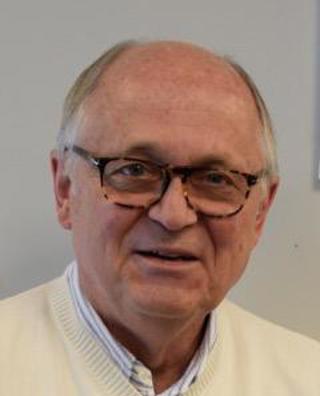
Session 31 features a guest who has been requested by listeners numerous times since the start of this podcast, and that is none other than Dr. Pat McGreevy. As I explain in the episode, Pat and I have been talking on and off about doing a show for over a year now, and I'm really glad we finally had an opportunity to record this discussion. What exactly did we talk about? Well, Pat describes how he got into the field, and more interestingly, what the field was like in the early 1970's. He discusses his graduate training with Dr. Ogden Lindsley, the use of the Standard Celeration Chart, and when to shift gears from teaching verbal operants to functional skills. Pat also shares his views methodological and practice-level issues in our field. Finally, a conversation with Pat would be incomplete without discussing the curriculum he developed, Essential for Living. He discusses why he wrote the curriculum in the first place, and helped me understand how to get started with it. Here is his bio from the website: Dr. McGreevy received B.S. and M.A. degrees in Psychology and Special Education, respectively, from the University of Iowa. He was a special education teacher for eight years, working with children and young adults with moderate-to-severe developmental disabilities. He received the Ph.D. degree in Education from Kansas University under the guidance of Ogden R. Lindsley. Dr. McGreevy served on the Special Education faculties of the University of Missouri Kansas City, and Louisiana State University. He also served on the faculty of the Behavior Analysis Program at the Florida Institute of Technology. He is the author of Teaching and Learning in Plain English, an introduction to Precision Teaching, and the founder of the Journal of Precision Teaching and Standard Celeration Charting. He is also the author of ten journal articles and a book chapter on teaching verbal behavior. He is the first author of Essential for Living, a new functional skills curriculum, assessment, and professional practitioner's handbook for children and adults with moderate-to-severe disabilities. For the past 30 years, Dr. McGreevy has provided consultations for children and adults with developmental disabilities in school districts, residential programs, and hospitals, specializing in the treatment of aggressive and self-injurious behavior in individuals with limited communication or language skills. Under the guidance of Dr. Jack Michael, Dr. McGreevy has also conducted workshops on teaching communication skills and language in the context of severe problem behavior, which are based on B. F. Skinner's analysis of verbal behavior. This podcast is sponsored by Britton Behavioral Consulting. Dr. Lisa Britton provides affordable, high quality, independent fieldwork supervision for aspiring BCBA's. Group and independent supervision sessions are available. For more information, click here to reach out to Lisa.
30 Heinä 20171h 17min
30: A Conversation with Aubrey Daniels
It's not everyday that one gets a chance to chat with someone with decades of experience in Behavior Analysis. It is equally rare to do so with someone who helped pioneer the field of Organizational Behavior Management. That's why I'm so excited to share this conversation with none other than Dr. Aubrey Daniels. Before I started this podcast, I drew up a list of potential guests. Aubrey was one of those people at the top of the list, though I doubted that he would have time for such a fledgling outlet like The Behavioral Observations Podcast. However my aspirations recently turned into reality a few weeks ago when Aubrey and I sat down to record this conversation. In this interview we cover the following: How Aubrey first got into the field, and what the Behavior Analysis scene was like at that time. How he pivoted from a career in the mental health setting to working with organizations. How to sell behavioral solutions to potential customers. The application of behavioral principles in regular education settings. Advice for practitioners who want to get into the OBM field. General advice for newly minted BCBA's. We also spend quite a bit of time discussing listener-submitted questions. For more information about Aubrey, check out the homepage of Aubrey Daniels International here. If you're not familiar with Aubrey, here is a short bio: Aubrey Daniels, a thought leader and internationally recognized expert on management, leadership, safety and workplace issues, is considered an authority on human behavior in the workplace. As founder and chairman of the board of directors of his consulting firm, Aubrey Daniels International, he and his staff help organizations employ the timeless principles of behavioral science to re-energize the workplace, optimize performance and achieve lasting results. Aubrey actively blogs about performance systems, workplace safety and management issues and is frequently interviewed for major media outlets. In addition to being a highly sought after keynote speaker at major association, conference and educational events, Aubrey is the author of six best-selling books widely recognized as international management classics: Bringing out the Best in People: How to Apply the Astonishing Power of Positive Reinforcement; Performance Management: Changing Behavior That Drives Organizational Effectiveness, Other People's Habits, Measure of a Leader, Oops! 13 Management Practices that Waste Time and Money (and what to do instead), and Safe by Accident?His books have been translated into Japanese, Chinese, Korean, Spanish and French and have been licensed in China, India, Indonesia, Japan, Korea, Romania and Saudi Arabia. This podcast is sponsored by Britton Behavioral Consulting. Dr. Lisa Britton provides affordable, high quality, independent fieldwork supervision for aspiring BCBA's. Group and independent supervision sessions are available. For more information, click here to reach out to Lisa.
19 Heinä 20171h 27min
29: Supervision Best Practices with Lisa Britton
If you caught the last few episodes of the podcast, you've heard me talk about our new sponsor, Britton Behavioral Consulting. This is where Dr. Lisa Britton, BCBA-D provides high quality Independent Fieldwork Supervision for individuals seeking board certification. Lisa has been a Behavior Analyst for almost two decades, and given the important role that supervision has in our field, I thought it would be a good idea to have her on to discuss best practices in this area. In this episode, we talk about the following: How Lisa got into the field of ABA What questions you need to ask yourself if you're considering offering supervision as a service What a supervisee should look for in a supervisor How to embed Behavior Skills Training into the supervision process Specific tools she uses to conduct remote supervision sessions If you are looking for supervision, or if you simply have questions about the process, head over to www.brittonbehavioralconsulting.com and reach out to Lisa. During our conversation, we talked a lot about pieces of software, specific trainings, and other nitty-gritty details. I have attempted to provide links to most of the topics we covered below. Links to remote supervision software: https://www.gotomeeting.com/ https://www.gotomeeting.com/training The bSci21.org training that Lisa mentioned (about having difficult conversations) http://www.bsci21.org/courses/conversations-that-drive-performance-empowering-employees-with-behavior-science-1-bacb-ceu/ Intro to special edition of Behavior Analysis in Practice on supervision https://www.ncbi.nlm.nih.gov/pmc/articles/PMC5118263/ Overview of Behavioral Skills Training, again, in Behavior Analysis in Practice https://www.ncbi.nlm.nih.gov/pmc/articles/PMC3592486/
21 Kesä 20171h 4min

28: Molly Ola Pinney from the Global Autism Project
In Session 28 of The Behavioral Observations Podcast, Molly Ola Pinney joins me to talk about The Global Autism Project, an organization she started in 2003. In brief, The Global Autism Project trains teachers to work with children with Autism globally. The organization began this initiative in Africa, but has now branched out to helping people in this way to Central America, India, and beyond. In this episode, we talk about how the organization was founded, what it's like to support teams remotely, and how exactly they carry out this mission today. Molly closes the interview by encouraging practitioners (or basically anyone listening to the show) to consider saying, "yes," to new opportunities, even when they may be a little apprehensive about doing so. This episode is sponsored by Britton Behavioral Consulting. Dr. Lisa Britton, BCBA-D specializes in providing high quality independent fieldwork supervision to aspiring BCBA's. For more information on her services, please check out her website here. Finally, if you are looking for BACB Type 2 Continuing Education, look no further (well, there are only 5.5 units available, so technically, you will have to look further, but you get the ideal…). Click here to find out about how you can earn CE's for listening to selected podcast episodes.
8 Kesä 201758min
27: Adel Najdowski talks Executive Functioning
In Session 27 of The Behavioral Observations Podcast, I chat with Dr. Adel Najdowski, BCBA-D about teaching Executive Functioning skills to individuals with Autism and Attention difficulties. Adel is the author of a new book on this subject, Flexible and Focused, and we discuss the idea of Behavior Analysts delving into the realm of more mainstream psychological and educational constructs, and more pragmatically, how to conceptualize things like EF into more manageable and teachable responses. The book is available on Amazon, and it will also be at the ABAI 2017 Bookstore, which is where I'll probably pick my copy up. This episode is sponsored by Britton Behavioral Consulting. Dr. Lisa Britton specializes in providing high quality independent fieldwork supervision to aspiring BCBA's. For more information on her services, please check out her website here.
25 Touko 201751min
26: Wendy Machalicek talks Telemedicine
I sometimes joke around with folks that we Behavior Analysts are perhaps the only people who think nothing of driving one hour to do two hours of work. While that's a little bit of an exaggeration, I find that it's not entirely off the mark either. Obviously there are only so many hours in the day, and from both a clinical and financial perspective, these practices lead to a lot of waste. What if there was a way to leverage existing technologies to reduce travel-related barriers to providing clinical services? Well, it turns out that the answer to this question already exists, and other helping professions have been using technology to both expand services and operate more efficiently. In episode 26 of The Behavioral Observations Podcast, I chat with Dr. Wendy Machalicek, BCBA-D, who is an Associate Professor of Special Education at The University of Oregon, about using technology to provide behavior analytic services to families in rural areas. This practice goes by a few different names, but is often referred to as Telemedicine or Telehealth. Wendy discusses some of her research in this area as well as walks us through how to conceptualize the use of technology in our own work. So does that mean you can fire up Skype and start consulting with clients? Not so fast… as I learned from this conversation there are tons of technical and ethical details that have the potential to be inadvertently overlooked, including things like encryption of data, consent/assent in terms of working with adults, privacy/confidentiality of anyone who can view/hear the client-analyst exchanges, etc... Wendy also the behavior-analytic, "scene," in Oregon and provided some helpful advice for newbies to the field (though I found her thoughts helpful for older practitioners like myself too!). We covered a lot in this episode, so here are some links of the things that were mentioned: • VSee HIPAA compliant video conferencing software • Bluetooth headsets • External web cameras • Swivl remote camera gear • The American Telemedicine Association • The APA Guidelines for practice re: Telehealth Speaking of making life more convenient, if you're on the road a lot but need Continuing Education, check out the CE page. That's right, you can now earn BACB Type 2 CE's by listening to selected podcasts, and answering a few questions. Right now CE credits are available for topics such as Functional Assessment and Function-Based Interventions, The Ethics of Self-Care, and Behavioral Economics. Again, visit the CE page for more details.
14 Touko 20171h
25: Jim Carr on the State of the Practice
I'm going to be honest with you here. This interview could have gone on for over two hours. To summarize, Jim Carr and I had a super fun conversation about the current state of the behavior analysis profession, what it was like when generation X-ers like us came into the field, what worries him about how the field is developing, and conversely, what areas of development is he most excited about. If you're interested in a past, present, and future perspective on the practice of Applied Behavior Analysis, this is the show for you. We also unexpectedly touch on some other topics such as the behavioral treatment of tic disorders and the "green book" from back-in-the-day that listed the then-severely limited graduate programs in behavior analysis (and if anyone has this book, please, at the very least, email me a picture of it!). Jim also goes over his professional journey in some detail, but here is the official bio that I've taken directly from the BACB website: Dr. Jim Carr is the Chief Executive Officer of the Behavior Analyst Certification Board. His professional interests include behavior analyst credentialing, behavioral assessment and treatment of developmental disabilities, verbal behavior, and practitioner training. Dr. Carr has published over 150 journal articles and book chapters on these and other topics. Dr. Carr is a Fellow of the Association for Behavior Analysis International. He is the editor-in-chief of the journal The Analysis of Verbal Behavior and has served on the editorial boards of 10 other behavior analysis journals, including 4 appointments as associate editor. Dr. Carr is the president of the Colorado Association for Behavior Analysis and past president of the Mid-American and Alabama Associations for Behavior Analysis. He received his doctorate in 1996 from Florida State University under the mentorship of Dr. Jon Bailey and previously served on the behavior analysis faculties at University of Nevada-Reno (1996-1999), Western Michigan University (1999-2008), and Auburn University (2008-2011). On a housekeeping note, the podcast is now available on Google Play, so if you are an Android user and don't want to download 3rd party apps like Stitcher Radio, click here, and you'll be good to go.
25 Huhti 20171h 20min