Hurricane Erin Update & Rapid Intensification Explained

Hurricane Erin Update & Rapid Intensification Explained

Got something to say to this podcast? Send a voicemail, and you might hear yourself on the next episode!

August 17, 1025: Hurricane Erin, recently a Category 5 storm, underwent one of the fastest intensifications ever observed, reaching the second lowest pressure ever recorded for an August hurricane after Hurricane Allen in 1980. While the storm is fortunate to be on a path that avoids direct land impact, its powerful energy will still significantly affect coastal areas.

Key Facts about Hurricane Erin:

  • Intensification & Current Status: Erin rapidly intensified to a Category 5, then weakened to a Category 3 due to an "eyewall replacement cycle" which expanded its size. It is forecast to intensify again as it moves north, east of the Bahamas, and will continue to grow in circulation diameter.
  • Offshore Track: The storm is tracking west 150 miles offshore of Puerto Rico, will turn north before reaching the Bahamas, and will pass between North Carolina and Bermuda before heading out to sea. This path is "extremely fortunate" in avoiding direct land impact.
  • Widespread Coastal Impacts: Despite being offshore, Erin will put "a tremendous amount of energy into the ocean," affecting all coastlines from the Caribbean to Canada, including the Bahamas and the U.S. East Coast.
  • Wave & Current Impacts: A larger diameter storm "will move more water and make stronger currents that impact the coast." Beach conditions will be affected in Florida and the Southeast on Tuesday, peaking in the Mid-Atlantic and New England on Wednesday and Thursday.
  • Rip Current Warning: Florida, particularly from Palm Beach County north to the Georgia border, will experience noticeable effects, including the "possibility of rip currents." The rule for rip currents is to "swim parallel to the beach."
  • Fringe Winds: Eastern North Carolina, the Virginia Tidewater, and the Delmarva Peninsula are most likely to experience "fringe effects from Erin’s winds about Wednesday," though "nothing severe is expected."
  • Next African System: Computer models show a disturbance in the eastern Atlantic potentially developing into a "disruptive system" approaching the Caribbean islands by late week.
  • Key Themes and Facts on Rapid Intensification:
  • Definition of Rapid Intensification: The National Hurricane Center defines rapid intensification (RI) as an increase in wind speed by 35 mph (46 kph) in 24 hours.
  • Doubling of Extreme Intensification: In the last 20 years (2001-2020), 8.1% of Atlantic tropical cyclones intensified from a Category 1 or weaker to a major hurricane (Category 3 or greater) within 24 hours. This rate was only 3.2% from 1971 to 1990. For a 36-hour window, the likelihood has "more than doubled" in the modern era (10.3%) compared to the historical era (4.23%).
  • Role of Ocean Warming:Primary Fuel: "With warmer oceans serving as fuel, Atlantic hurricanes are now more than twice as likely as before to rapidly intensify..." Oceans "have been setting heat records monthly since April" with "90% of the excess warming that humans have caused to the planet going into our oceans."
  • Scientific Consensus: "As anthropogenic emissions have warmed the planet, the world's oceans have warmed at the surface, where average temperatures have increased ~0.88 °C from 1850–1900 to 2011–2020. The rate at which ocean surfaces have warmed has also accelerated, with 0.60 °C of this warming occurring since 1980." This "simultaneous increases in both extreme SSTs and maximum TC intensification rates suggests that human-caused warming has already had a measurable impact on the speed with which TCs strengthen."

Tämä jakso on lisätty Podme-palveluun avoimen RSS-syötteen kautta eikä se ole Podmen omaa tuotantoa. Siksi jakso saattaa sisältää mainontaa.

Jaksot(265)

Hurricane Isaias: The AI Forecast Breakthrough and the Unexpected Winds

Hurricane Isaias: The AI Forecast Breakthrough and the Unexpected Winds

Got something to say to this podcast? Send a voicemail, and you might hear yourself on the next episode!Hurricane Isaias delivered one of the most fascinating forecasting challenges of the 2026 Atlant...

16 Loka 37min

Italy Changed the Weather Forecast

Italy Changed the Weather Forecast

Got something to say to this podcast? Send a voicemail, and you might hear yourself on the next episode!Before satellites, radar, and computer models, Italian scientists were helping transform how hum...

12 Loka 40min
Hurricane Isaias: What to Do When It’s Almost Too Late

Hurricane Isaias: What to Do When It’s Almost Too Late

Got something to say to this podcast? Send a voicemail, and you might hear yourself on the next episode!Hurricane Isaias has reached Category 3 strength with sustained winds of 120 mph, and time is ru...

9 Loka 53min
Hurricane Isaias, California’s Tropical Threat and the El Niño Paradox

Hurricane Isaias, California’s Tropical Threat and the El Niño Paradox

Got something to say to this podcast? Send a voicemail, and you might hear yourself on the next episode!The Atlantic has experienced one of the strangest hurricane seasons in modern history. Now Hurri...

8 Loka 40min
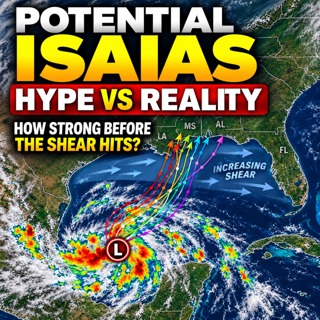
Potential Isaias: Gulf Hurricane Hype vs. Reality

Potential Isaias: Gulf Hurricane Hype vs. Reality

Got something to say to this podcast? Send a voicemail, and you might hear yourself on the next episode!A tropical cyclone is increasingly likely to form in the Gulf of Mexico, and if it becomes the n...

6 Loka 36min
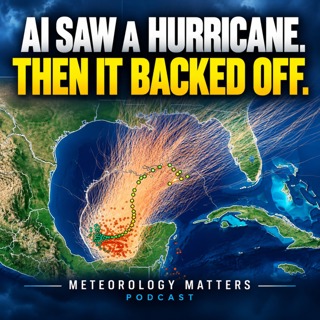
AI Saw a Hurricane. Then It Backed Off. What Changed?

AI Saw a Hurricane. Then It Backed Off. What Changed?

Got something to say to this podcast? Send a voicemail, and you might hear yourself on the next episode!One of the world’s most advanced AI hurricane models saw a growing tropical threat in the Bay of...

3 Loka 29min

Can Faith Change Minds About Climate Change? Religion vs. Science

Can Faith Change Minds About Climate Change? Religion vs. Science

Got something to say to this podcast? Send a voicemail, and you might hear yourself on the next episode!Can religious faith change how people understand climate change? And can religious beliefs succe...

2 Loka 30min
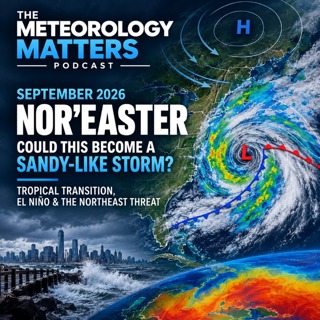
September 2026 Nor’easter: Could This Become a Sandy-Like Storm?

September 2026 Nor’easter: Could This Become a Sandy-Like Storm?

Got something to say to this podcast? Send a voicemail, and you might hear yourself on the next episode!A powerful early-season nor’easter is developing off the U.S. East Coast, with the Northeast fac...

24 Syys 45min

Suosittua kategoriassa Politiikka ja uutiset

uutiscast
vallattomat
aikalisa
politiikan-puskaradio
rss-viihde-media
ootsa-kuullut-tasta-2
rss-ootsa-kuullut-tasta
rss-vaalirankkurit-podcast
otetaan-yhdet
tervo-halme
rss-voi-venaja
rss-raha-talous-ja-politiikka
rss-podme-livebox
the-ulkopolitist
rss-asiastudio
rss-ulkopoditiikkaa
rss-polikulaari-pitka-kiekko-ja-muut-ts-podcastit
rss-girls-finish-f1rst
rss-suoraan-asiaan
75