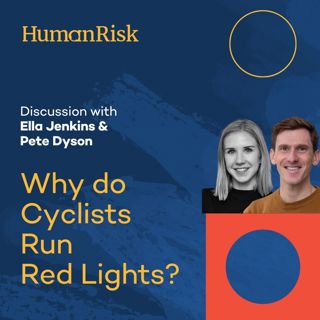
Ella Jenkins & Pete Dyson on Why Do Cyclists Run Red Lights?

Ella Jenkins & Pete Dyson on Why Do Cyclists Run Red Lights?

Why do cyclists in London run red lights? It's against the law, and yet, if you've cycled, driven or just observed London's cyclists, you'll know that many of them don't stop when there's a red light.

Confession time: I'm one of them. Not all the time, but some of the time, and weirdly not when I'm in Munich — the other city I live in — but only in London.

The question of why this happens — not just my red light running, but the act in general — is the subject of this episode. Because I think this seemingly simple act can reveal so much about our compliance with rules, our perception of risk, and the way environments shape behaviour.

To unpack these insights, I’m joined by Ella Jenkins, Associate Director at Thinks Insight, and Pete Dyson, a behavioural science researcher at the University of Bath and co-author of Transport for Humans. They've been part of a research team on a study commissioned by Lime, the electric bike and scooter company, which explores why cyclists in London behave the way they do.

What we discover isn’t about recklessness—it’s about confidence, social signalling, poor infrastructure, and the surprising psychology of compliance. In our conversation, we examine the drivers of red-light running, the effectiveness of different interventions, and what this means for broader behaviour change.

Whether you’re a policymaker, a cyclist, or simply someone curious about how our minds and cities interact, this episode offers practical insights into one of the most visible — and misunderstood — forms of everyday noncompliance.

Guest Biographies
Ella Jenkins is an Associate Director at Thinks Insight, a strategy and research consultancy that helps clients understand human behaviour and deliver change. She led the research project commissioned by Lime to understand why cyclists in London run red lights. With a background in behavioural science and a passion for applying insights in real-world contexts, Ella brings both analytical rigour and empathy to her work.

Pete Dyson is a behavioural science researcher at the University of Bath, where he focuses on transport systems and human behaviour. He is the co-author with Rory Sutherland of the influential book Transport for Humans: Are we nearly there yet? and previously served as the Principal Behavioural Scientist at the UK Department for Transport. He's also the current Cycling Mayor for the UK City of Bath.

Pete blends practical policymaking experience with a deep understanding of the behavioural levers that shape how we move through the world.

AI-Generated Timestamped Summary
[00:00:00] Introduction and personal confession about red-light running
[00:01:15] Overview of the Lime-commissioned research
[00:03:20] Introducing Ella Jenkins and Pete Dyson
[00:05:45] The origins and goals of the study
[00:09:05] Red-light running as a defensive rather than reckless behaviour
[00:12:08] Confidence and frequency of cycling linked to rule-breaking
[00:13:14] Perceptions versus reality of who breaks the rules
[00:16:32] The role of infrastructure and signal phasing
[00:18:54] Social norms and peer influence on cyclist behaviour
[00:21:46] Trust in the rules versus lived reality
[00:24:20] Designing for behavioural cues
[00:28:15] Comparison with other cities like Munich
[00:30:58] The emotional context of cycling
[00:34:46] Enforcement and views on potential interventions
[00:38:12] Habit formation and unintended nudges
[00:41:23] The interplay between education and empathy
[00:46:49] Final reflections and Christian's closing thoughts

Links
Ella on LinkedIn:
https://www.linkedin.com/in/ella-jenkins/

Pete on LinkedIn: https://www.linkedin.com/in/pete-dyson-9ba5301b/

What drives red light running in London cyclists?
, the research we discuss: https://fileserver.britainthinks.com/dl/wH4CcDyRg8bV

Thinks Insight: https://www.thinksinsight.com/

Lime Bikes: https://www.li.me/en-gb

Transport for Humans: https://www.transportforhumans.com/

Pete's previous appearance on the show talking about Transport for Humans: https://www.humanriskpodcast.com/pete-dyson-on-making-transport-more-human/

The announcement of Pete as Cycling Mayor of Bath: https://www.bath.ac.uk/announcements/the-bicycle-mayor-of-bath-pete-dyson/


Tämä jakso on lisätty Podme-palveluun avoimen RSS-syötteen kautta eikä se ole Podmen omaa tuotantoa. Siksi jakso saattaa sisältää mainontaa.

Jaksot(368)

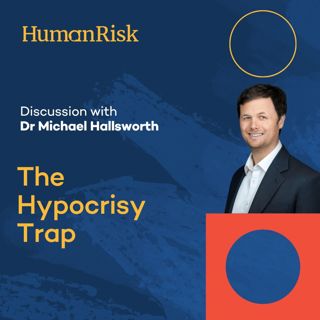
Dr Michael Hallsworth on The Hypocrisy Trap

Dr Michael Hallsworth on The Hypocrisy Trap

We all intuitively know that hypocrisy is a bad thing. But what if it isn’t a flaw, but a feature? But maybe the real problem isn’t hypocrisy, it’s how we think about it.Episode SummaryOn this episode...

16 Marras 202558min
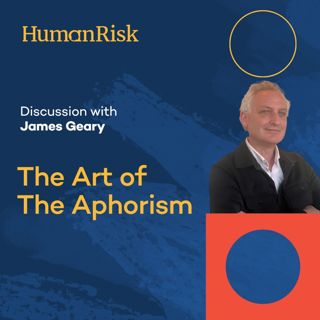
James Geary on The Art of The Aphorism

James Geary on The Art of The Aphorism

Can a single sentence change the way you see the world? My guest on this episode, James Geary thinks so.Episode SummaryOn this episode, I speak with writer and journalist James, whose lifelong fascina...

9 Marras 20251h 4min
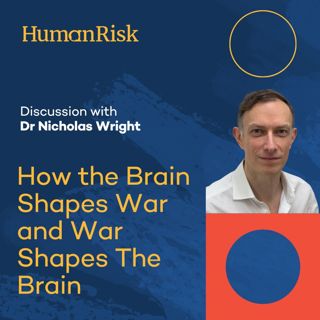
Dr Nicholas Wright on How the Brain Shapes War and War Shapes The Brain

Dr Nicholas Wright on How the Brain Shapes War and War Shapes The Brain

What can war teach us about how the human brain really works? And why is human decision-making a more significant factor than military strength in wars?Episode SummaryOn this episode, I'm exploring ho...

1 Marras 20251h 2min
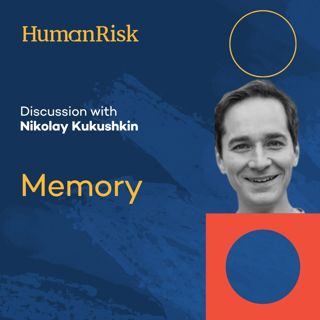
Dr Nikolay Kukushkin on Memory

Dr Nikolay Kukushkin on Memory

What if your body is learning things your mind doesn’t know? What if memory wasn't just something that our brain has?Episode Summary On this episode, I'm exploring a bold idea with neuroscientist Dr N...

25 Loka 20251h 6min
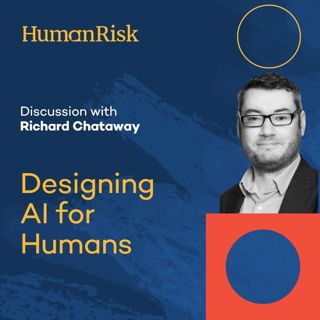
Richard Chataway on Designing AI for Humans

Richard Chataway on Designing AI for Humans

What if the biggest AI risk isn’t bias or data, but human behaviour itself? How might AI impact the people using it and what does that mean for how we design solutions and deploy the technology?Episod...

18 Loka 20251h 8min
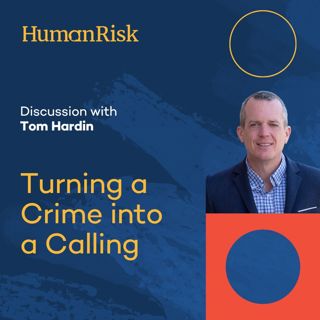
Tom Hardin On Turning A Crime Into A Calling

Tom Hardin On Turning A Crime Into A Calling

What happens when the worst thing you’ve ever done becomes the foundation for your life’s work?Episode SummaryMy guest on this episode is Tom Hardin, otherwise known as Tipper X.  He's been on the sho...

5 Loka 202555min
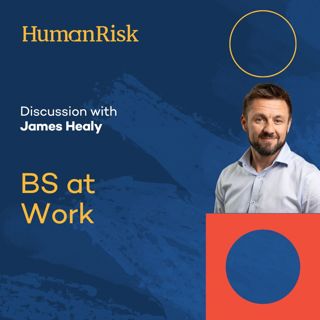
James Healy on BS at Work (Bullshit & Behavioural Science)

James Healy on BS at Work (Bullshit & Behavioural Science)

Why do so many workplaces run on bullshit processes and procedures?  And how might Behavioural Science help resolve them?Episode SummaryIn this episode, I sit down with author, speaker and advisor Jam...

27 Syys 20251h 4min
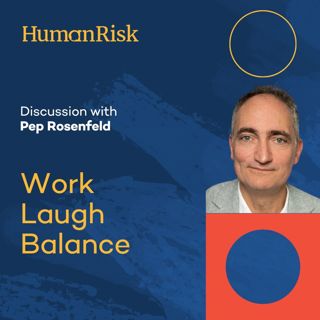
Pep Rosenfeld on Work Laugh Balance

Pep Rosenfeld on Work Laugh Balance

What if the most powerful tool at work isn’t logic, but laughter? On this episode I'm speaking to a comedian who far from thinking humour is a workplace distraction, thinks it might be one of our most...

6 Syys 20251h 3min

Suosittua kategoriassa Tiede

rss-poliisin-mieli
tiedekulma-podcast
rss-mita-tulisi-tietaa
docemilia
filocast-filosofian-perusteet
menologeja-tutkimusmatka-vaihdevuosiin
rss-duodecim-lehti
rss-tiedetta-vai-tarinaa
sotataidon-ytimessa
rss-lapsuuden-rakentajat-podcast
rss-lihavuudesta-podcast
utelias-mieli
radio-antro
rss-bios-podcast
rss-metsantuntijat-podcast
rss-luontopodi-samuel-glassar-tutkii-luonnon-ihmeita
rss-sosiopodi