Will Privatizing The Mortgage Giants Solve The Housing Crisis?
Capitalisn't4 Syys 2025

Will Privatizing The Mortgage Giants Solve The Housing Crisis?

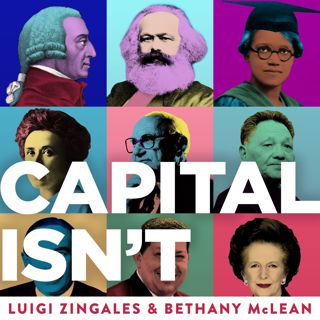
This week, the Trump administration announced it would sell around 5% of mortgage giants and government-sponsored enterprises (GSEs) Fannie Mae and Freddie Mac. The sale would begin to reintroduce the two firms to private markets after 17 years of government conservatorship. The decision to re-privatize two of the largest mortgage firms in the world, and a prominent reason why the United States is one of the only countries where people can get 30-year fixed-rate mortgages, will have enormous implications for the U.S. economy, housing market, and the American dream.

Fannie Mae was founded during the Great Depression with the idea of making mortgages more widely available to Americans by buying mortgage loans from banks. Freddie Mac came along in 1970 to provide competition and increase liquidity for mortgages. In part, Fannie and Freddie increased liquidity by repackaging their mortgages into mortgage-backed securities and reselling them to investors. In the early 2000s, the subprime mortgage crisis began as smaller, unregulated financial actors started offering risky mortgage loans and likewise repackaged them to investors. When the crisis imploded in 2008, it gutted the market for mortgage-backed securities, and the U.S. government seized Fannie and Freddie to prevent them from collapsing. The government feared that without Freddie and Fannie, many Americans would no longer be able to afford home ownership. Today, Fannie and Freddie still back roughly 50% of all mortgage loans, with other government agencies making up another chunk.

The Trump administration’s plans to take these GSEs public again will allow the two firms to raise billions through new stock offerings and shift risk back to the private sector. But the question is, why is the government doing this? Will it help fix the country’s housing crisis—which Trump has reportedly called a national emergency—or will it make matters worse? Bethany and Luigi get together to discuss what it would mean for Fannie and Freddie to go public, who benefits from these developments, and their implications for home loans, the housing market, and the American economy.

Also check out Bethany’s book, published in 2015: Shaky Ground: The Strange Saga of the U.S. Mortgage Giants


Hosted by Simplecast, an AdsWizz company. See pcm.adswizz.com for information about our collection and use of personal data for advertising.

Tämä jakso on lisätty Podme-palveluun avoimen RSS-syötteen kautta eikä se ole Podmen omaa tuotantoa. Siksi jakso saattaa sisältää mainontaa.

Jaksot(244)

Was Free Trade Ever Really Free? - ft. Fmr. Biden Trade Rep. Katherine Tai

Was Free Trade Ever Really Free? - ft. Fmr. Biden Trade Rep. Katherine Tai

Free trade was never actually free? That's the case Katherine Tai, Joe Biden's former U.S. Trade Representative, brings Bethany McLean and Luigi Zingales this week.  For decades, the economic consensu...

18 Kesä 51min

Why Corporations Always Win At The Supreme Court - ft. Adam Winkler

Why Corporations Always Win At The Supreme Court - ft. Adam Winkler

Corporations are people in the eyes of the law. But how did that happen, and why does it hand them rights you don't have?  UCLA law professor Adam Winkler, author of "We the Corporations", traces a 20...

4 Kesä 46min

You Can't Buy Trust - ft. Wikipedia Co-Founder Jimmy Wales

You Can't Buy Trust - ft. Wikipedia Co-Founder Jimmy Wales

How does a free, decentralized, volunteer-run encyclopedia produce something more trusted than nearly any for-profit institution? Luigi Zingales and Bethany McLean sit down with Wikipedia co-founder J...

28 Touko 43min

Is Healthcare Making Capitalism Sick? - ft. Zack Cooper

Is Healthcare Making Capitalism Sick? - ft. Zack Cooper

Are stagnant wages the hidden price tag of a broken healthcare system? On this week's Capitalisn't, Yale health economist Zack Cooper tells Bethany McLean and Luigi Zingales that the U.S. healthcare m...

21 Touko 1h

How “Muskism” Is Changing American Capitalism - ft. Quinn Slobodian

How “Muskism” Is Changing American Capitalism - ft. Quinn Slobodian

For the better part of the 20th century, the American economy relied on the steady social peace of "Fordism"—an era of mass production and consumption that helped reconcile capitalism with democracy. ...

7 Touko 55min

Is Capitalism Delivering For The Majority? - ft. Steve Kaplan

Is Capitalism Delivering For The Majority? - ft. Steve Kaplan

The US economy looks great on paper: high GDP, low unemployment, and booming markets. So why does it feel like the system is broken for so many people? To unpack the disconnect between macroeconomic d...

23 Huhti 1h 5min

Is The College Promise Broken? - ft. Noam Scheiber

Is The College Promise Broken? - ft. Noam Scheiber

For decades, Americans were promised that a college degree guaranteed a secure spot in the middle class. But instead of entering corporate management, many graduates are finding themselves trapped in ...

16 Huhti 41min

The Real Cause Of Wage Stagnation - ft. Arin Dube

The Real Cause Of Wage Stagnation - ft. Arin Dube

Economic models have treated the labor market like a perfectly competitive system where wages naturally align with worker value. Arin Dube, economics professor at the University of Massachusetts Amher...

2 Huhti 47min

Suosittua kategoriassa Liike-elämä ja talous

sijotuskasti
psykopodiaa-podcast
rss-rahapodi
mimmit-sijoittaa
rss-oivalluksia-rahasta-elamasta
herrasmieshakkerit
leadcast
rss-porssipuhetta
rss-inderes-femme
rss-yritys-ja-erehdys
vapauta-supervoimasi-podcast
rss-rahamania
asuntoasiaa-paivakirjat
rss-inderes
rss-porssipodi
ostan-asuntoja-podcast
yrittaja
hyva-paha-johtaminen
rss-perho-rajoilla
rss-viisas-raha-podi