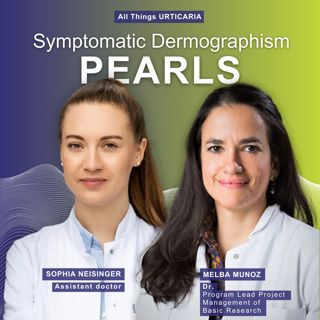
Living with SD: from Triggers to Future Therapies

Living with SD: from Triggers to Future Therapies

In this episode, Sophia Neisinger welcomes Dr. Melba Muñoz, head of the Chronic Inducible Urticaria Program in Berlin, to discuss symptomatic dermographism (SD), the most common form of inducible urticaria.


They discuss:

🔹 What exactly is symptomatic dermographism, and why is it so burdensome for patients?

🔹 How common is SD, and what did the latest international prevalence study reveal?

🔹 How can tools like the FricTest help diagnose and assess SD?

🔹 Which treatments are available today—and which exciting therapies are on the horizon?


Dr. Muñoz shares insights on the challenges SD patients face in daily life, the importance of proper diagnosis, and why new therapies in clinical trials may soon change the landscape of treatment. She also highlights the need for awareness among both physicians and patients to reduce diagnostic delays and improve care.

Join us for this engaging conversation on how better diagnostics, treatment options, and awareness can transform the lives of SD patients.


Key Learnings from the Episode

Definition: Symptomatic dermographism is a form of inducible urticaria where scratching or stroking on the skin leads to wheals, redness, and itch.

Prevalence: International data suggest approximately 4% of the population may be affected, making it surprisingly common.

Impact: Even daily activities like wearing clothes or combing hair can trigger symptoms, causing significant quality-of-life impairment.

Diagnosis: The FricTest is a standardized tool to diagnose and measure SD activity, more reliable than ad-hoc methods like using a pen.

Overlap: Around 30–40% of SD patients also present with chronic spontaneous urticaria (CSU).

Treatment today: Only antihistamines are licensed; omalizumab may be used off-label (or in-label if CSU is present).

Future therapies: Anti-KIT antibodies (barzolvolimab, briquilumab), oral KIT inhibitors, and BTK inhibitors (remibrutinib) show great promise.

Diagnostic delays: Many SD patients experience long delays, partly due to lack of awareness and the perception that symptoms are "normal."

Patient-reported tools: The Urticaria Control Test (UCT) and the new SD-Qual scale are validated instruments for assessing disease control and quality of life.

Awareness: Education for general practitioners and patients is key, as many still use antihistamines incorrectly (on demand instead of regularly).


Chapters

00:00 Introduction to Symptomatic Demographism

02:53 Understanding Symptomatic Demographism

04:49 Prevalence and Diagnosis of SD

06:54 Diagnostic Tools for SD

09:16 Treatment Options for SD

13:52 Challenges in Diagnosis and Awareness

18:40 Patient-Reported Outcomes and Future Directions


Do you have suggestions for future episodes? Please provide feedback and offer your suggestions for future topics and expert selection here.


Feedback form:

ATU: ⁠⁠⁠⁠⁠⁠⁠https://forms.office.com/e/m6a2uEdsUH

Tämä jakso on lisätty Podme-palveluun avoimen RSS-syötteen kautta eikä se ole Podmen omaa tuotantoa. Siksi jakso saattaa sisältää mainontaa.

Jaksot(121)

AI and the Future of Urticaria

AI and the Future of Urticaria

In this episode of the UCARE GA²LEN (Global Allergy and Asthma Excellence Network) podcast on Urticaria, Prof. Torsten Zuberbier and Prof. Hermenio Lima discuss the growing role of artificial intellig...

16 Kesä 16min
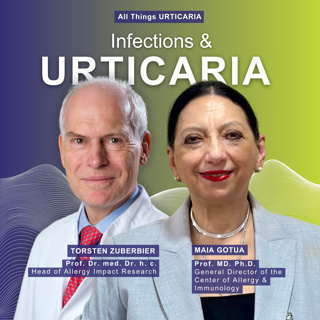
Urticaria Triggers: Infection Insights

Urticaria Triggers: Infection Insights

In this episode of the UCARE GA²LEN (Global Allergy and Asthma Excellence Network) podcast on Urticaria, Prof. Torsten Zuberbier and Prof. Maia Gotua discuss the role of infections in acute and chroni...

19 Touko 16min
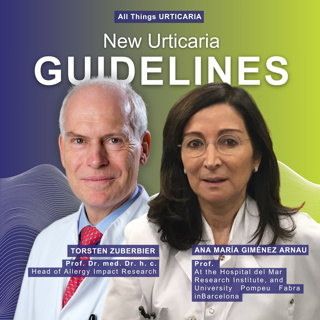
A New Era in Urticaria Treatment

A New Era in Urticaria Treatment

In this episode of “All Things Urticaria” — a podcast from UCARE, the Global Allergy and Asthma Excellence Network — Prof. Torsten Zuberbier and Prof. Ana Giménez-Arnau discuss the newly released inte...

23 Huhti 19min
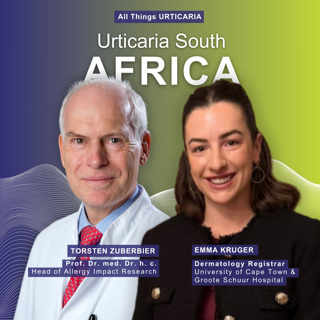
Managing Urticaria in Resource-Limited Settings

Managing Urticaria in Resource-Limited Settings

In this episode of the UCARE Global Allergy and Asthma Excellence Network podcast on Urticaria, Prof. Torsten Zuberbier speaks with Dr. Emma Kruger from Cape Town, South Africa, about managing urticar...

24 Maalis 17min
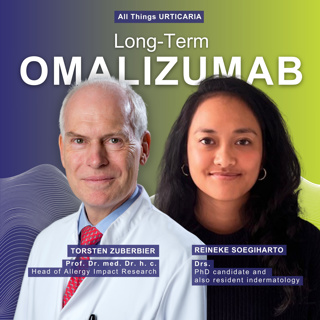
Drug Survival of Omalizumab

Drug Survival of Omalizumab

In this episode of the Urticaria podcast series, Prof. Torsten Zuberbier speaks with Reineke Soegiharto, PhD candidate and dermatology resident from UMC Utrecht, about the international UCARE study DR...

24 Helmi 17min
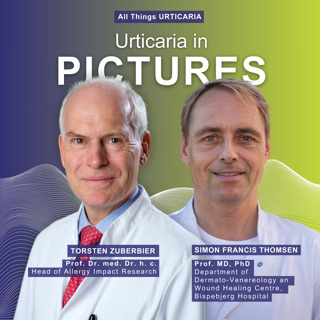
Visualizing Urticaria Worldwide

Visualizing Urticaria Worldwide

In this episode of the GA²LEN Urticaria Podcast, Professor Torsten Zuberbier is joined by Professor Simon Francis Thomsen from Denmark to introduce an exciting new global initiative within the UCARE n...

28 Tammi 19min

A New Era for Urticaria Treatment

A New Era for Urticaria Treatment

In this short, conference-based episode, Professor Torsten Zuberbier, President of Global Allergy and Asthma Excellence Network, speaks with Professor Kiran Godse from Mumbai, India, directly from the...

18 Joulu 20255min

Measuring What Matters: PROMs in Urticaria Care

Measuring What Matters: PROMs in Urticaria Care

In this episode of the GA²LEN (Global Allergy and Asthma Excellence Network) Podcast on Everything Urticaria, Professor Torsten Zuberbier talks with Dr. Karsten Weller, a leading expert and developer ...

2 Joulu 202519min

Suosittua kategoriassa Tiede

hippokrateen-vastaanotolla
rss-mita-tulisi-tietaa
tiedekulma-podcast
rss-hereilla
rss-duodecim-lehti
utelias-mieli
rss-jyvaskylan-yliopisto
sotataidon-ytimessa
rss-laakaripodi
university-of-eastern-finland
docemilia
rss-ranskaa-raakana
rss-astetta-parempi-elama-podcast