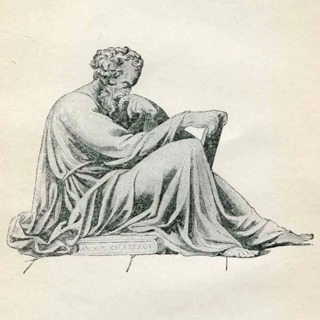
The History of Philosophy in 16 Questions - Q6: What can we learn from nature?

The History of Philosophy in 16 Questions - Q6: What can we learn from nature?

The History of Philosophy in 16 Questions - Q6: What can we learn from nature?


Hundred Schools of Thought (600-200 B.C.)


Legalism: Humans are inherently corrupt and social order can only be maintained through strict hierarchy that imposes order through force.


Mohism: Human society is best served through equality, frugality, and ethical education focused on helping people understand their own best interests. An early example of utilitarian and materialist thinking.


Logicians: Focused on correct thinking, argumentation, naming and use of language as the method best suited to understanding the world and discovering right action. Placed heavy emphasis on reason.


Confucianism: Emphasis on the founding of social order in hierarchy, family, conformity to social roles, the native goodness of human beings and the central role of education.


The sense of compassion is the beginning of benevolence; the sense of shame the beginning of righteousness; the sense of modesty the beginning of decorum; the sense of right and wrong the beginning of wisdom. Man possesses these four beginnings just as he possesses four limbs. Anyone possessing these four and saying that he can not do what is required of him is abasing himself. Mencius


Treat with reverence due to age the elders in your own family, so that those in the families of others shall be similarly treated; treat with the kindness due to youth the young in your own family, so that those in the families of others shall be similarly treated—do this and the kingdom may be made to go round in your palm. It is said in the 'Book of Poetry,'


'His example acted on his wife,

Extended to his brethren,

And was felt by all the clans and States;'


Rén (仁, benevolence, humaneness); Yì (義/义, righteousness or justice);


Lǐ (禮/礼, proper rite); Zhì (智, knowledge); Xìn (信, integrity).


Zhōng (忠, loyalty); Xiào (孝, filial piety);


Jié (節/节, contingency); Yì (義/义, righteousness).


Sign-up for Wes’s PATREON to get your questions answered by Wes!


Plus, gain access to course materials, reading lists, peer discussions, bonus lectures, and Wes’s weekly diaries from France. Only $2 / month.

Hosted on Acast. See acast.com/privacy for more information.

Tämä jakso on lisätty Podme-palveluun avoimen RSS-syötteen kautta eikä se ole Podmen omaa tuotantoa. Siksi jakso saattaa sisältää mainontaa.

Jaksot(241)

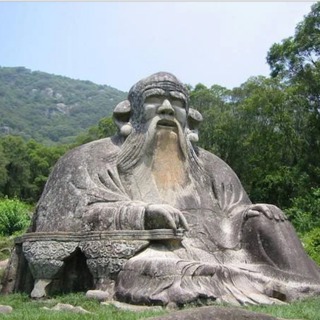
Taoism: Ep. 7: The Tao Te Ching IS for You!

Taoism: Ep. 7: The Tao Te Ching IS for You!

I encountered the notion that the Tao Te Ching in particular and Taoism in general is really not for. Rather, it was written for a ruling political elite in ancient China and that we misunderstand its...

21 Elo 34min

An Invitation to Being Human: Ep. 11 - The Other Humans

An Invitation to Being Human: Ep. 11 - The Other Humans

The research is perfectly clear that the single greatest determinant of our longevity, health and happiness is having a few meaningful relationships. It is in other humans that humans find their great...

17 Elo 42min

Taoism: Ep. 6 - Taoism and Calvinism

Taoism: Ep. 6 - Taoism and Calvinism

I realized that perhaps more helpful than comparing Taoism withing the context of Mohism, Legalism and Confucianism would be to compare it to Calvinism. Calvinism, derived from Platonism, is THE domin...

14 Elo 46min

An Invitation to Being Human: Ep. 10 - It's Not Just You

An Invitation to Being Human: Ep. 10 - It's Not Just You

A lot of the narrative around our struggles with the modern world focuses on individual responsibility. However, the rates of stress, sleep troubles, prescription drug use, depression and more all poi...

10 Elo 46min

Taoism: Ep. 5 - The Importance of Not Knowing

Taoism: Ep. 5 - The Importance of Not Knowing

Two tales from Chuang Tzu emphasize how we consistently pay too much attention to Language rather than Experience and hence stay confused. By emphasizing the importance of the individual and experienc...

7 Elo 40min

An Invitation to Being Human: Ep. 9 - The Aftermath

An Invitation to Being Human: Ep. 9 - The Aftermath

As one cultivates a sense of the human it is difficult to not notice how inhuman much of the world is. Our encounters with people and the environment around us will be a constant reminder and challeng...

3 Elo 51min

Taoism: Ep. 4 - Wu Wei - Misunderstanding Non-Action

Taoism: Ep. 4 - Wu Wei - Misunderstanding Non-Action

Besides a cultural bias towards action, we also have a strong drive towards suffering, overcoming, grit, drive etc. in pursuit of external goals. Taoism argues this is exactly the wrong approach. Acti...

31 Heinä 43min

Thames Water, Philosophy and Our Near Term Future

Thames Water, Philosophy and Our Near Term Future

The bankruptcy of Thames water represents a pattern in infrastructure failures that are increasing and will continue to increase for the foreseeable future. The question is when, and perhaps if, elect...

29 Heinä 40min

Suosittua kategoriassa Koulutus

rss-murhan-anatomia
psykopodiaa-podcast
voi-hyvin-meditaatiot-2
adhd-podi
rss-vapaudu-voimaasi
leikitaanko-laakaria
psykologia
rss-niinku-asia-on
kesken
rss-liian-kuuma-peruna
solu-ja-molekyylibiologian-perusteet
jari-sarasvuo-podcast
rss-duodecim-lehti
rss-narsisti
dreamtalk
koulu-podcast-2
rss-koira-haudattuna
puhutaan-koiraa
rss-arkea-ja-aurinkoa-podcast-espanjasta
rss-luonnollinen-synnytys-podcast