Diamonds Power Quantum-Classical Fusion: The Future of Computing Unleashed

Diamonds Power Quantum-Classical Fusion: The Future of Computing Unleashed

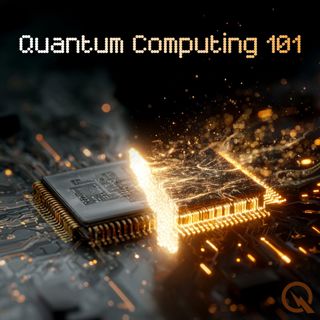
This is your Quantum Computing 101 podcast.

Imagine walking into Oak Ridge National Laboratory this morning. Even before the sun is up, the air inside buzzes with anticipation—today, they unveil an installation that’s set to rewire the future: diamond-powered quantum-classical hybrid systems. I’m Leo, your resident quantum computing specialist, and right now, the way quantum and classical computing fuse together reminds me of two orchestras perfectly harmonized—bringing sound to ideas that previously existed only as abstract score sheets.

Hybrid quantum-classical computing isn’t theoretical anymore. Major labs like Oak Ridge are demonstrating integrated setups where quantum processors nestle beside classical supercomputers, with diamond chips at the heart. Why diamonds? Their atomic lattice resists external noise, which keeps qubits coherent—no need for cryogenic cooling or cumbersome vacuum systems. These Quantum Brilliance units, engineered by innovators like Mark Luo and recently integrated at Oak Ridge, operate at room temperature, slashing hardware overhead and letting researchers experiment and iterate faster than ever.

This week, QuEra Computing grabbed headlines with an expanded $230 million round from NVIDIA’s venture arm, NVentures. That’s no ordinary investment—QuEra’s neutral-atom quantum machines are running side-by-side with NVIDIA’s mammoth H100 classical AI GPUs at Japan’s ABCI-Q supercomputing center. Picture it: classical GPUs crunch massive datasets, quantum cores tackle complex optimizations or critical subproblems, and the workflow shifts seamlessly between them. Suddenly, previously “impossible” tasks in drug discovery or portfolio optimization are solved in hours, not months, as highlighted yesterday at Quantum World Congress.

It’s more than just hardware synergy. IonQ and Element Six’s collaboration allows mass production of quantum-grade diamond thin films. These foundry-compatible materials mean quantum memory—essential for quantum networks and advanced hybrid architectures—can be manufactured with standard semiconductor tools. It’s as if the delicate art of diamond cutting now powers the next leap in information science: flawless quantum bits etched right onto silicon wafers.

At the heart of the hybrid approach is adaptability. Classical computers—your everyday servers and CPUs—excel at crunching through routine, predictable data. Quantum processors, on the other hand, thrive in unpredictability and ambiguity, like finding the lowest-energy arrangements for complex molecules or rapidly searching immense solution spaces. Hybrid solutions, like those discussed by Dr. Andrew King from D-Wave at Quantum World Congress tomorrow, orchestrate this interplay, choosing which engine—classical or quantum—solves which part, balancing accuracy, speed, and cost.

Think of it like today’s world news: while governments navigate turbulent markets, hybrid quantum-classical platforms are solving complex financial models in real time, responding to shifting conditions as nimbly as a seasoned trader feels out the pulse of Wall Street.

If you want to experience this revolution firsthand, remember the name: Quantum Computing 101. Questions, ideas, or topics? Email me anytime at leo@inceptionpoint.ai. Don’t forget to subscribe, and for more information, check out quiet please dot AI. This has been Quiet Please Production—thanks for tuning in to the future.

For more http://www.quietplease.ai


Get the best deals https://amzn.to/3ODvOta

This content was created in partnership and with the help of Artificial Intelligence AI

Jaksot(283)

Quantum-Classical Hybrids: How Quantinuum and Fugaku Cracked Molecular Simulation's Impossible Wall

Quantum-Classical Hybrids: How Quantinuum and Fugaku Cracked Molecular Simulation's Impossible Wall

This is your Quantum Computing 101 podcast.Imagine this: just days ago, Quantinuum linked their Reimei trapped-ion quantum computer directly to Japan's Fugaku supercomputer, unleashing a hybrid beast ...

3 Maalis 3min

Leo's Quantum Leap: How Hybrid Computing Is Solving Real Problems Classical Computers Can't Touch

Leo's Quantum Leap: How Hybrid Computing Is Solving Real Problems Classical Computers Can't Touch

This is your Quantum Computing 101 podcast.# Quantum Computing 101: Leo's Hybrid RevolutionWelcome back, folks. I'm Leo, and today we're diving into something that absolutely captivated me this week. ...

27 Helmi 4min

Hybrid Quantum Computing Breakthrough: How Classical HPC and Quantum Qubits Solve the Impossible Together

Hybrid Quantum Computing Breakthrough: How Classical HPC and Quantum Qubits Solve the Impossible Together

This is your Quantum Computing 101 podcast.Imagine this: just days ago, on February 20th, researchers at the University of Copenhagen unveiled a real-time qubit tracker using FPGA hardware from Quantu...

25 Helmi 4min

Fugaku Meets IBM Heron: How Japan's Supercomputer Just Cracked Quantum Chemistry's Biggest Problem

Fugaku Meets IBM Heron: How Japan's Supercomputer Just Cracked Quantum Chemistry's Biggest Problem

This is your Quantum Computing 101 podcast.Imagine this: just days ago, on February 18th, RIKEN in Japan and IBM flipped the switch on a quantum revolution. Their pre-exascale supercomputer Fugaku—158...

23 Helmi 2min

Fugaku Meets Heron: How Japan's Supercomputer and IBM Qubits Cracked Molecules in Closed Loop Harmony

Fugaku Meets Heron: How Japan's Supercomputer and IBM Qubits Cracked Molecules in Closed Loop Harmony

This is your Quantum Computing 101 podcast.Imagine this: just days ago, on February 20th, researchers at the University of Copenhagen unveiled a real-time qubit tracker that catches fluctuations 100 t...

22 Helmi 3min

Fugaku Meets Heron: How Japan's Quantum-Classical Supercomputer Fusion Cracked Chemistry's Hardest Problems

Fugaku Meets Heron: How Japan's Quantum-Classical Supercomputer Fusion Cracked Chemistry's Hardest Problems

This is your Quantum Computing 101 podcast.Imagine this: just two days ago, on February 18, 2026, RIKEN and IBM flipped the switch on a quantum revolution right here in Japan. Their pre-exascale super...

20 Helmi 3min

Euro-Q-Exa Unveiled: How 54 Qubits Just Merged With Classical Supercomputing to Crack Real World Problems

Euro-Q-Exa Unveiled: How 54 Qubits Just Merged With Classical Supercomputing to Crack Real World Problems

This is your Quantum Computing 101 podcast.Imagine this: just two days ago, on February 16, 2026, researchers at Spain's CSIC and Delft University of Technology cracked the code on reading Majorana qu...

18 Helmi 3min

Quantum Hybrids Crack the Code: How IBM's QeMCMC Solves Problems Classical Computers Can't Touch

Quantum Hybrids Crack the Code: How IBM's QeMCMC Solves Problems Classical Computers Can't Touch

This is your Quantum Computing 101 podcast.Imagine this: just days ago, on February 11, 2026, researchers at QuTech in Delft and CSIC in Spain cracked the readout code for Majorana qubits in a Nature ...

16 Helmi 3min

Suosittua kategoriassa Politiikka ja uutiset

uutiscast
aikalisa
politiikan-puskaradio
ootsa-kuullut-tasta-2
rss-ootsa-kuullut-tasta
rss-pinnalla
rss-vaalirankkurit-podcast
aihe
rss-podme-livebox
tervo-halme
rss-asiastudio
rss-girls-finish-f1rst
otetaan-yhdet
et-sa-noin-voi-sanoo-esittaa
the-ulkopolitist
rss-mina-ukkola
rss-50100-podcast
rss-tasta-on-kyse-ivan-puopolo-verkkouutiset
rss-ulkopoditiikkaa
rss-tekkipodi