Born to be cultured
Many Minds22 Huhti 2020

Born to be cultured

Welcome back! Today's episode is a conversation with Cristine Legare. Cristine is a Professor in the Department of Psychology at the University of Texas at Austin. Her research focuses on how our minds allow us to do culture—to learn it, to create it, and to pass it on. Among other things, we talk about cumulative culture and the human capacities for imitation and innovation. We talk about the power of ritual and about thorny questions surrounding human uniqueness. We touch on work that Cristine and her team have done in Vanuatu. And we muse about the problems facing psychology—in particular the so-called WEIRD problem. For those who may not know, this is the issue of psychologists unduly focusing on a thin slice of humanity—namely, Western, Educated, Industrialized, Rich, and Democratic (WEIRD) folks. I found Cristine's perspective on this issue—and really on all these issues—super insightful.

Without further ado, here is my conversation with Dr. Cristine Legare. Hope you enjoy it! And please be well.

A transcript of this episode is available here.

Notes and links

2:35 – An article about "cumulative culture."

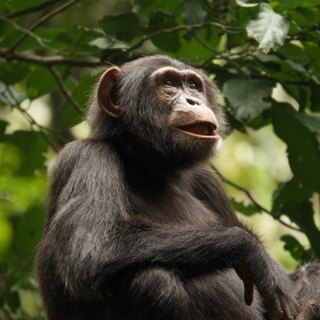
3:25 –There is debate about whether any non-human animals show evidence of cumulative culture. Here is one review of the topic.

6:30 – A paper by Dr. Legare and a colleague on imitation and innovation as "dual engines of cultural learning."

10:53 – One of Dr. Legare's studies examining children's flexible understanding of when to imitate faithfully.

13:07 – A popular article about the puzzle of why chimps in Zambia started to put grass in their ears. The primary research was reported here.

14:25 – The literature on so-called "over-imitation" is substantial. Here is a recent review.

19:14 – An encyclopedia article by Dr. Legare and a colleague on ritual. See also their paper on the social functions of rituals.

25:45 – Here is the original paper report on the "illusion of explanatory depth."

28:42 – A paper on how a culture's history of migration affects how often its members smile.

34:45 – This article describes the puzzle of chimpanzees throwing rocks at trees.

40:18 – This paper by Joe Henrich and colleagues is the source of the acronym WEIRD—that is, Western, Educated, Industrialized, Rich, Democratic—and is one of the most cited and discussed papers in the last decade of psychology. Here is a recent popular article on the current state of the WEIRD problem. Finally, see this paper by Dr. Legare and colleagues about the WEIRD bias in developmental psychology.

49:00 – Dr. Legare has done a number of studies in Vanuatu, a culturally diverse archipelago in the South Pacific.

49:32 – A study by Dr. Legare and colleagues comparing triadic interactions in the US and in Vanuatu.

55:51 – Barbara Rogoff, mentioned here, has done a range of important work on learning styles across cultures. See, for example, her book, The Cultural Nature of Human Development.

59:55 – A study by Dr. Legare and colleagues showing that adults in the US and Vanuatu differ in how they evaluate the intelligence of conforming vs non-conforming children.

Dr. Legare's end-of-show recommendations:

A good summary of some of the research we discussed by Dr. Legare and her colleagues can be found here. See also the following books:

The Secret of Our Success (2018), by Joe Henrich

Cognitive Gadgets (2018), by Cecilia Heyes

A Different Kind of Animal (2018), by Robert Boyd

Minds Make Societies (2018), by Pascal Boyer

The best ways to keep up with Dr. Legare's research:

http://www.cristinelegare.com/

Many Minds is a project of the Diverse Intelligences Summer Institute (DISI) (https://www.diverseintelligencessummer.com/), which is made possible by a generous grant from the Templeton World Charity Foundation to UCLA. It is hosted by Kensy Cooperrider, with creative support from DISI Directors Erica Cartmill and Jacob Foster, and Associate Director Hilda Loury. Our artwork is by Ben Oldroyd (https://www.mayhilldesigns.co.uk/). Our transcripts are created by Sarah Dopierala (https://sarahdopierala.wordpress.com/).

You can subscribe to Many Minds on Apple, Stitcher, Spotify, Pocket Casts, Google Play—or wherever you like to listen to podcasts.

We welcome your comments, questions, and suggestions. Feel free to email us at: manymindspodcast@gmail.com.

For updates about the show, follow us on Twitter: @ManyMindsPod.

Tämä jakso on lisätty Podme-palveluun avoimen RSS-syötteen kautta eikä se ole Podmen omaa tuotantoa. Siksi jakso saattaa sisältää mainontaa.

Jaksot(167)

From the archive: Varieties of childhood

From the archive: Varieties of childhood

Hi friends! We're taking a bit of a summer pause. We'll be back soon—in the meanwhile, enjoy this listener favorite from our archives! ----- [originally aired July 10, 2025] Childhood is a special tim...

31 Heinä 1h 28min

From the archive: Philosophers on psychedelics

From the archive: Philosophers on psychedelics

Hi friends! We're taking a bit of a summer pause. We will be back soon—in the meanwhile, enjoy this listener favorite from our archives! ----- [originally aired May 14, 2025] Some call it the "psyched...

17 Heinä 1h 40min
The origins of Darwin's ideas

The origins of Darwin's ideas

No discipline, no sphere of intellectual life, has been untouched by the work of Charles Darwin. He died in 1882 but his ideas are very much alive; they're now central to how we understand the natural...

3 Heinä 1h 19min

The sparkling deep

The sparkling deep

It's tempting to see bioluminescence as an oddity, one of those rare eccentricities of life on earth. And, on land, maybe that's true. But our planet is mostly water, and out in the open ocean biolumi...

20 Kesä 1h 20min

Is Man the Hunter just a myth?

Is Man the Hunter just a myth?

There's a story about of our past that you know well. It goes like this: At some point earlier in human evolution, we started to hunt. Men in particular—perhaps channeling some deep-seated aggressive ...

5 Kesä 1h 32min

Babies, dogs, and the riddles of word learning

Babies, dogs, and the riddles of word learning

It's kind of astonishing, really, that kids ever learn words. Each one poses a little riddle. Does this sound string refer to a person? A category of things? Or maybe some other feature of the bloomin...

22 Touko 1h 18min

The inner life of the hand

The inner life of the hand

Newton saw in the human hand proof of the divine; Darwin saw a key to our species' success. Many others, too, have described the hand in hyperbolic terms, as a paragon of design, a cornerstone of huma...

7 Touko 1h 10min

From the archive: The cuttlefish and its coat of many colors

From the archive: The cuttlefish and its coat of many colors

Hi friends! We're skipping a beat to take care of some spring housekeeping tasks. We will be back in May! In the meanwhile, enjoy this listener favorite from our archives! ----- [originally aired Apri...

22 Huhti 1h 33min

Suosittua kategoriassa Koulutus

rss-murhan-anatomia
psykopodiaa-podcast
voi-hyvin-meditaatiot-2
rss-vapaudu-voimaasi
kesken
rss-niinku-asia-on
rss-arkea-ja-aurinkoa-podcast-espanjasta
rss-liian-kuuma-peruna
rss-laadukasta-ensihoitoa
adhd-podi
aamukahvilla
rss-luonnollinen-synnytys-podcast
solu-ja-molekyylibiologian-perusteet
psykologia
jari-sarasvuo-podcast
rahapuhetta
ihminen-tavattavissa-tommy-hellsten-instituutti
rss-narsisti
rss-duodecim-lehti
dreamtalk