When the mind's eye can't see
Many Minds30 Syys 2020

When the mind's eye can't see

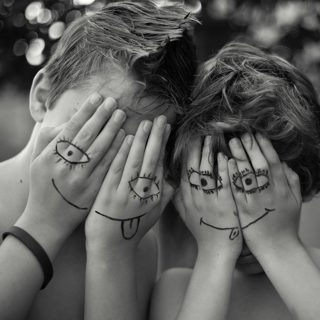
Imagine a friend's face. How much detail do you see? Do you see the color of their hair? What about the curve of their smile? For many people, this mental image will be relatively vivid. A somewhat watered down picture, sure, but still a picture—still something similar to what they would see if that friend were sitting across from them. For other folks, though, there's no image there at all. There's just no way to will it into being. Such people have what is now known as "aphantasia"—the inability to generate visual imagery.

Today I talk with Dr. Rebecca Keogh, a cognitive neuroscientist at the University of New South Wales in Australia. Dr. Keogh is one of the leading researchers in the new, fast-evolving study of aphantasia. We talk about the work she and her colleagues are doing to explore the full spectrum of individual differences in visual imagery ability, how these differences arise in the brain, and how they impact different aspects of everyday life, from how we dream, to how we envision the future, to how we respond to trauma. We also talk about folks on the other end of the spectrum—those with so-called "hyperphantasia," who experience visual images in extraordinary detail. And we get a sneak preview of some of the questions that Rebecca and her colleagues are taking on next.

This episode takes us, for the first time on Many Minds, into the fascinating terrain of individual differences—into questions about how other human minds may differ from our own, often in ways that invisible and unexpected. This is terrain we definitely plan to revisit in future episodes. Had a blast with this one folks—hope you enjoy it, too!

A transcript of this episode is available here.

Notes and links

3:16 – The 2015 paper in Cortex that introduced the term "aphantasia," but the spectrum of visual imagery ability has been studied since the 1800s.

5:08 – In the 1980s Martha Farah and colleagues studied a case of acquired "aphantasia," though they didn't use the term at the time.

8:30 – The Vividness of Visual Imagery Questionnaire (VVIQ) was first introduced in 1973 by David Mark.

12:15 – The 2018 paper in Cortex by Dr. Keogh and Dr. Joel Pearson.

15:15 – A 2008 paper by Dr. Pearson introducing the binocular rival method of measuring mental imagery.

23:15 – An overview of the idea of separate "what" and "where" pathways in the brain.

27:23 – The 2020 paper—'A cognitive profile of multi-sensory imagery, memory and dreaming in aphantasia'—by Alexei Dawes, Dr. Keogh, and colleagues.

41:30 – The 2020 paper by Dr. Keogh and colleagues about the role of cortical excitability in visual imagery.

44:30 – Phosphenes are a kind of visual experience that is not induced by light entering the retina.

48:15 – A primer on Transcranial Direct Current Stimulation (tDCS).

51:45 – A pre-print by Marcus Wicken, Dr. Keogh, and Dr. Pearson using skin conductance to examine the level of fear experienced by aphantasic and control participants.

1:01:45 – A paper by Dr. Adam Zeman and colleagues titled 'Phantasia–The psychological significance of lifelong visual imagery vividness extremes,' which discusses vocational choices in people with extreme imagery.

Rebecca Keogh's end-of-show recommendations:

Aphantasia: Experiences, Perceptions, and Insights by Alan Kendle

The Cambridge Handbook of the Imagination by Anna Abraham

The best way to keep up with Dr. Keogh's work is to follow her on Twitter (@Becca_Keogh_PhD). To keep tabs on aphantasia research more broadly, you can follow other prominent aphantasia researchers such as Dr. Joel Pearson (@ProfJoelPearson) and Dr. Adam Zeman (@ZemanLab). You can also check out the Future Minds Lab and sign up for their mailing list: https://www.futuremindslab.com/.

Many Minds is a project of the Diverse Intelligences Summer Institute (DISI) (https://www.diverseintelligencessummer.com/), which is made possible by a generous grant from the Templeton World Charity Foundation to UCLA. It is hosted by Kensy Cooperrider, with creative support from DISI Directors Erica Cartmill and Jacob Foster, and Associate Director Hilda Loury. Our artwork is by Ben Oldroyd (https://www.mayhilldesigns.co.uk/). Our transcripts are created by Sarah Dopierala (https://sarahdopierala.wordpress.com/).

You can subscribe to Many Minds on Apple, Stitcher, Spotify, Pocket Casts, Google Play, or wherever you like to listen to podcasts.

We welcome your comments, questions, and suggestions. Feel free to email us at: manymindspodcast@gmail.com.

For updates about the show, follow us on Twitter: @ManyMindsPod.

Tämä jakso on lisätty Podme-palveluun avoimen RSS-syötteen kautta eikä se ole Podmen omaa tuotantoa. Siksi jakso saattaa sisältää mainontaa.

Jaksot(167)

From the archive: Varieties of childhood

From the archive: Varieties of childhood

Hi friends! We're taking a bit of a summer pause. We'll be back soon—in the meanwhile, enjoy this listener favorite from our archives! ----- [originally aired July 10, 2025] Childhood is a special tim...

31 Heinä 1h 28min
From the archive: Philosophers on psychedelics

From the archive: Philosophers on psychedelics

Hi friends! We're taking a bit of a summer pause. We will be back soon—in the meanwhile, enjoy this listener favorite from our archives! ----- [originally aired May 14, 2025] Some call it the "psyched...

17 Heinä 1h 40min
The origins of Darwin's ideas

The origins of Darwin's ideas

No discipline, no sphere of intellectual life, has been untouched by the work of Charles Darwin. He died in 1882 but his ideas are very much alive; they're now central to how we understand the natural...

3 Heinä 1h 19min

The sparkling deep

The sparkling deep

It's tempting to see bioluminescence as an oddity, one of those rare eccentricities of life on earth. And, on land, maybe that's true. But our planet is mostly water, and out in the open ocean biolumi...

20 Kesä 1h 20min

Is Man the Hunter just a myth?

Is Man the Hunter just a myth?

There's a story about of our past that you know well. It goes like this: At some point earlier in human evolution, we started to hunt. Men in particular—perhaps channeling some deep-seated aggressive ...

5 Kesä 1h 32min

Babies, dogs, and the riddles of word learning

Babies, dogs, and the riddles of word learning

It's kind of astonishing, really, that kids ever learn words. Each one poses a little riddle. Does this sound string refer to a person? A category of things? Or maybe some other feature of the bloomin...

22 Touko 1h 18min

The inner life of the hand

The inner life of the hand

Newton saw in the human hand proof of the divine; Darwin saw a key to our species' success. Many others, too, have described the hand in hyperbolic terms, as a paragon of design, a cornerstone of huma...

7 Touko 1h 10min

From the archive: The cuttlefish and its coat of many colors

From the archive: The cuttlefish and its coat of many colors

Hi friends! We're skipping a beat to take care of some spring housekeeping tasks. We will be back in May! In the meanwhile, enjoy this listener favorite from our archives! ----- [originally aired Apri...

22 Huhti 1h 33min

Suosittua kategoriassa Koulutus

rss-murhan-anatomia
psykopodiaa-podcast
voi-hyvin-meditaatiot-2
rss-vapaudu-voimaasi
kesken
rss-niinku-asia-on
rss-arkea-ja-aurinkoa-podcast-espanjasta
rss-liian-kuuma-peruna
rss-laadukasta-ensihoitoa
adhd-podi
aamukahvilla
rss-luonnollinen-synnytys-podcast
solu-ja-molekyylibiologian-perusteet
psykologia
jari-sarasvuo-podcast
rahapuhetta
ihminen-tavattavissa-tommy-hellsten-instituutti
rss-narsisti
rss-duodecim-lehti
dreamtalk