The root-brain hypothesis
Many Minds14 Loka 2020

The root-brain hypothesis

Welcome back folks! Today is a return to one of our favorite formats: the audio essay. If you like your audio essays short, concise, and full of tidbits, then this mini will not disappoint.

We take a look at a 140-year-old idea but very much a radical one—the root-brain hypothesis. It was proposed by Charles Darwin in a book published in the twilight of his career. The idea, in short, is that plants have a structure that is, in some ways, brain-like—and it is located underground, at their roots. We talk about how Darwin and his son Francis arrived at this idea, why it was ignored for so long, and how it's recently stirred to life.

Enjoy!

A text version of this "mini" is available here.

Notes and links

2:15 – The last page of Darwin's The Power of Movement in Plants (1880).

3:25 – The 2009 paper by Dr. Baluška and colleagues about the history and modern revival of the "root-brain hypothesis."

6:00 – The tinfoil hats experiment—and its influence—is discussed in this 2009 paper.

8:00 – The dust-up between Darwin and Sachs is described in this 1996 paper.

8:47 – The 2011 paper listing many of the environmental variables plants are now known to be sensitive to.

9:28 – Dr. Gagliano and colleagues' paper on associative learning in plant and on plants' use of sounds to find water. The possibility of echolocation is discussed here.

9:45 – For broader context surrounding the question of plants may have something like a brain, see Oné R. Pagán's essay titled 'The brain: A concept in flux.'

9:57 – The 2006 paper that inaugurated the field of "plant neurobiology."

10:34 – Discussions of the "transition zone" of the root can be found in the 2009 paper by Baluška and colleagues, as well as in this more technical paper from 2010.

11:00 – The response letter to the original "plant neurobiology" paper, signed by 36 plant biologists.

12:00 – Michael Pollan's 2013 article 'The Intelligent Plant' in The New Yorker.

12:05 – Anthony Trewavas's letter, highlighting the power of metaphors in science.

12:26 – The 2020 paper about pea tendrils in Psychonomic Bulletin & Review.

Correction: The audio version of this episode misstates the publication year of Darwin's final book, about worms. The correct year is 1881, not 1883.

Many Minds is a project of the Diverse Intelligences Summer Institute (DISI) (https://www.diverseintelligencessummer.com/), which is made possible by a generous grant from the Templeton World Charity Foundation to UCLA. It is hosted by Kensy Cooperrider, with creative support from DISI Directors Erica Cartmill and Jacob Foster, and Associate Director Hilda Loury. Our artwork is by Ben Oldroyd (https://www.mayhilldesigns.co.uk/).

You can subscribe to Many Minds on Apple, Stitcher, Spotify, Pocket Casts, Google Play—or wherever you like to listen to podcasts.

We welcome your comments, questions, and suggestions. Feel free to email us at: manymindspodcast@gmail.com.

For updates about the show, follow us on Twitter: @ManyMindsPod.

Tämä jakso on lisätty Podme-palveluun avoimen RSS-syötteen kautta eikä se ole Podmen omaa tuotantoa. Siksi jakso saattaa sisältää mainontaa.

Jaksot(167)

From the archive: Varieties of childhood

From the archive: Varieties of childhood

Hi friends! We're taking a bit of a summer pause. We'll be back soon—in the meanwhile, enjoy this listener favorite from our archives! ----- [originally aired July 10, 2025] Childhood is a special tim...

31 Heinä 1h 28min

From the archive: Philosophers on psychedelics

From the archive: Philosophers on psychedelics

Hi friends! We're taking a bit of a summer pause. We will be back soon—in the meanwhile, enjoy this listener favorite from our archives! ----- [originally aired May 14, 2025] Some call it the "psyched...

17 Heinä 1h 40min
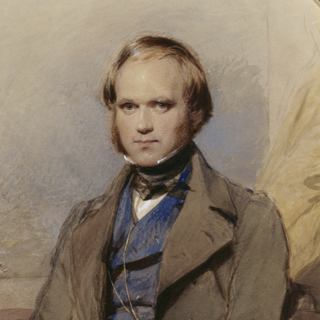
The origins of Darwin's ideas

The origins of Darwin's ideas

No discipline, no sphere of intellectual life, has been untouched by the work of Charles Darwin. He died in 1882 but his ideas are very much alive; they're now central to how we understand the natural...

3 Heinä 1h 19min
The sparkling deep

The sparkling deep

It's tempting to see bioluminescence as an oddity, one of those rare eccentricities of life on earth. And, on land, maybe that's true. But our planet is mostly water, and out in the open ocean biolumi...

20 Kesä 1h 20min

Is Man the Hunter just a myth?

Is Man the Hunter just a myth?

There's a story about of our past that you know well. It goes like this: At some point earlier in human evolution, we started to hunt. Men in particular—perhaps channeling some deep-seated aggressive ...

5 Kesä 1h 32min

Babies, dogs, and the riddles of word learning

Babies, dogs, and the riddles of word learning

It's kind of astonishing, really, that kids ever learn words. Each one poses a little riddle. Does this sound string refer to a person? A category of things? Or maybe some other feature of the bloomin...

22 Touko 1h 18min

The inner life of the hand

The inner life of the hand

Newton saw in the human hand proof of the divine; Darwin saw a key to our species' success. Many others, too, have described the hand in hyperbolic terms, as a paragon of design, a cornerstone of huma...

7 Touko 1h 10min

From the archive: The cuttlefish and its coat of many colors

From the archive: The cuttlefish and its coat of many colors

Hi friends! We're skipping a beat to take care of some spring housekeeping tasks. We will be back in May! In the meanwhile, enjoy this listener favorite from our archives! ----- [originally aired Apri...

22 Huhti 1h 33min

Suosittua kategoriassa Koulutus

rss-murhan-anatomia
psykopodiaa-podcast
voi-hyvin-meditaatiot-2
rss-vapaudu-voimaasi
kesken
rss-niinku-asia-on
rss-arkea-ja-aurinkoa-podcast-espanjasta
rss-liian-kuuma-peruna
rss-laadukasta-ensihoitoa
adhd-podi
aamukahvilla
rss-luonnollinen-synnytys-podcast
solu-ja-molekyylibiologian-perusteet
psykologia
jari-sarasvuo-podcast
rahapuhetta
ihminen-tavattavissa-tommy-hellsten-instituutti
rss-narsisti
rss-duodecim-lehti
dreamtalk