Humans, dogs, and other domesticated animals
Many Minds9 Joulu 2020

Humans, dogs, and other domesticated animals

When you think of domestication, I bet you think of farm animals—you know cows and pigs and alpacas—or maybe house pets. You might think of corn or wheat or rice. You probably don't think of us—humans, Homo sapiens. But, by the end of today's conversation, I'm guessing you will.

For this episode I talked with Dr. Brian Hare of Duke University. He's a core member of the Center for Cognitive Neuroscience there, as well a Professor of Evolutionary Anthropology. Along with Vanessa Woods, he's the author of book published this summer titled Survival of the Friendliest: Understanding our Origins and Rediscovering our Common Humanity.

We talked about Brian's research with dogs, foxes, and bonobos and how it led him to a big idea at the center of this new book. The idea is that, much as we domesticated farm animals to make them tamer and easier to work with, we also seem to have domesticated ourselves at some point in our evolutionary past. This process is known as self-domestication—a selection for friendliness. But beyond making us gentler and smilier, the domestication process also had a bunch of unexpected impacts on our behaviors, bodies, and brains. Really unexpected, like the fact that we have globe-shaped heads. According to Brian and Vanessa's account, self-domestication was in fact the force that allowed ancient humans to develop larger social networks and, in turn, more sophisticated technologies. So it may hold the answer to why we're still around while other hominin species—like the Neanderthals—aren't.

As Brian says at one point in our conversation, the book is really offering an account of human nature. And, importantly, it's a dual nature. Lurking behind our friendliness—co-existing and co-evolved with our newfound chumminess—is a darker side, a capacity for real cruelty.

I consider the human self-domestication hypothesis to be one of the most fascinating ideas of that last decade. Right now it's really at the center of a lot of conversations about human origins and about human and animal minds. Enjoy!

A transcript of this episode is available here.

Notes and links

Note: Much of what we discuss is covered in Survival of the Friendliest, but additional readings and sources are also listed here.

6:42 – Read the paper inspired by Dr. Hare's early observations about how his dog Oreo could understand human pointing gestures.

8:40 – In one study, Dr. Hare traveled to Siberia to study a population of domesticated foxes—and specifically to ask whether they would show a predilection for cooperative communication. The long-running fox-farm experiment is the subject of a book titled How to Tame a Fox (And Build a Dog).

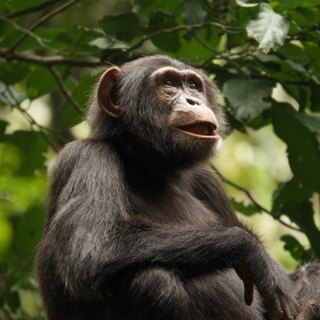
10:50 – Around the same time as his research in Siberia, Dr. Hare also published work examining how bonobos exhibit more tolerance than chimpanzees.

15:15 – A recent article voicing skepticism about the fox-farm research and the so-called "domestication syndrome."

17:30 – See Dr. Hare's 2017 book, Bonobos: Unique in Mind, Brain, and Behavior, co-authored with Shinya Yamamato.

30:00 – A long-standing puzzle in paleoanthropology is why modern human behavior—as judged by advanced tool use, symbolism, etc.—lagged behind modern human anatomy by more than a hundred thousand years. The eventual emergence of modern behavior is sometimes described as the Upper Paleolithic Revolution.

40:00 – An article Dr. Hare published along with Robert L. Cieri, Steven Churchill, and other colleagues on the origins of "behavioral modernity."

48:30 – Steven Pinker—among other scholars—has argued that violence has declined in human societies from prehistory until today. This idea has been both influential and controversial.

58:45 – Evidence from social psychology suggests that cross-group friendships might be especially powerful in changing attitudes. Here's one paper on the power of inter-group contact.

Brian Hare's end-of-show recommendations:

Richard Wrangham, The Goodness Paradox

David Livingston Smith, On Inhumanity

David Stasavage, The Decline and Rise of Democracy

See also: books by Joseph Henrich and Michael Tomasello

The best way to keep up with Dr. Hare's work is on Twitter (@bharedogguy) website: http://brianhare.net/

Many Minds is a project of the Diverse Intelligences Summer Institute (DISI) (https://www.diverseintelligencessummer.com/), which is made possible by a generous grant from the Templeton World Charity Foundation to UCLA. It is hosted by Kensy Cooperrider, with creative support from DISI Directors Erica Cartmill and Jacob Foster, and Associate Director Hilda Loury. Our artwork is by Ben Oldroyd (https://www.mayhilldesigns.co.uk/). Our transcripts are created by Sarah Dopierala (https://sarahdopierala.wordpress.com/).

You can subscribe to Many Minds on Apple, Stitcher, Spotify, Pocket Casts, Google Play, or wherever you like to listen to podcasts.

We welcome your comments, questions, and suggestions. Feel free to email us at: manymindspodcast@gmail.com.

For updates about the show, follow us on Twitter: @ManyMindsPod.

Tämä jakso on lisätty Podme-palveluun avoimen RSS-syötteen kautta eikä se ole Podmen omaa tuotantoa. Siksi jakso saattaa sisältää mainontaa.

Jaksot(167)

From the archive: Varieties of childhood

From the archive: Varieties of childhood

Hi friends! We're taking a bit of a summer pause. We'll be back soon—in the meanwhile, enjoy this listener favorite from our archives! ----- [originally aired July 10, 2025] Childhood is a special tim...

31 Heinä 1h 28min
From the archive: Philosophers on psychedelics

From the archive: Philosophers on psychedelics

Hi friends! We're taking a bit of a summer pause. We will be back soon—in the meanwhile, enjoy this listener favorite from our archives! ----- [originally aired May 14, 2025] Some call it the "psyched...

17 Heinä 1h 40min
The origins of Darwin's ideas

The origins of Darwin's ideas

No discipline, no sphere of intellectual life, has been untouched by the work of Charles Darwin. He died in 1882 but his ideas are very much alive; they're now central to how we understand the natural...

3 Heinä 1h 19min

The sparkling deep

The sparkling deep

It's tempting to see bioluminescence as an oddity, one of those rare eccentricities of life on earth. And, on land, maybe that's true. But our planet is mostly water, and out in the open ocean biolumi...

20 Kesä 1h 20min

Is Man the Hunter just a myth?

Is Man the Hunter just a myth?

There's a story about of our past that you know well. It goes like this: At some point earlier in human evolution, we started to hunt. Men in particular—perhaps channeling some deep-seated aggressive ...

5 Kesä 1h 32min

Babies, dogs, and the riddles of word learning

Babies, dogs, and the riddles of word learning

It's kind of astonishing, really, that kids ever learn words. Each one poses a little riddle. Does this sound string refer to a person? A category of things? Or maybe some other feature of the bloomin...

22 Touko 1h 18min

The inner life of the hand

The inner life of the hand

Newton saw in the human hand proof of the divine; Darwin saw a key to our species' success. Many others, too, have described the hand in hyperbolic terms, as a paragon of design, a cornerstone of huma...

7 Touko 1h 10min

From the archive: The cuttlefish and its coat of many colors

From the archive: The cuttlefish and its coat of many colors

Hi friends! We're skipping a beat to take care of some spring housekeeping tasks. We will be back in May! In the meanwhile, enjoy this listener favorite from our archives! ----- [originally aired Apri...

22 Huhti 1h 33min

Suosittua kategoriassa Koulutus

rss-murhan-anatomia
psykopodiaa-podcast
voi-hyvin-meditaatiot-2
rss-vapaudu-voimaasi
kesken
rss-niinku-asia-on
rss-arkea-ja-aurinkoa-podcast-espanjasta
rss-liian-kuuma-peruna
rss-laadukasta-ensihoitoa
adhd-podi
aamukahvilla
rss-luonnollinen-synnytys-podcast
solu-ja-molekyylibiologian-perusteet
psykologia
jari-sarasvuo-podcast
rahapuhetta
ihminen-tavattavissa-tommy-hellsten-instituutti
rss-narsisti
rss-duodecim-lehti
dreamtalk