From the archive: Why do we dream?
Many Minds28 Joulu 2022

From the archive: Why do we dream?

We're off this week but are excited to share a thought-provoking conversation from our archives, about the long-standing puzzle of why we (and other creatures) dream. Happy holidays from the Many Minds team!

---

You may not remember much about it, but chances are last night you went on a journey. As you slept, your brain concocted a story—maybe a sprawl of interconnected stories. It took you to some unreal places, gave you superpowers, unearthed old acquaintances, and twisted your perceptions. Meanwhile, billions of brains all around you, up and down the tree of life, were probably doing something very similar—dreaming, that is. But why do we do this? What could possibly be the function of these nightly ramblings?

My guest today is Dr. Erik Hoel. He is a writer and a neuroscientist at Tufts University. In a paper published earlier this year, Erik presented a new theory of why we (and other creatures) dream. It's called the "over-fitted brain hypothesis"; the basic idea is that dreaming helps us stay cognitively limber, adaptable—less tied to the particulars of our previous experiences.

Erik and I discuss how he came to this new theory. We talk about how his account develops an analogy between the "overfitting" problem in machine learning and the "overfitting" problem that biological brains face as well. We discuss how his hypothesis can account for the bizarre nature of dream experience. And we consider Erik's provocative suggestion that dreams are really just one type of fiction—biological fictions, if you like—and that other types of fiction may serve similar purposes.

Erik is a fascinating, wide-ranging thinker (there aren't a lot of neuroscientists who also write novels). And this is a conversation I'll be chewing on for some time. It takes on one of those timeless questions about human experience—why we dream—from an angle that feels fresh and energizing.

Alright friends, on to my conversation with Dr. Erik Hoel. Hope you enjoy it!

The paper we discuss is available here. A transcript of this episode is available here.

Notes and links

4:00 – Dreams have been in the news recently, with reports of an uptick in strange dreams during the pandemic.

9:30 – An early study on "dream deprivation."

11:00 – An article on the idea that dreams serve memory consolidation.

23:00 – A study showing that we don't dream about reading or writing.

27:30 – An attempt to solve a Rubik's cube with a robot hand.

32:00 – An influential paper articulating the synaptic homeostasis hypothesis.

38:30 – A recent paper on the question of whether animals like octopuses dream.

42:00 – We've discussed Pinker's "music is like cheesecake" analogy in previous episodes, most recently in our discussion of the evolution of music.

46:00 – For more on these ideas, see Dr. Hoel's essay 'Enter the Supersensorium'—and be sure to check out his new novel The Revelations!

You can find Dr. Hoel on Twitter (@erikphoel) and subscribe his newsletter on Substack.

Many Minds is a project of the Diverse Intelligences Summer Institute (DISI) (https://disi.org), which is made possible by a generous grant from the Templeton World Charity Foundation to UCLA. It is hosted and produced by Kensy Cooperrider, with help from assistant producer Cecilia Padilla. Creative support is provided by DISI Directors Erica Cartmill and Jacob Foster. Our artwork is by Ben Oldroyd (https://www.mayhilldesigns.co.uk/). Our transcripts are created by Sarah Dopierala (https://sarahdopierala.wordpress.com/).

You can subscribe to Many Minds on Apple, Stitcher, Spotify, Pocket Casts, Google Play, or wherever you like to listen to podcasts.

We welcome your comments, questions, and suggestions. Feel free to email us at: manymindspodcast@gmail.com.

For updates about the show, visit our website (https://disi.org/manyminds/), or follow us on Twitter: @ManyMindsPod.

Tämä jakso on lisätty Podme-palveluun avoimen RSS-syötteen kautta eikä se ole Podmen omaa tuotantoa. Siksi jakso saattaa sisältää mainontaa.

Jaksot(168)

From the archive: Electric ecology

From the archive: Electric ecology

Hi friends! We're still taking a bit of a summer pause. We'll be back at the end of August—in the meanwhile, enjoy this listener favorite from our archives! ----- [originally aired September 19, 2024]...

17 Elo 1h 33min
From the archive: Varieties of childhood

From the archive: Varieties of childhood

Hi friends! We're taking a bit of a summer pause. We'll be back soon—in the meanwhile, enjoy this listener favorite from our archives! ----- [originally aired July 10, 2025] Childhood is a special tim...

31 Heinä 1h 28min
From the archive: Philosophers on psychedelics

From the archive: Philosophers on psychedelics

Hi friends! We're taking a bit of a summer pause. We will be back soon—in the meanwhile, enjoy this listener favorite from our archives! ----- [originally aired May 14, 2025] Some call it the "psyched...

17 Heinä 1h 40min
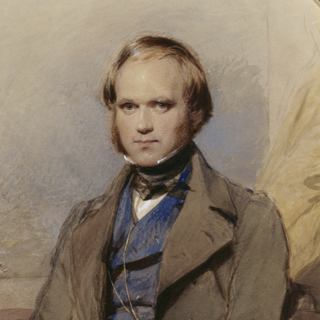
The origins of Darwin's ideas

The origins of Darwin's ideas

No discipline, no sphere of intellectual life, has been untouched by the work of Charles Darwin. He died in 1882 but his ideas are very much alive; they're now central to how we understand the natural...

3 Heinä 1h 19min

The sparkling deep

The sparkling deep

It's tempting to see bioluminescence as an oddity, one of those rare eccentricities of life on earth. And, on land, maybe that's true. But our planet is mostly water, and out in the open ocean biolumi...

20 Kesä 1h 20min

Is Man the Hunter just a myth?

Is Man the Hunter just a myth?

There's a story about of our past that you know well. It goes like this: At some point earlier in human evolution, we started to hunt. Men in particular—perhaps channeling some deep-seated aggressive ...

5 Kesä 1h 32min

Babies, dogs, and the riddles of word learning

Babies, dogs, and the riddles of word learning

It's kind of astonishing, really, that kids ever learn words. Each one poses a little riddle. Does this sound string refer to a person? A category of things? Or maybe some other feature of the bloomin...

22 Touko 1h 18min

The inner life of the hand

The inner life of the hand

Newton saw in the human hand proof of the divine; Darwin saw a key to our species' success. Many others, too, have described the hand in hyperbolic terms, as a paragon of design, a cornerstone of huma...

7 Touko 1h 10min

Suosittua kategoriassa Koulutus

rss-murhan-anatomia
psykopodiaa-podcast
voi-hyvin-meditaatiot-2
rss-vapaudu-voimaasi
kesken
rss-niinku-asia-on
rss-arkea-ja-aurinkoa-podcast-espanjasta
rss-liian-kuuma-peruna
rss-laadukasta-ensihoitoa
adhd-podi
aamukahvilla
rss-luonnollinen-synnytys-podcast
solu-ja-molekyylibiologian-perusteet
psykologia
jari-sarasvuo-podcast
rahapuhetta
ihminen-tavattavissa-tommy-hellsten-instituutti
rss-narsisti
rss-duodecim-lehti
dreamtalk