From the archive: Children in the deep past
Many Minds29 Marras 2023

From the archive: Children in the deep past

Hi friends, we're on hiatus for the fall. To tide you over, we're putting up some favorite episodes from our archives. Enjoy!

----

[originally aired May 25, 2022]

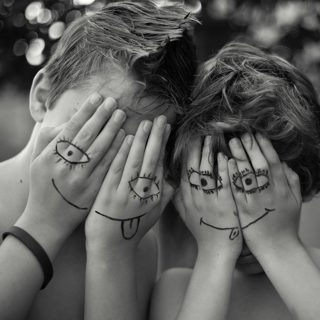
When we think about ancient humans, we often imagine them doing certain kinds of things. Usually very serious things like hunting game and making tools, foraging for food and building fires, maybe performing the occasional intricate ritual. But there was definitely more to the deep past than all this adulting. There were children around, too—lots of them—no doubt running around and wreaking havoc, much as they do today. But what were the kids up to, exactly? What games were they playing? What toys did they have? What were their lives like?

My guest today is Dr. Michelle Langley, an archaeologist at Griffith University in Queensland, Australia. Michelle grapples with questions about children, play, and childhood in the deep past. In recent work, she draws on ethnographic reports to assemble a picture of what children have in common all across the globe. She then uses that understanding to cast new light on the archaeological record, to make fresh inferences about what kids must have been doing, making, and leaving behind.

In this conversation, Michelle and I talk about the kinds of basic activities that have long been a mainstay of childhood everywhere—activities like playing with dolls, keeping pets, collecting shells, and building forts. We discuss how archaeologists often assume that hard-to-interpret objects have ritual purpose, when, in fact, those objects could just as easily be toys. We talk about how children seek out and engineer "secret spaces". We also touch on how a male-centric bias has distorted archaeological discussions; how the baby sling may have been the primordial container; and how otters stash their favorite tools in their armpits.

This is a super fun one, folks. But first a tiny bit of housekeeping: in case you missed the news, we have new newsletter. Seriously, who wouldn't want a monthly dose of Many Minds right in their inbox? You can find a sign-up link in the show notes.

Alright friends, on to my conversation with Dr. Michelle Langley. Enjoy!

A transcript of this episode is available here.

Notes and links

2:30 – A 15,000 year old horse figurine from Les Espélugues cave in France.

6:00 – A classic paper by Conkey & Spector that helped initiate a wave of feminist archaeology.

7:30 – Dr. Langley's first paper to examine children's leavings in the archaeological record.

8:30 – See here for discussion and examples of perforated batons or bâton percés.

9:30 – Dr. Langley's paper, co-authored with Mirani Litster, 'Is it ritual? Or is it children?'

14:00 – An influential discussion of ethnographic analogies in archaeology.

18:30 – A paper on the interpretation of Dorset miniature harpoon heads.

23:30 – An article on the Neanderthal ornamental use of raptor feathers.

29:00 - Dr. Langley's paper on identifying children's secret spaces in the archaeological record.

30:30 – A book by David Sobel on children's special spaces.

34:00 – A website about the site of Étiolles.

40:00 – A figure showing the layout of the Bruniquel Cave, including the secondary structures.

41:00 ­– More information about the mammoth bone huts of Ukraine.

44:00 – A paper by Dr. Langley and Thomas Suddendorf on bags and other "mobile containers" in human evolution.

47:00 – A video showing a sea otter using their underarm "pocket" to store objects.

50:00 – The "carrier bag theory of evolution" was proposed by Elizabeth Fisher in Women's Creation. This later inspired Ursula Le Guin to propose the "carrier bag theory of fiction."

51:30 – An experimental study by Dr. Langley and colleagues on children's emerging intuitions about the use of containers and bags.

55:30 – A paper by Dr. Langley and colleagues on early symbolic behavior in Indonesia.

Dr. Langley recommends:

Growing up in the Ice Age, by April Nowell

You can read more about Dr. Langley's work at her website and follow her on Twitter.

Many Minds is a project of the Diverse Intelligences Summer Institute, which is made possible by a generous grant from the Templeton World Charity Foundation to UCLA. It is hosted and produced by Kensy Cooperrider, with help from Assistant Producer Urte Laukaityte and with creative support from DISI Directors Erica Cartmill and Jacob Foster. Our artwork is by Ben Oldroyd. Our transcripts are created by Sarah Dopierala.

Subscribe to Many Minds on Apple, Stitcher, Spotify, Pocket Casts, Google Play, or wherever you listen to podcasts. You can also now subscribe to the Many Minds newsletter here!

We welcome your comments, questions, and suggestions. Feel free to email us at: manymindspodcast@gmail.com.

For updates about the show, visit our website or follow us on Twitter: @ManyMindsPod.

Tämä jakso on lisätty Podme-palveluun avoimen RSS-syötteen kautta eikä se ole Podmen omaa tuotantoa. Siksi jakso saattaa sisältää mainontaa.

Jaksot(167)

From the archive: Varieties of childhood

From the archive: Varieties of childhood

Hi friends! We're taking a bit of a summer pause. We'll be back soon—in the meanwhile, enjoy this listener favorite from our archives! ----- [originally aired July 10, 2025] Childhood is a special tim...

31 Heinä 1h 28min
From the archive: Philosophers on psychedelics

From the archive: Philosophers on psychedelics

Hi friends! We're taking a bit of a summer pause. We will be back soon—in the meanwhile, enjoy this listener favorite from our archives! ----- [originally aired May 14, 2025] Some call it the "psyched...

17 Heinä 1h 40min
The origins of Darwin's ideas

The origins of Darwin's ideas

No discipline, no sphere of intellectual life, has been untouched by the work of Charles Darwin. He died in 1882 but his ideas are very much alive; they're now central to how we understand the natural...

3 Heinä 1h 19min

The sparkling deep

The sparkling deep

It's tempting to see bioluminescence as an oddity, one of those rare eccentricities of life on earth. And, on land, maybe that's true. But our planet is mostly water, and out in the open ocean biolumi...

20 Kesä 1h 20min

Is Man the Hunter just a myth?

Is Man the Hunter just a myth?

There's a story about of our past that you know well. It goes like this: At some point earlier in human evolution, we started to hunt. Men in particular—perhaps channeling some deep-seated aggressive ...

5 Kesä 1h 32min

Babies, dogs, and the riddles of word learning

Babies, dogs, and the riddles of word learning

It's kind of astonishing, really, that kids ever learn words. Each one poses a little riddle. Does this sound string refer to a person? A category of things? Or maybe some other feature of the bloomin...

22 Touko 1h 18min

The inner life of the hand

The inner life of the hand

Newton saw in the human hand proof of the divine; Darwin saw a key to our species' success. Many others, too, have described the hand in hyperbolic terms, as a paragon of design, a cornerstone of huma...

7 Touko 1h 10min

From the archive: The cuttlefish and its coat of many colors

From the archive: The cuttlefish and its coat of many colors

Hi friends! We're skipping a beat to take care of some spring housekeeping tasks. We will be back in May! In the meanwhile, enjoy this listener favorite from our archives! ----- [originally aired Apri...

22 Huhti 1h 33min

Suosittua kategoriassa Koulutus

rss-murhan-anatomia
psykopodiaa-podcast
voi-hyvin-meditaatiot-2
rss-vapaudu-voimaasi
kesken
rss-niinku-asia-on
rss-arkea-ja-aurinkoa-podcast-espanjasta
rss-liian-kuuma-peruna
rss-laadukasta-ensihoitoa
adhd-podi
aamukahvilla
rss-luonnollinen-synnytys-podcast
solu-ja-molekyylibiologian-perusteet
psykologia
jari-sarasvuo-podcast
rahapuhetta
ihminen-tavattavissa-tommy-hellsten-instituutti
rss-narsisti
rss-duodecim-lehti
dreamtalk