The space of (possibly) sentient beings
Many Minds22 Elo 2024

The space of (possibly) sentient beings

We may not know what it's like to be a bat, but we're pretty confident that it's like something—that bats (and other mammals) are sentient creatures. They feel pleasure and pain, cold and warmth, agitation and comfort. But when it comes to other creatures, the case is less clear. Is a crab sentient? What about a termite, or a tree? The honest answer is we just don't know—and yet, despite that uncertainty, practical questions arise. How should we treat these beings? What do we owe them?

My guest today is Dr. Jonathan Birch. Jonathan is a Professor of Philosophy at the London School of Economics and the author of the new book The Edge of Sentience: Risk and Precaution in Humans, Other Animals, and AI. In it, he presents a framework for thinking about which beings might be sentient and about how our policies should account for this.

Here, we talk about Jonathan's work at the nexus of philosophy, science, and policy—in particular, his role in advising the UK government on the welfare of cephalopods and decapods. We discuss what it means to be sentient and what the brain basis of sentience might be. We sketch his precautionary framework for dealing with the wide-ranging debates and rampant uncertainty around these issues. We talk about several prominent edge cases in the natural world. And, finally, we consider whether AI might become sentient and, if so, by what route. Along the way, Jonathan and I touch on: plants, crayfish, bees, larvae, and LLMs. We talk about "sentience candidates" and the "zone of reasonable disagreement"; about Jonathan's stances on octopus farming and live-boiling of crabs; about the "run-ahead principle" and the "gaming problem"; and about the question of whether all conscious experience has a valence.

Jonathan's book is a remarkably clear and compelling read—if you find yourself intrigued by our conversation, I definitely recommend that you check out The Edge of Sentience as well. Alright friends, without further ado, on to our sixth season of Many Minds and on to my conversation with Dr. Jonathan Birch. Enjoy!

A transcript of this episode is available here.

Notes and links

3:00 – The full report prepared by Dr. Birch and colleagues for the UK government is available here.

4:30 – Listen to our earlier episode with Dr. Alex Schnell here.

7:00 – Dr. Birch's 2017 book, from an earlier chapter of his career during which he focused on kin selection and social behavior.

11:00 – A paper by Dr. Birch on the UK government's response to the pandemic.

16:00 – A classic 1958 paper on sentience by the philosopher Herbert Feigl.

20:30 – Read Dr. Birch's general audience essay on the case of live-boiling crabs.

28:30 – Advocates of the idea that regions of the midbrain support sentience include Antonio Damasio, Jaak Panskepp (whose work we discussed in this earlier episode), and Bjorn Merker (whose work we discussed in this earlier episode).

31:30 – A discussion of the possibility of sentience in plants, with former guest Paco Calvo.

34:30 – Peter Godfrey Smith's recent book, Metazoa.

35:30 – A paper by Dr. Birch and colleagues titled 'Dimensions of animal consciousness.'

39:30 – A study reporting conditioned place avoidance in octopuses.

40:30 – A study reporting anxiety-like states in crayfish.

42:00 – A primer on "nociception" (which Kensy mispronounces in this segment).

44:00 – A popular article by Dr. Birch and colleagues arguing against octopus farming.

47:00 – A paper about welfare concerns in farmed insects.

49:00 – A paper showing that bees will selectively groom an antenna that was touched with a heat probe.

51:00 – The OpenWorm project.

1:02:00 – A recent piece by Dr. Birch and former guest Kristin Andrews about developing better markers for understanding AI sentience. The question of defining "markers" of conscious experience was also a central topic of our recent episode with Tim Bayne.

Recommendations

Other Minds, Peter Godfrey-Smith

The Mind of a Bee, Lars Chittka

Justice for Animals, Martha Nussbaum

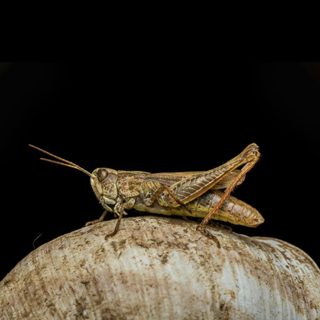
Tile image credit: Ivan Ivanovič via Unsplash

Many Minds is a project of the Diverse Intelligences Summer Institute, which is made possible by a generous grant from the John Templeton Foundation to Indiana University. The show is hosted and produced by Kensy Cooperrider, with help from Assistant Producer Urte Laukaityte and with creative support from DISI Directors Erica Cartmill and Jacob Foster. Our artwork is by Ben Oldroyd. Our transcripts are created by Sarah Dopierala.

Subscribe to Many Minds on Apple, Stitcher, Spotify, Pocket Casts, Google Play, or wherever you listen to podcasts. You can also now subscribe to the Many Minds newsletter here!

We welcome your comments, questions, and suggestions. Feel free to email us at: manymindspodcast@gmail.com.

For updates about the show, visit our website or follow us on Twitter (@ManyMindsPod) or Bluesky (@manymindspod.bsky.social).

Tämä jakso on lisätty Podme-palveluun avoimen RSS-syötteen kautta eikä se ole Podmen omaa tuotantoa. Siksi jakso saattaa sisältää mainontaa.

Jaksot(167)

From the archive: Varieties of childhood

From the archive: Varieties of childhood

Hi friends! We're taking a bit of a summer pause. We'll be back soon—in the meanwhile, enjoy this listener favorite from our archives! ----- [originally aired July 10, 2025] Childhood is a special tim...

31 Heinä 1h 28min
From the archive: Philosophers on psychedelics

From the archive: Philosophers on psychedelics

Hi friends! We're taking a bit of a summer pause. We will be back soon—in the meanwhile, enjoy this listener favorite from our archives! ----- [originally aired May 14, 2025] Some call it the "psyched...

17 Heinä 1h 40min
The origins of Darwin's ideas

The origins of Darwin's ideas

No discipline, no sphere of intellectual life, has been untouched by the work of Charles Darwin. He died in 1882 but his ideas are very much alive; they're now central to how we understand the natural...

3 Heinä 1h 19min

The sparkling deep

The sparkling deep

It's tempting to see bioluminescence as an oddity, one of those rare eccentricities of life on earth. And, on land, maybe that's true. But our planet is mostly water, and out in the open ocean biolumi...

20 Kesä 1h 20min

Is Man the Hunter just a myth?

Is Man the Hunter just a myth?

There's a story about of our past that you know well. It goes like this: At some point earlier in human evolution, we started to hunt. Men in particular—perhaps channeling some deep-seated aggressive ...

5 Kesä 1h 32min

Babies, dogs, and the riddles of word learning

Babies, dogs, and the riddles of word learning

It's kind of astonishing, really, that kids ever learn words. Each one poses a little riddle. Does this sound string refer to a person? A category of things? Or maybe some other feature of the bloomin...

22 Touko 1h 18min

The inner life of the hand

The inner life of the hand

Newton saw in the human hand proof of the divine; Darwin saw a key to our species' success. Many others, too, have described the hand in hyperbolic terms, as a paragon of design, a cornerstone of huma...

7 Touko 1h 10min

From the archive: The cuttlefish and its coat of many colors

From the archive: The cuttlefish and its coat of many colors

Hi friends! We're skipping a beat to take care of some spring housekeeping tasks. We will be back in May! In the meanwhile, enjoy this listener favorite from our archives! ----- [originally aired Apri...

22 Huhti 1h 33min

Suosittua kategoriassa Koulutus

rss-murhan-anatomia
psykopodiaa-podcast
voi-hyvin-meditaatiot-2
rss-vapaudu-voimaasi
kesken
rss-niinku-asia-on
rss-arkea-ja-aurinkoa-podcast-espanjasta
rss-liian-kuuma-peruna
rss-laadukasta-ensihoitoa
adhd-podi
aamukahvilla
rss-luonnollinen-synnytys-podcast
solu-ja-molekyylibiologian-perusteet
psykologia
jari-sarasvuo-podcast
rahapuhetta
ihminen-tavattavissa-tommy-hellsten-instituutti
rss-narsisti
rss-duodecim-lehti
dreamtalk