The nature of nurture
Many Minds5 Syys 2024

The nature of nurture

The idea of a "maternal instinct"—the notion that mothers are wired for nurturing and care—is a familiar one in our culture. And it has a flipside, a corollary—what you might call "paternal aloofness." It's the idea that men just aren't meant to care for babies, that we have more, you know, manly things to do. But when you actually look at the biology of caretaking, the truth is more complicated and much more interesting.

My guest today is Dr. Sarah Blaffer Hrdy. She is Professor Emerita of Anthropology at the University of California, Davis and the author of the new book, Father Time: A Natural History of Men and Babies. In it, she examines paternal care, the biology that supports it, and the norms and practices that sometimes suppress it.

In this conversation, Sarah and I set her new book, Father Time, in the context of her four previous books. We discuss the surprising prevalence of male care in fish and amphibians. We talk about how Charles Darwin noted the plasticity of caretaking in animals, only to ignore that plasticity when talking about humans. We consider how time in intimate proximity with babies activates capacities for nurturing—not just in fathers, but in caretakers of all kinds. Along the way, we touch on langurs and owl monkeys; emus and cassowaries; cichlid fish and fairy shrimp; prolactin and oxytocin; patriarchy and patriarchal notions. We talk about what seems to be distinctive about the human capacity for care; and about what happens when males spend too much time competing for status, and not enough time snuggling babies.

You'll probably get a sense for this from our conversation, but there are very few researchers who take both biology and culture as seriously as Sarah Blaffer Hrdy does. She does not shy away from digging deep into either domain. And she does not shy away from trying to trace the tangled links between the two.

Alright friends, I hope you enjoy this one. On to my conversation with Dr. Sarah Blaffer Hrdy.

A transcript of this episode is available here.

Notes and links

3:00 – A classic paper on male parental care in fishes.

7:00 – Dr. Hrdy's previous books include The Langurs of Abu, The Woman that Never Evolved, Mother Nature, and Mothers and Others.

13:00 – A academic article on "cooperative breeding" in birds.

16:30 – The full text of Charles Darwin's book, The Descent of Man.

21:00 – Read about Caroline Kennard and her correspondence with Darwin here.

23:30 – A review of a recent book on Nancy Hopkins and her (quantitative) efforts to expose sexism at MIT.

26:00 – The 2014 paper on the brains of fathers in different caretaking roles.

37:00 – A paper by Larry Young and a colleague on the role of ancient peptides (like oxytocin) in sociality.

40:00 – The lab of Dr. Lauren O'Connell, who studies physiology and social behavior in poison dart frogs.

42:00 – A review of paternal care in primates.

47:00 – For more on Michael Tomasello's "mutualism hypothesis"—and a lot else—see our earlier episode with Dr. Tomasello.

49:00 – For more on the costliness of the human brain, see our earlier episodes here and here.

58:00 – The 2007 study by Esther Herrmann, Michael Tomasello, and colleagues on the human specialization for social cognition.

59:00 – A study of children's early "ostensive gestures" of showing and offering.

1:02:00 – An obituary for the ethnographer Lorna Marshall.

1:09:00 – An overview of ostracods and the traces they leave in the fossil record.

Recommendations

The Parental Brain, Michael Numan

Silas Marner, George Eliot

Endless Forms Most Beautiful, Sean Carroll

Your Inner Fish, Neil Shubin

Brave Genius, Sean Carroll

Tile image credit: Kelly Sikkema via Unsplash

Many Minds is a project of the Diverse Intelligences Summer Institute, which is made possible by a generous grant from the John Templeton Foundation to Indiana University. The show is hosted and produced by Kensy Cooperrider, with help from Assistant Producer Urte Laukaityte and with creative support from DISI Directors Erica Cartmill and Jacob Foster. Our artwork is by Ben Oldroyd. Our transcripts are created by Sarah Dopierala.

Subscribe to Many Minds on Apple, Stitcher, Spotify, Pocket Casts, Google Play, or wherever you listen to podcasts. You can also now subscribe to the Many Minds newsletter here!

We welcome your comments, questions, and suggestions. Feel free to email us at: manymindspodcast@gmail.com.

For updates about the show, visit our website or follow us on Twitter (@ManyMindsPod) or Bluesky (@manymindspod.bsky.social).

Tämä jakso on lisätty Podme-palveluun avoimen RSS-syötteen kautta eikä se ole Podmen omaa tuotantoa. Siksi jakso saattaa sisältää mainontaa.

Jaksot(167)

From the archive: Varieties of childhood

From the archive: Varieties of childhood

Hi friends! We're taking a bit of a summer pause. We'll be back soon—in the meanwhile, enjoy this listener favorite from our archives! ----- [originally aired July 10, 2025] Childhood is a special tim...

31 Heinä 1h 28min

From the archive: Philosophers on psychedelics

From the archive: Philosophers on psychedelics

Hi friends! We're taking a bit of a summer pause. We will be back soon—in the meanwhile, enjoy this listener favorite from our archives! ----- [originally aired May 14, 2025] Some call it the "psyched...

17 Heinä 1h 40min
The origins of Darwin's ideas

The origins of Darwin's ideas

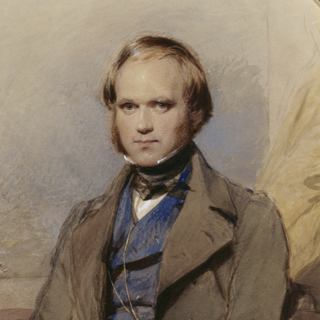
No discipline, no sphere of intellectual life, has been untouched by the work of Charles Darwin. He died in 1882 but his ideas are very much alive; they're now central to how we understand the natural...

3 Heinä 1h 19min

The sparkling deep

The sparkling deep

It's tempting to see bioluminescence as an oddity, one of those rare eccentricities of life on earth. And, on land, maybe that's true. But our planet is mostly water, and out in the open ocean biolumi...

20 Kesä 1h 20min

Is Man the Hunter just a myth?

Is Man the Hunter just a myth?

There's a story about of our past that you know well. It goes like this: At some point earlier in human evolution, we started to hunt. Men in particular—perhaps channeling some deep-seated aggressive ...

5 Kesä 1h 32min

Babies, dogs, and the riddles of word learning

Babies, dogs, and the riddles of word learning

It's kind of astonishing, really, that kids ever learn words. Each one poses a little riddle. Does this sound string refer to a person? A category of things? Or maybe some other feature of the bloomin...

22 Touko 1h 18min

The inner life of the hand

The inner life of the hand

Newton saw in the human hand proof of the divine; Darwin saw a key to our species' success. Many others, too, have described the hand in hyperbolic terms, as a paragon of design, a cornerstone of huma...

7 Touko 1h 10min

From the archive: The cuttlefish and its coat of many colors

From the archive: The cuttlefish and its coat of many colors

Hi friends! We're skipping a beat to take care of some spring housekeeping tasks. We will be back in May! In the meanwhile, enjoy this listener favorite from our archives! ----- [originally aired Apri...

22 Huhti 1h 33min

Suosittua kategoriassa Koulutus

rss-murhan-anatomia
psykopodiaa-podcast
voi-hyvin-meditaatiot-2
rss-vapaudu-voimaasi
kesken
rss-niinku-asia-on
rss-arkea-ja-aurinkoa-podcast-espanjasta
rss-liian-kuuma-peruna
rss-laadukasta-ensihoitoa
adhd-podi
aamukahvilla
rss-luonnollinen-synnytys-podcast
solu-ja-molekyylibiologian-perusteet
psykologia
jari-sarasvuo-podcast
rahapuhetta
ihminen-tavattavissa-tommy-hellsten-instituutti
rss-narsisti
rss-duodecim-lehti
dreamtalk