
The shaman with a thousand faces
Many Minds24 Heinä 2025

The shaman with a thousand faces

When you hear the word "shaman," I'm guessing a web of associations starts to form in your mind. Perhaps you imagine strange ceremonies and strong substances; maybe you think of an earlier time when magic and superstition reigned. But shamanism is not just some relic of the past, or a curio from exotic lands. It's part of our present, and it will almost certainly be part of our future. This is because the roots of shamanism lie within us all.

My guest today is Dr. Manvir Singh. Manvir is an Assistant Professor of Anthropology at the University of California, Davis and a regular contributor to The New Yorker. He's also the author of a new book—Shamanism: The Timeless Religion.

Here, Manvir and I talk about his fieldwork with Mentawai shamans in Indonesia. We discuss what makes a shaman a shaman and consider the cognitive building blocks that make shamanism so widespread and so appealing. We discuss the shamanic origins of Abrahamic religions. We consider how, over the course of history, shamanism has repeatedly resurged, despite attempts to snuff it out. And we also talk about the various forms and flavors that shamanism takes in contemporary Western societies. Along the way, Manvir and I touch on: drumming, fasting, and the "dark tent"; Jesus; experimental Edens; witches, prophets, and messiahs; glossolalia; disenchantment and re-enchantment; the rise of neoshamanism; Paleolithic rock art; hedge wizards and tech CEOs; Western exceptionalism; and the routinization of charisma.

If you enjoy this episode, I highly recommend that you check out Manvir's book—it's a captivating blend of narrative and ideas and it goes far beyond what we were able to talk about here. I'll also flag that this is Manvir's second time on Many Minds. Back in July of 2020 we had another conversation—broader in scope—where we talked about shamanism but also Manvir's work on witches, stories, and music. So you might check that one out as well.

Alright friends, on to my conversation with Dr. Manvir Singh. Enjoy!

A transcript of this episode is available here.

Notes and links

4:00 – For video examples of shamanic rituals from around the world, see Dr. Singh's recent thread on Bluesky / Twitter.

12:30 – On the idea of "cultural attraction" and "cultural attractors," see here and here. For a recent treatment of the idea of "super-attractors," see Dr. Singh's preprint here.

16:00 – On the case of cultural loss among the Northern Aché, see the recent work by Dr. Singh and a colleague.

17:30 – For more on Dr. Singh's theoretical framework for understanding shamanism, see his earlier academic paper.

19:00 – The 2005 review of altered states of consciousness by Vaitl et al. For more on psychedelics and altered states, see our recent episode with Chris Letheby.

29:00 – Mircea Eliade's classic work on shamanism—Shamanism: Archaic Techniques of Ecstasy.

34:00 – For the book by Martin Riesebrodt on the nature of religion, see here.

36:00 – For more on the human propensity for ritual, see our earlier episode with Dimitris Xygalatas.

43:00 – For one influential interpretation of Paleolithic rock art as evidence for shamanism, see David Lewis-Williams' book, Mind in the Cave: Consciousness and the Origins of Art.

52:00 – For a discussion of psychedelics and organized religion that touches on the "routinization of charisma," see this article by Michael Pollan.

54:00 – For more about the case of Alice Auma, see Dr. Singh's recent piece in The New Yorker.

1:00:30 – For more about neoshamanism and Michael Harner, see the website of the Foundation for Shamanic Studies—www.shamanism.org.

1:04:00 – For the analysis of financial managers by Samuel Johnson, see here.

1:06:00 – For more on the quasi-shamanic flavor of tech CEOs, see Rakesh Khurana's book, Searching for a Corporate Savior: The Irrational Quest for Charismatic CEOs.

1:08:00 – See, again, Dr. Singh's recent piece in The New Yorker in which he discusses Trump and prophet-like status.

1:13:00 – For Dr. Singh's work on other complex cultural traditions, see the website for his lab.

Recommendations

The Sambia: Ritual, Sexuality, and Change in Papua New Guinea, by Gilbert Herdt

The Falling Sky: Words of a Yanomami Shaman, by Davi Kopenawa & Bruce Albert

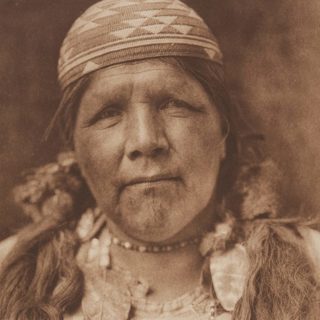
Tile image credit: Image by Edward Curtis via MOPA

Many Minds is a project of the Diverse Intelligences Summer Institute, which is made possible by a generous grant from the John Templeton Foundation to Indiana University. The show is hosted and produced by Kensy Cooperrider, with help from Assistant Producer Urte Laukaityte and with creative support from DISI Directors Erica Cartmill and Jacob Foster. Our artwork is by Ben Oldroyd. Our transcripts are created by Sarah Dopierala.

Subscribe to Many Minds on Apple, Stitcher, Spotify, Pocket Casts, Google Play, or wherever you listen to podcasts. You can also now subscribe to the Many Minds newsletter here!

We welcome your comments, questions, and suggestions. Feel free to email us at: manymindspodcast@gmail.com. s

For updates about the show, visit our website or follow us on Twitter (@ManyMindsPod) or Bluesky (@manymindspod.bsky.social).

Tämä jakso on lisätty Podme-palveluun avoimen RSS-syötteen kautta eikä se ole Podmen omaa tuotantoa. Siksi jakso saattaa sisältää mainontaa.

Jaksot(172)

Island of the tool users

Island of the tool users

Tool use is rare in the animal kingdom—but maybe not as rare as we once thought. Since Jane Goodall famously observed a chimpanzee fishing for termites, many new examples of animals using tools have c...

9 Loka 1h 26min

Cognitive offloading and its consequences

Cognitive offloading and its consequences

For thousands of years—maybe for as long as we've been human—we've offloaded our thinking. We've counted on our fingers. We've carved tallies into bone. We've invented a long series of tools to help u...

25 Syys 1h 15min

Coming of age in Ngogo

Coming of age in Ngogo

It's a familiar story in many ways. A child is born, and for years afterward is adored and indulged and anchored to home and family. But then the child grows up and starts crossing that long threshold...

11 Syys 1h 34min

The natural history of linguistic diversity

The natural history of linguistic diversity

Thousands of languages are used around the world today, and this linguistic diversity is a precious part of our human heritage. But it's also more than that. Linguistic diversity provides clues—a vast...

28 Elo 1h 32min

From the archive: Electric ecology

From the archive: Electric ecology

Hi friends! We're still taking a bit of a summer pause. We'll be back at the end of August—in the meanwhile, enjoy this listener favorite from our archives! ----- [originally aired September 19, 2024]...

17 Elo 1h 33min

From the archive: Varieties of childhood

From the archive: Varieties of childhood

Hi friends! We're taking a bit of a summer pause. We'll be back soon—in the meanwhile, enjoy this listener favorite from our archives! ----- [originally aired July 10, 2025] Childhood is a special tim...

31 Heinä 1h 28min

From the archive: Philosophers on psychedelics

From the archive: Philosophers on psychedelics

Hi friends! We're taking a bit of a summer pause. We will be back soon—in the meanwhile, enjoy this listener favorite from our archives! ----- [originally aired May 14, 2025] Some call it the "psyched...

17 Heinä 1h 40min

The origins of Darwin's ideas

The origins of Darwin's ideas

No discipline, no sphere of intellectual life, has been untouched by the work of Charles Darwin. He died in 1882 but his ideas are very much alive; they're now central to how we understand the natural...

3 Heinä 1h 19min

Suosittua kategoriassa Koulutus

rss-murhan-anatomia
aamukahvilla
psykopodiaa-podcast
voi-hyvin-meditaatiot-2
rss-duodecim-lehti
psykologia
rss-liian-kuuma-peruna
rss-rahamania
kesken
aloita-meditaatio
rss-uskonto-on-tylsaa
ihminen-tavattavissa-tommy-hellsten-instituutti
rss-hereilla
rss-luonnollinen-synnytys-podcast
rss-arkea-ja-aurinkoa-podcast-espanjasta
rss-suomen-aa-podcast
rahapuhetta
adhd-podi
koulu-podcast-2
rss-niinku-asia-on


















