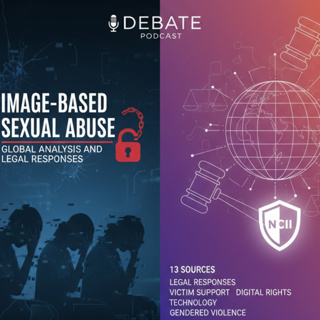
Image-Based Sexual Abuse: Global Analysis and Legal Responses

Image-Based Sexual Abuse: Global Analysis and Legal Responses

Debate Point 1: The Problem with the Name.

Host: Absolutely. The sources make it clear: terminology matters. Legal experts and advocates are pushing hard for terms like NDII or IBSA because "revenge porn" is often a gross misnomer. Why? Because focusing on the perpetrator's motive—revenge—is misleading and problematic. Not every abuser is motivated by vengeance; they might seek profit, notoriety, or simply entertainment. Worse still, a UK judge criticized the term for conveying the impression that the victim somehow "deserved" the abuse. The core harm lies not in the perpetrator’s state of mind, but in the violation of consent, privacy, and autonomy.

IBSA and NDII are far more accurate because they capture the full spectrum of abuse, which goes way beyond ex-partners sharing selfies. We’re talking about voyeuristic recordings (like South Korea’s "molka" epidemic), images stolen via hacking (think the notorious IsAnyoneUp.com case), and the devastating new reality of deepfake imagery created by AI.

Debate Point 2: The Efficacy of Legal and Tech Solutions.

Host: So, if the scope is that wide, are our laws catching up? There’s a mix of good news and major, terrifying challenges.

On the positive side, legal reform is accelerating globally. In the US, every single one of the 50 states, plus D.C. and U.S. territories, now has criminal laws against NDII. Furthermore, we finally have federal civil recourse under the VAWA 2022, which lets victims recover damages and legal fees. The big news, though, is the TAKE IT DOWN Act, signed in May 2025. This makes it a federal crime to knowingly share or even threaten to share deepfakes or intimate images, requiring platforms to remove the material within 48 hours. Criminalizing NDII federally is key because it potentially exempts these acts from the immunity granted to platforms by Section 230 of the Communications Decency Act (CDA).

Internationally, Australia models a fantastic comprehensive approach with criminal laws, civil remedies, and a civil penalties scheme enforced by the eSafety Commissioner. And the UK saw a landmark civil case awarding a victim nearly £100,000 for image-based abuse, treating the impact as "akin to the impacts of sexual assault".

But here’s the grim reality check: Challenges abound.

  1. Jurisdictional Nightmare: The transnational nature of online distribution means perpetrators can be miles away, creating a nightmare for investigation and prosecution.
  2. Legal Elements: Proving elements like "intent to harm" can still be incredibly hard. As we saw in the Hunter Moore case, the "revenge porn kingpin" was convicted for hacking and identity theft, not the NDII itself, highlighting the former legal vacuum.
  3. The Free Speech Hurdle: Legal debates persist over balancing the right to privacy against First Amendment free speech protections, complicating the drafting and upholding of robust laws.

Debate Point 3: The Tech Countermeasures.

Host: The final battle is fought on the platforms themselves. We need technical solutions that provide victims agency.

Thankfully, tech companies like Google, Microsoft, Facebook, and Twitter have policies against NCII. More importantly, they use hashing technology. This is a digital fingerprint (a unique hash value) created from a victim's image on their own device that gets shared with platforms like StopNCII.org. The actual intimate image never leaves the device, but the hash prevents re-circulation on participating sites. Organizations like the Cyber Civil Rights Initiative (CCRI)—which offers the Image Abuse Helpline (844-878-2274) and the Safety Center—are crucial in providing immediate support and guiding victims through reporting.


Jaksot(850)

Weaponizing Italian Law Against Meta. The Nicole Eggert case.

Weaponizing Italian Law Against Meta. The Nicole Eggert case.

Based on the sources, the Geocities Prophecy and the element of Synchronicity refer to the statistically improbable chain of events connecting a teenage fan in 1990s Uruguay to a Hollywood star's digi...

12 Helmi 30min
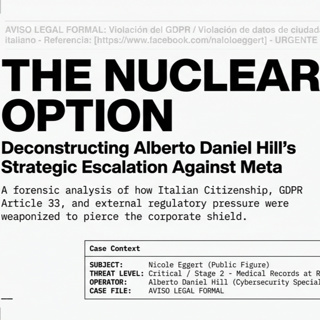
The 5 Billion Dollar Button: How One Email Could Bankrupt Meta

The 5 Billion Dollar Button: How One Email Could Bankrupt Meta

"The 5 Billion Dollar Button."Synopsis:What happens when a trillion-dollar algorithm ignores the wrong person?In the world of Big Tech, users are data points. But when Nicole Eggert (Baywatch) had her...

12 Helmi 6min
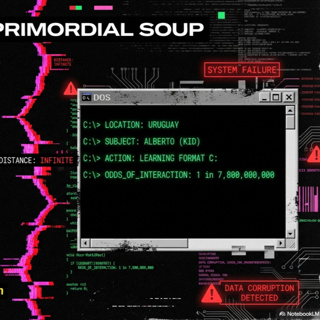
Saving Nicole Eggert’s Cancer Diary From Deletion

Saving Nicole Eggert’s Cancer Diary From Deletion

What are the odds? No, seriously. Let’s run the numbers.What is the statistical probability that Nicole Eggert (Summer Quinn from Baywatch, the show watched by 1.1 billion people) gets hacked by a scr...

12 Helmi 34min

Abuso Basado en Imágenes

Abuso Basado en Imágenes

Este documento sintetiza un análisis del abuso sexual basado en imágenes (IBSA), trazando su evolución desde hackeos dirigidos a celebridades hasta la amenaza actual de los "deepfakes" generados por I...

27 Joulu 20257min

The Unseen Wound

The Unseen Wound

These sources examine the non-consensual distribution of intimate images, a form of digital abuse frequently referred to as "revenge porn." The texts explore the severe mental health consequences for ...

27 Joulu 20256min

Nonconsensual Intimate Images: Unpacking Digital Abuse, Legal Gaps, and the Fight for Justice

Nonconsensual Intimate Images: Unpacking Digital Abuse, Legal Gaps, and the Fight for Justice

This document synthesizes an analysis of image-based sexual abuse (IBSA), charting its evolution from targeted celebrity hacks to the current threat of AI-generated “deepfakes.” The sources reveal a s...

27 Joulu 202552min
Uruguay Surveillance System: Oversight Failure and Abuse

Uruguay Surveillance System: Oversight Failure and Abuse

The provided sources examine "El Guardián," a sophisticated telecommunications interception system utilized by the Uruguayan Ministry of the Interior to monitor calls, emails, and social media. While ...

27 Joulu 202517min

El Guardián ¿controles efectivos contra el abuso?

El Guardián ¿controles efectivos contra el abuso?

Las fuentes proporcionadas examinan "El Guardián", un sofisticado sistema de interceptación de telecomunicaciones utilizado por el Ministerio del Interior de Uruguay para monitorear llamadas, correos ...

27 Joulu 202516min

Suosittua kategoriassa True crime

jaljilla
maanantaimysteeri
palmujen-varjoissa
i-dont-like-mondays
murhan-anatomia
backmanholmavuo
kurja-juttu
rss-jaljilla
piinan-kirous-2
viimeinen-havainto
rss-murhan-anatomia
motiivina-mustasukkaisuus
rss-paha-syntyi-pohjolassa
rss-maanantaimysteeri-2
motiivina-raha
huijarit
paha-syntyi-pohjolassa-bonuskausi
se-voisin-olla-mina
kulttien-johdossa
rss-haudattu