
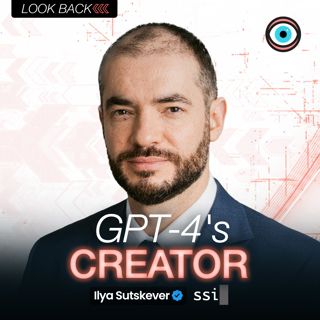
Ilya Sutskever: The Mastermind Behind GPT-4 and the Future of AI
Eye On A.I.15 Maalis 2023

Ilya Sutskever: The Mastermind Behind GPT-4 and the Future of AI

In this podcast episode, Ilya Sutskever, the co-founder and chief scientist at OpenAI, discusses his vision for the future of artificial intelligence (AI), including large language models like GPT-4.

Sutskever starts by explaining the importance of AI research and how OpenAI is working to advance the field. He shares his views on the ethical considerations of AI development and the potential impact of AI on society.

The conversation then moves on to large language models and their capabilities. Sutskever talks about the challenges of developing GPT-4 and the limitations of current models. He discusses the potential for large language models to generate a text that is indistinguishable from human writing and how this technology could be used in the future.

Sutskever also shares his views on AI-aided democracy and how AI could help solve global problems such as climate change and poverty. He emphasises the importance of building AI systems that are transparent, ethical, and aligned with human values.

Throughout the conversation, Sutskever provides insights into the current state of AI research, the challenges facing the field, and his vision for the future of AI. This podcast episode is a must-listen for anyone interested in the intersection of AI, language, and society.

Timestamps:

(00:04) Introduction of Craig Smith and Ilya Sutskever.
(01:00) Sutskever's AI and consciousness interests.
(02:30) Sutskever's start in machine learning with Hinton.
(03:45) Realization about training large neural networks.
(06:33) Convolutional neural network breakthroughs and imagenet.
(08:36) Predicting the next thing for unsupervised learning.
(10:24) Development of GPT-3 and scaling in deep learning.
(11:42) Specific scaling in deep learning and potential discovery.
(13:01) Small changes can have big impact.
(13:46) Limits of large language models and lack of understanding.
(14:32) Difficulty in discussing limits of language models.
(15:13) Statistical regularities lead to better understanding of world.
(16:33) Limitations of language models and hope for reinforcement learning.
(17:52) Teaching neural nets through interaction with humans.
(21:44) Multimodal understanding not necessary for language models.
(25:28) Autoregressive transformers and high-dimensional distributions.
(26:02) Autoregressive transformers work well on images.
(27:09) Pixels represented like a string of text.
(29:40) Large generative models learn compressed representations of real-world processes.
(31:31) Human teachers needed to guide reinforcement learning process.
(35:10) Opportunity to teach AI models more skills with less data.
(39:57) Desirable to have democratic process for providing information.
(41:15) Impossible to understand everything in complicated situations.

Craig Smith Twitter: https://twitter.com/craigss
Eye on A.I. Twitter: https://twitter.com/EyeOn_AI

Tämä jakso on lisätty Podme-palveluun avoimen RSS-syötteen kautta eikä se ole Podmen omaa tuotantoa. Siksi jakso saattaa sisältää mainontaa.

Jaksot(386)

Chat GPT's Creator Explains The Shocking Truth About How AI Understands the World | Ilya Sutskever

Chat GPT's Creator Explains The Shocking Truth About How AI Understands the World | Ilya Sutskever

Craig Smith sits down with Ilya Sutskever - Co-Founder and Chief Scientist at Safe Superintelligence Inc. & former chief scientist at OpenAI and one of the primary minds behind GPT-3, GPT-4, and the d...

9 Loka 41min

The Coordination Tax: Why AI Is Burning Out Your Best People | Dan O'Connell, Front

The Coordination Tax: Why AI Is Burning Out Your Best People | Dan O'Connell, Front

Everyone assumes AI in customer operations means fewer people and lower costs. The data from 700 customer operations leaders is more complicated, and more honest. Dan O'Connell, CEO of Front, joins Cr...

6 Loka 51min

Ukraine's Secret Weapon: The Points System Winning the Drone War | Andrii Hrytseniuk

Ukraine's Secret Weapon: The Points System Winning the Drone War | Andrii Hrytseniuk

Ukraine tracks every confirmed drone kill with video evidence, deduplicates the data to prevent double-counting, converts verified strikes into e-points, and delivers newly ordered weapons to frontlin...

2 Loka 33min
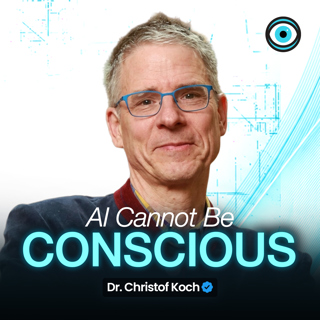
Why Current AI Cannot Be Conscious | Dr. Christof Koch

Why Current AI Cannot Be Conscious | Dr. Christof Koch

One in four patients currently being considered for life support withdrawal may actually be fully conscious, they just can't signal it. That single finding, from a landmark New England Journal of Medi...

30 Syys 1h 1min
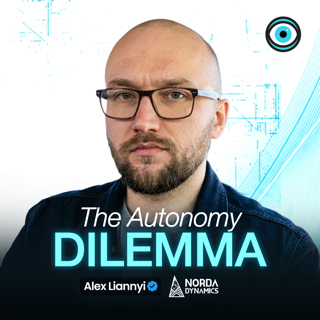
The Technology for Fully Autonomous Attack Is Already Here | Alex Liannyi, NORDA Dynamics

The Technology for Fully Autonomous Attack Is Already Here | Alex Liannyi, NORDA Dynamics

The AI systems guiding Ukrainian combat drones aren't running on expensive Nvidia chips. They're running on a Raspberry Pi Zero - a $15 hobby computer - and that single detail tells you more about how...

24 Syys 19min

Inside Ukraine's Drone War: Maj. "Phoenix" of Lasar's Group

Inside Ukraine's Drone War: Maj. "Phoenix" of Lasar's Group

The first armed drone Ukraine ever fielded wasn't built in a factory or procured from a defense contractor. It was built in four months by a network engineer using a Starlink terminal and a large agri...

21 Syys 1h 5min

The Hidden Algorithm That Decides Which Software AI Will Recommend | Tim Sanders, G2

The Hidden Algorithm That Decides Which Software AI Will Recommend | Tim Sanders, G2

Most companies investing in AI visibility are optimizing for the wrong thing. Being cited by an AI response and being recommended by an AI response are completely different outcomes, with click-throug...

14 Syys 58min

The Reason 30 Years of Cybersecurity Has Failed - and What Actually Fixes It | Trent Telford, Qanapi

The Reason 30 Years of Cybersecurity Has Failed - and What Actually Fixes It | Trent Telford, Qanapi

Every major data breach in the last 30 years shares the same root cause: the data inside the wall was never protected, only the wall. And AI frontier models are now making that wall easier to breach t...

10 Syys 55min