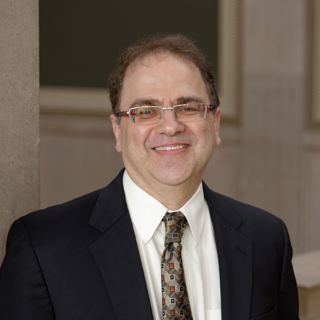
29 - Narayana Kocherlakota on the FOMC, the 2008 Crisis, and Monetary Rules
Narayana Kocherlakota is the Lionel W. McKenzie Professor of Economics at the University of Rochester, and he previously served as president and CEO of the Federal Reserve Bank of Minneapolis. He joins the show to discuss to discuss what it is like working as a Fed president and a member of the Federal Open Market Committee. He also shares some of his thoughts on the drawbacks of current proposals on establishing monetary rules. David's blog: macromarketmusings.blogspot.com/ Narayana's website: https://sites.google.com/site/kocherlakota009/ David's Twitter: @davidbeckworth Narayana's Twitter: @kocherlakota009 Related links: Narayana's profile, speeches, and articles as Fed president: https://www.minneapolisfed.org/about/more-about-the-fed/presidents-of-the-minneapolis-fed/narayana-kocherlakota Narayana's Bloomberg archive: https://www.bloomberg.com/view/contributors/APvwpZqjDaA/narayana-kocherlakota/articles Narayana's Brookings article: Rules vs. Discretion: A Reconsideration https://www.brookings.edu/bpea-articles/rules-versus-discretion-a-reconsideration/ Responses to the Brookings article by John Taylor and George Selgin: https://economicsone.com/2016/09/17/kocherlakota-on-the-fed-and-the-taylor-rule/ http://www.alt-m.org/2016/09/22/rules-discretion-audacity-critique-kocherlakota/
24 Loka 201659min
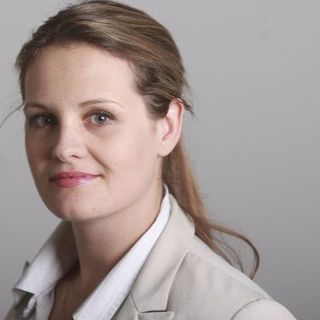
28 - Izabella Kaminska on Blockchain Technology and the Economics of Star Trek
Izabella Kaminska is a writer for the Financial Times at its premier blog, FT Alphaville. She joins the show to discuss her work on blockchain technology as well as current proposals on monetary and fiscal policy. Finally, Izabella and David, who are both big sci-fi fans, talk about economics in the Star Trek and Star Wars sagas. David's Twitter: @DavidBeckworth Izabella Kaminska's Twitter: @izakaminska David's blog: http://macromarketmusings.blogspot.com/ Izabella Kaminska's FT bio and archive: http://ftalphaville.ft.com/meet-the-team/izabella-kaminska/ Related links: "You see, money doesn't exist in the 24th century" – Izabella Kaminska http://ftalphaville.ft.com/2015/10/12/2142030/you-see-money-doesnt-exist-in-the-24th-century/ Even lower rates? "Thanks but no thanks" say banks everywhere – Izabella Kaminska http://ftalphaville.ft.com/2016/07/11/2168870/even-lower-rates-thanks-but-no-thanks-say-banks-everywhere/ Trekonomics: The Economics of Star Trek – Manu Saadia https://www.amazon.com/Trekonomics-Economics-Star-Manu-Saadia/dp/1941758754 It's a Trap: Emperor Palpatine's Poison Pill – Zachary Feinstein https://arxiv.org/pdf/1511.09054.pdf
17 Loka 20161h 1min

27 - Claudio Borio on Financial Stability, the Triffin Dilemma, and International Monetary Policy
Claudio Borio is the director of the monetary and economic department at the Bank for International Settlements (BIS). He joins the show to discuss his career in monetary policy, banking, and macroprudential regulation. In particular, he and David discuss problems afflicting the Eurozone and how to address massive financial imbalances across the world. David's Twitter: @DavidBeckworth Claudio's bio and research: https://www.bis.org/author/claudio_borio.htm David's blog: macromarketmusings.blogspot.com/ Related links: "Revisiting Three Intellectual Pillars of Monetary Policy" by Claudio Borio http://object.cato.org/sites/cato.org/files/serials/files/cato-journal/2016/5/cj-v36n2-1.pdf
10 Loka 20161h 5min

26 – Andy Levin on Federal Reserve Reform
Andrew Levin is a professor of economics at Dartmouth College and a former Federal Reserve Board economist. For two years, he worked as a special adviser to Chairman Ben Bernanke and Vice Chair Janet Yellen. He joins the podcast to discuss his experiences at the Fed and the need for more accountability. His ideas include increasing transparency, setting term limits, and fostering diversity of thought and background among its members. David's Twitter: @DavidBeckworth Andy Levin's Twitter: @AndrewTLevin David's blog: http://macromarketmusings.blogspot.com/ Andy Levin's bio: http://www.dartmouth.edu/~alevin/ Related links: Dartmouth College Q&A with Professor Andy Levin http://www.thedartmouth.com/article/2016/09/qa-with-economics-professor-andrew-levin How Andy proposes to reform the Fed: http://www.businessinsider.com/andrew-levins-4-radical-fed-changes-2016-4 http://www.bloomberg.com/politics/articles/2016-04-11/former-yellen-adviser-proposes-sweeping-reform-of-fed-system http://www.wsj.com/articles/former-fed-adviser-activists-lay-out-a-plan-for-change-at-the-fed-1460400788 https://www.federalreserve.gov/monetarypolicy/fomchistorical2008.htm
3 Loka 201657min

25 - Morgan Ricks on *The Money Problem,* Financial Regulation, and Shadow Banking
Morgan Ricks is a law professor at Vanderbilt University and an expert on financial regulation. From 2009-2010, he was a senior policy adviser at the U.S. Treasury Department where he focused on financial stability initiatives. Morgan joins the show to discuss his new book, "The Money Problem: Rethinking Financial Regulation," which argues that shadow banking institutions create large sums of private sector money through issuing short-term debt. This rapid expansion creates instability to the financial system and to the broader economy. To solve this problem, Morgan proposes that only properly chartered, FDIC-insured banks be allowed to issue short-term liabilities. Although there may be more bureaucracy in insuring the financial system under this proposal, Morgan argues there would be less need for higher capital requirements and other regulations. David's blog: http://macromarketmusings.blogspot.com/ Morgan Ricks' Vanderbilt profile: http://law.vanderbilt.edu/bio/morgan-ricks David's Twitter: @DavidBeckworth Morgan Ricks' Twitter: @MorganRicks1 Related links: The Money Problem: Rethinking Financial Regulation https://www.amazon.com/Money-Problem-Rethinking-Financial-Regulation/dp/022633032X David's review of The Money Problem in National Review (gated) https://www.nationalreview.com/magazine/2016-09-12-0100/morgan-ricks-the-money-problem "A Simpler Approach to Financial Reform" by Morgan Ricks http://papers.ssrn.com/sol3/papers.cfm?abstract_id=2316900 "A Former Treasury Adviser on How to Really Fix Wall Street" by Morgan Ricks in The New Republic https://newrepublic.com/article/98659/wall-street-term-out-panic
26 Syys 201658min

24 - Ryan Avent on *The Wealth of Humans,* Job Automation, and Globalization
Ryan Avent is an economics columnist for The Economist and author of the new book, The Wealth of Humans: Work, Power, and Status in the Twenty-First Century. He joins the show to discuss his new book, which explores how the Digital Revolution is dramatically changing the economy and our lives. He also discusses how he previously worked at the Bureau of Labor Statistics and as a private sector consultant before moving to journalism. Finally, David and Ryan talk about economic angst both in the United States and abroad as well as some sound macroeconomic policies to address this. David's Twitter: @davidbeckworth David's blog: http://macromarketmusings.blogspot.com/ Ryan Avent's Twitter: @ryanavent Ryan Avent's website: http://www.ryanavent.com/blog/?page_id=6 Related links: http://www.economist.com/ https://www.amazon.com/Wealth-Humans-Status-Twenty-first-Century/dp/1250075807
19 Syys 20161h 2min
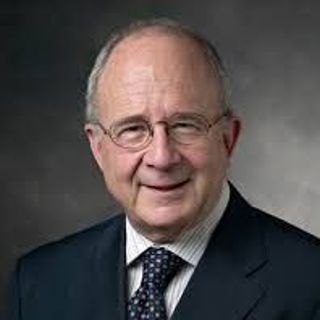
23 - Michael Bordo on Anna Schwartz, Financial Crises, and Life as a Monetary Historian
Michael D. Bordo is a professor of economics and the director of the Center for Monetary and Financial History at Rutgers University, a Distinguished Visiting Fellow at the Hoover Institution, and a research associate at the National Bureau of Economic Research. He has also been a visiting scholar at numerous central banks across the world. Michael, a prolific scholar, joins the show to discuss a long career in monetary economics, including his research with the legendary Anna Schwartz. He shares his thoughts on the Great Recession and how it compares with the Great Depression. Additionally, he challenges the notion that financial crises like the 2007-2009 crisis are necessarily followed by slow recoveries. David and Michael also chat about the history of American banking law and how restrictions on interstate-branch banking until the 1990s hindered economic growth. Finally, Michael gives some advice about how to be a successful monetary historian! David's blog: macromarketmusings.blogspot.com Michael Bordo's homepage: https://sites.google.com/site/michaelbordo/ David's Twitter: @davidbeckworth Related links: Michael Bordo in The Wall Street Journal: "Financial Recessions Don't Lead to Weak Recessions" http://www.wsj.com/articles/SB10000872396390444506004577613122591922992 "A Lesson from the Great Depression that the Fed Might have Learned: A Comparison of the 1932 Open Market Purchases with Quantitative Easing" http://www.frbsf.org/economic-research/files/S01_P1_Arunima-Sinha.pdf "A Fiscal Union for the Euro: Some Lessons from History" http://www.nber.org/papers/w17380 "Under What Circumstances can Inflation be a Solution to Excessive National Debt: Some Lessons from History" http://docplayer.net/6583440-Under-what-circumstances-can-inflation-be-a-solution-to-excessive-national-debt-some-lessons-from-history.html
12 Syys 20161h 2min
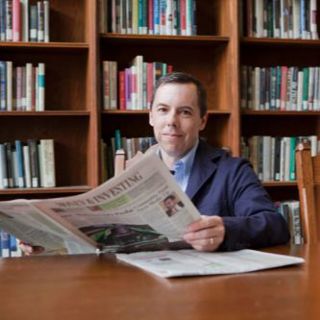
22 - Peter Ireland on the Chicago School, Federal Reserve Policy Targets, and Monetary Aggregates
Peter Ireland is the Murray and Monti Professor of Economics at Boston College, a research associate at the National Bureau of Economic Research, and a member of the Shadow Open Market Committee. He joins the show to discuss his experience as a student at the University of Chicago as well as the nuts and bolts of how the Federal Reserve sets out to achieve its short-, medium-, and long-term objectives. David and Peter also discuss the role of monetary aggregates in monetary policy. Economists largely don't pay much attention to the traditional simple-sum measures of the money supply anymore, but Ireland argues that more complex measures of money, called Divisia indices, can teach us a lot about the stance of monetary policy. [To learn more about the upcoming conference, Monetary Rules for a Post-Crisis World, co-hosted by the Mercatus Center and the Cato Institute, and register, please click the link below. You can also watch the conference online by clicking the link.] http://mercatus.org/content/register-monetary-rules-post-crisis-world David's blog: macromarketmusings.blogspot.com/ Peter Ireland's personal website: https://www2.bc.edu/peter-ireland/ Peter Ireland's Boston college profile: http://www.bc.edu/schools/cas/economics/faculty-and-staff/faculty-listing/peter-ireland.html David's Twitter: @davidbeckworth Peter Ireland's Twitter: @PIrelandatBC Related links: The Shadow Open Market Committee http://shadowfed.org/ A "Working" Solution to the Question of Nominal GDP Targeting by Peter Ireland and Michael Belongia https://dlib.bc.edu/islandora/object/bc-ir:103357/datastream/PDF/view
5 Syys 20161h 1min