#224 – There's a cheap and low-tech way to save humanity from any engineered disease | Andrew Snyder-Beattie

#224 – There's a cheap and low-tech way to save humanity from any engineered disease | Andrew Snyder-Beattie

Conventional wisdom is that safeguarding humanity from the worst biological risks — microbes optimised to kill as many as possible — is difficult bordering on impossible, making bioweapons humanity’s single greatest vulnerability. Andrew Snyder-Beattie thinks conventional wisdom could be wrong.

Andrew’s job at Open Philanthropy is to spend hundreds of millions of dollars to protect as much of humanity as possible in the worst-case scenarios — those with fatality rates near 100% and the collapse of technological civilisation a live possibility.

Video, full transcript, and links to learn more: https://80k.info/asb

As Andrew lays out, there are several ways this could happen, including:

  • A national bioweapons programme gone wrong, in particular Russia or North Korea
  • AI advances making it easier for terrorists or a rogue AI to release highly engineered pathogens
  • Mirror bacteria that can evade the immune systems of not only humans, but many animals and potentially plants as well

Most efforts to combat these extreme biorisks have focused on either prevention or new high-tech countermeasures. But prevention may well fail, and high-tech approaches can’t scale to protect billions when, with no sane people willing to leave their home, we’re just weeks from economic collapse.

So Andrew and his biosecurity research team at Open Philanthropy have been seeking an alternative approach. They’re proposing a four-stage plan using simple technology that could save most people, and is cheap enough it can be prepared without government support. Andrew is hiring for a range of roles to make it happen — from manufacturing and logistics experts to global health specialists to policymakers and other ambitious entrepreneurs — as well as programme associates to join Open Philanthropy’s biosecurity team (apply by October 20!).

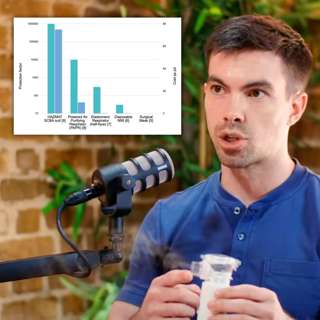
Fundamentally, organisms so small have no way to penetrate physical barriers or shield themselves from UV, heat, or chemical poisons. We now know how to make highly effective ‘elastomeric’ face masks that cost $10, can sit in storage for 20 years, and can be used for six months straight without changing the filter. Any rich country could trivially stockpile enough to cover all essential workers.

People can’t wear masks 24/7, but fortunately propylene glycol — already found in vapes and smoke machines — is astonishingly good at killing microbes in the air. And, being a common chemical input, industry already produces enough of the stuff to cover every indoor space we need at all times.

Add to this the wastewater monitoring and metagenomic sequencing that will detect the most dangerous pathogens before they have a chance to wreak havoc, and we might just buy ourselves enough time to develop the cure we’ll need to come out alive.

Has everyone been wrong, and biology is actually defence dominant rather than offence dominant? Is this plan crazy — or so crazy it just might work?

That’s what host Rob Wiblin and Andrew Snyder-Beattie explore in this in-depth conversation.


What did you think of the episode? https://forms.gle/66Hw5spgnV3eVWXa6

Chapters:

  • Cold open (00:00:00)
  • Who's Andrew Snyder-Beattie? (00:01:23)
  • It could get really bad (00:01:57)
  • The worst-case scenario: mirror bacteria (00:08:58)
  • To actually work, a solution has to be low-tech (00:17:40)
  • Why ASB works on biorisks rather than AI (00:20:37)
  • Plan A is prevention. But it might not work. (00:24:48)
  • The “four pillars” plan (00:30:36)
  • ASB is hiring now to make this happen (00:32:22)
  • Everyone was wrong: biorisks are defence dominant in the limit (00:34:22)
  • Pillar 1: A wall between the virus and your lungs (00:39:33)
  • Pillar 2: Biohardening buildings (00:54:57)
  • Pillar 3: Immediately detecting the pandemic (01:13:57)
  • Pillar 4: A cure (01:27:14)
  • The plan's biggest weaknesses (01:38:35)
  • If it's so good, why are you the only group to suggest it? (01:43:04)
  • Would chaos and conflict make this impossible to pull off? (01:45:08)
  • Would rogue AI make bioweapons? Would other AIs save us? (01:50:05)
  • We can feed the world even if all the plants die (01:56:08)
  • Could a bioweapon make the Earth uninhabitable? (02:05:06)
  • Many open roles to solve bio-extinction — and you don’t necessarily need a biology background (02:07:34)
  • Career mistakes ASB thinks are common (02:16:19)
  • How to protect yourself and your family (02:28:21)

This episode was recorded on August 12, 2025

Video editing: Simon Monsour and Luke Monsour
Audio engineering: Milo McGuire, Simon Monsour, and Dominic Armstrong
Music: CORBIT
Camera operator: Jake Morris
Coordination, transcriptions, and web: Katy Moore

Tämä jakso on lisätty Podme-palveluun avoimen RSS-syötteen kautta eikä se ole Podmen omaa tuotantoa. Siksi jakso saattaa sisältää mainontaa.

Jaksot(340)

We can guess what intergalactic war would look like. And strangely, it matters.

We can guess what intergalactic war would look like. And strangely, it matters.

Intergalactic war is probably billions of years away — yet physics can already tell us how it ends. And strangely that conclusion is relevant to decisions people have to make today.In this video, Rob ...

18 Kesä 15min

How AI could create the world’s biggest problems (article by Zershaaneh Qureshi)

How AI could create the world’s biggest problems (article by Zershaaneh Qureshi)

Imagine you’re living 15,000 years ago. Your people are hunter-gatherers and you sleep under the stars. If someone told you humans would one day build cities with millions of people, fly through the a...

11 Kesä 1h 29min

What it's really like to run AGI safety at Google DeepMind (and where I disagree with 'doomers') | Rohin Shah

What it's really like to run AGI safety at Google DeepMind (and where I disagree with 'doomers') | Rohin Shah

Most people working on AI safety think without a massive effort AI systems will probably end up with goals catastrophically different from humanity’s. Today’s guest, Rohin Shah — head of AGI Safety an...

2 Kesä 2h 48min

What makes for a dream job? | Benjamin Todd

What makes for a dream job? | Benjamin Todd

What actually makes a job fulfilling? It's not what most career advice tells you. "Follow your passion" sounds inspiring, but it's misleading — and the research backs that up.Drawing on hundreds of st...

28 Touko 28min

We’re updating our career advice for the strangest time in history | Benjamin Todd, author of 80,000 Hours

We’re updating our career advice for the strangest time in history | Benjamin Todd, author of 80,000 Hours

The average career is 80,000 hours long. With AI advancing so rapidly, the hours you have left in your career matter more than ever.Some leading AI researchers think there’s a 10% chance that AI syste...

26 Touko 1h 6min

Can AIs already start 'rogue deployments' inside AI companies? (Landmark new METR report)

Can AIs already start 'rogue deployments' inside AI companies? (Landmark new METR report)

A red-teamer was embedded inside Anthropic for three weeks, told to imagine he was an evil Claude, and asked to figure out how to launch a ‘rogue AI deployment’ without getting caught. It’s one part o...

20 Touko 20min

#243 – 'Godfather of AI' Yoshua Bengio: "I now see a path" to safe superintelligent AI

#243 – 'Godfather of AI' Yoshua Bengio: "I now see a path" to safe superintelligent AI

The co-inventor of modern AI and the most cited living scientist believes he's figured out how to ensure AI is honest, incapable of deception, and never goes rogue. Yoshua Bengio – Turing Award Winner...

7 Touko 2h 35min

'95% of AI Pilots Fail': The hidden agenda behind the viral stat that misled millions

'95% of AI Pilots Fail': The hidden agenda behind the viral stat that misled millions

You might have heard that '95% of corporate AI pilots' are failing. It was one of the most widely cited AI statistics of 2025, parroted by media outlets everywhere. It helped trigger a Nasdaq selloff ...

28 Huhti 10min

Suosittua kategoriassa Koulutus

rss-murhan-anatomia
psykopodiaa-podcast
adhd-podi
voi-hyvin-meditaatiot-2
kesken
rss-liian-kuuma-peruna
puhutaan-koiraa
aamukahvilla
rss-narsisti
rss-hereilla
aamupore
rss-rahamania
filocast-filosofian-perusteet
rss-uskonto-on-tylsaa
rss-laadukasta-ensihoitoa
rss-arkea-ja-aurinkoa-podcast-espanjasta
dear-ladies
rss-psykalab
rss-taloyhtiokupla
rss-koira-haudattuna