
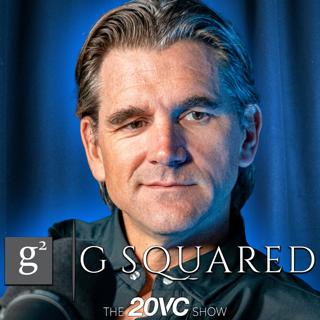
20VC: How We Made $800M on Coursera | We Lost Money on Uber and Made Money on Lyft | We Did 3x on Postmates in 18 Months | DPI is King, MOIC is BS | We Dodged Theranos and I Still Lost Millions with Larry Aschebrook @ G Squared
Larry Aschebrook is the Founder and Managing Partner of G Squared in what is one of the wildest stories of venture capital. Larry started G Squared with nothing, dialling for dollars having personally invested in Twitter and Uber. In his first fund, Larry made sizable bets into SpaceX, Palantir, Alibaba and Twitter. Larry has also had mega losses along the way (discussed in the show) in Getir, 23andme and more. Today, Larry manages over $5BN and has invested in all the best from Wiz to Spotify to Revolut and Anthropic. Agenda: 00:00 – From Broke to Billion-Dollar Bets 03:40 – The $800M Coursera Windfall 06:10 – Lyft Made Millions, Uber Lost $50M 09:05 – "We Fcked Up": The Billion-Dollar Vintage 11:50 – How a $150M Spotify Bet Made a Billion 15:10 – The Gut Call That Dodged Theranos 18:00 – Vampires vs Zombies: The Coming Startup Purge 20:30 – When Success Almost Killed the Firm 24:20 – DPI Is King, MOIC Is Bullsht 27:40 – Why I'd Buy Anthropic at $61BN Today 30:05 – Losing $70M on 23andMe 32:10 – The Janitor of Venture Capital 34:00 – The Getir Deal That Nearly Broke Me 36:25 – Does Money Actually Make You Happy? 39:00 – What Cal Ripken Jr. Taught Me About Venture
16 Kesä 1h 34min

20VC: SpaceX, Tesla, Neuralink: Elon's Empire After the Firestorm | Are Circle and Coreweave Meme Stocks: IPO Analysis | Anduril Raises $2.6BN & Becomes Founders Fund's 1st and 2nd Largest Check Ever | Cursor Now 20% of SaaS Spend and the SaaS Slowdown
Agenda: 00:03 – Circle's IPO: Investors Just Left $BNs on the Table 00:06 – CoreWeave & Circle: Are We Back to Meme Stock Madness? 00:11 – Should Stripe and Databricks Finally Go Public? 00:17 – US Stock Markets: How They DOMINATE the Global Game 00:21 – 50% of Unicorns Are DOOMED. What Happens Now? 00:25 – Founders Fund Just Dropped $1B on Anduril. Why?! 00:29 – What Would You Do If LPs Let You Go Wild? 00:36 – What Missing Out on Millions for Docusign Taught Rory 00:44 – Cursor is 20% of SaaS Spend: The Shocking Data Behind the SaaS Slowdown 00:47 – AI vs. SaaS: The Great Budget War Begins 00:48 – Can AI Take Budget from the Talent Budget or Will It Remain in Software Budgets? 00:56 – SpaceX, Tesla, Neuralink: Elon's Empire After the Firestorm Please read the offering circular and related risks at invest.modemobile.com. This is a paid advertisement for Mode Mobile's Regulation A+ Offering. Past performance is no guarantee of future results. Investing in private company securities is not suitable for all investors because it is highly speculative and involves a high degree of risk. It should only be considered a long-term investment. You must be prepared to withstand a total loss of your investment. Private company securities are also highly illiquid, and there is no guarantee that a market will develop for such securities. DealMaker Securities LLC, a registered broker-dealer, and member of FINRA | SIPC, located at 105 Maxess Road, Suite 124, Melville, NY 11747, is the Intermediary for this offering and is not an affiliate of or connected with the Issuer. Please check our background on FINRA's BrokerCheck.
12 Kesä 1h 16min
20VC: Fiverr CEO: 'If You're Not Adapting to AI, F* You. You're Done | Why "Time to Copy" is the Most Important Metric in Startups Today | Why 99% of AI Companies Today Will Die | Why Governments Will Take Control of AI with Micha Kauffman
Micha Kaufman is the Founder and CEO of Fiverr, the leading online marketplace for freelance services. Fiverr has had an insane ride in the public markets, in 2019 the company went public with a $650M market cap, at their peak that hit over $8BN. Today, facing a wave of AI, the company has a market cap of $1.121BN on an estimated $430M EOY revenues. Prior to co-founding Fiverr, Micha successfully founded and led several startups over the last 30 years. In Today's Episode We Discuss: 00:00 – "Fuck you. It's not my job to make you better." Micha's viral internal email that sparked a company-wide awakening 05:00 – The real reason Micha thinks Fiverr is vulnerable to AI 07:00 – "Replace 100% of your job with AI": Micha's challenge to every employee 11:00 – The brutal truth about entitlement in the modern workforce 13:00 – Wake the f*** up: Micha on the crisis of work ethic and ambition 15:00 – "Too many startups, zero value": Why AI is the new dot-com bubble 17:00 – The time-to-clone has collapsed: Why your startup can be copied in 10 days 21:00 – Why distribution, not code, is the moat that matters now 23:00 – The new game of investing: Why backing "missionaries" is all that counts 25:00 – The seed investment Micha wrote off… that became his biggest win 38:00 – "Being a CEO today is like captaining a ship in a storm" 39:00 – Will governments take control of AI? The Manhattan Project analogy 42:00 – The rise of AI superpowers—and the brutal decline of everyone else 46:00 – The single-person unicorn: Is it real? Micha says yes 47:00 – Why Micha's hiring more engineers—not fewer 48:00 – Marketing is being disrupted faster than engineering. Here's how 54:00 – What cost Micha wants to cut—but can't 56:00 – Why Micha would tell his kid: "Don't go to university" 57:00 – The business Fiverr could have built before OnlyFans—and why they didn't 59:00 – How Micha decides every year whether he should still be CEO 01:00:00 – The ultimate metric: When meaning matters more than happiness
9 Kesä 1h 6min

20VC: The Science of Storytelling: Three Steps to Master the Perfect Story | From Near Death Experience to Unicorn Startup: The Untold Story of Omaze with Matt Pohlson
Matt Pohlson is the co-founder and Chairman of Omaze, the most insane story in startups that you have never heard. From near death experience to working with Arnold Schwarzenegger, George Clooney and The Pope. Omaze has raised over $200 million for charity by offering once-in-a-lifetime celebrity experiences and luxury house draws. He's a master storyteller, a purpose-driven builder, and one of the most creative entrepreneurs in modern philanthropy. In Today's Episode We Discuss: 00:00 — He Died for 4 Minutes… Then Built a $400M Startup 04:00 — The Magic Johnson Moment That Sparked Omaze 06:30 — From $780 to $1.7M: The Breaking Bad Campaign That Changed Everything 09:00 — Star Wars, Schwarzenegger, and Selling Dreams 13:00 — He Flatlined in Surgery… And Everything Changed 18:00 — How Near-Death Killed Fear and Transformed His Leadership 22:00 — Why Fear Isn't Real — And How to Beat It 24:00 — The $250K Bet That Changed Omaze's Business Forever 27:00 — Launching Houses: The Pivot to $100M+ Revenue 34:00 — The Science of Storytelling: Make the Customer the Hero 38:00 — Why TV Still Works: $35M Ad Spend Secrets 45:00 — How They Almost Went Out of Business—Twice 50:00 — The Deck That Saved Omaze Mid-COVID 53:00 — Loneliness, Therapy, and the CEO Mental Game 55:00 — From Self-Doubt to Self-Love: The Hoffman Process 58:00 — How to Lead With Story, Science, and Soul 1:02:00 — Should Omaze Go Public? Matt's Unfiltered Take 1:05:00 — Addiction, Ambition, and Why Fulfillment Can Kill Hunger 1:10:00 — Revenue Per Employee: $7M a Head! 1:15:00 — Matt's 10-Year Vision: Fortune 500. #1 in Charity. Please read the offering circular and related risks at invest.modemobile.com. This is a paid advertisement for Mode Mobile's Regulation A+ Offering. Past performance is no guarantee of future results. Investing in private company securities is not suitable for all investors because it is highly speculative and involves a high degree of risk. It should only be considered a long-term investment. You must be prepared to withstand a total loss of your investment. Private company securities are also highly illiquid, and there is no guarantee that a market will develop for such securities. DealMaker Securities LLC, a registered broker-dealer, and member of FINRA | SIPC, located at 105 Maxess Road, Suite 124, Melville, NY 11747, is the Intermediary for this offering and is not an affiliate of or connected with the Issuer. Please check our background on FINRA's BrokerCheck.
6 Kesä 1h 25min

20VC: Is Chamath Right: Is DPI The Only Thing That Matters | Does OpenAI Even Matter | Mary Meekers AI Report: The Analysis| IPO Breakdown: Chime, Circle & Thoma Bravo's New Fund
Agenda: 00:00 – The Most Unfiltered Episode Ever Begins 03:30 – Does OpenAI Even Matter? Sam Lessin Says Maybe Not. 05:45 – TVPI Is Bullshit? 09:20 – Asset Gatherers vs Real Investors: Who Actually Wins? 12:15 – The Death of the Billion-Dollar VC Fund? 16:00 – Mid-Tier VC Funds Are Getting Annihilated 21:00 – Chime: Great Exit or Missed Opportunity? 27:00 – The War on Relevance: What Companies Truly Matter? 33:00 – If You're Not a Billion-Dollar Company, Do You Even Count? 37:10 – Mary Meeker's AI Report: What Everyone Missed 39:50 – $600B in AI CapEx—Where Is the Revenue?! 43:40 – What Could Trigger the First AI Crash? 51:10 – The Existential Dread Missing in Most B2B Startups 58:30 – Will AI Reduce Your Startup to Just a Pipe? 01:01:10 – IPO Market Is Back: What Actually Matters Now? 01:06:50 – YC Startups at $60M Valuations: How Should You Play It? 01:10:00 – Why 3% Ownership Could Still Work—Maybe 01:11:30 – Will Elon Still Be Tesla CEO by 2027? Place Your Bets 01:14:10 – Will Meta Release a Closed AI Model? And Does It Even Matter? 01:17:30 – The Real Challenge of Managing 11 Companies and 58 Kids Please read the offering circular and related risks at invest.modemobile.com. This is a paid advertisement for Mode Mobile's Regulation A+ Offering. Past performance is no guarantee of future results. Investing in private company securities is not suitable for all investors because it is highly speculative and involves a high degree of risk. It should only be considered a long-term investment. You must be prepared to withstand a total loss of your investment. Private company securities are also highly illiquid, and there is no guarantee that a market will develop for such securities. DealMaker Securities LLC, a registered broker-dealer, and member of FINRA | SIPC, located at 105 Maxess Road, Suite 124, Melville, NY 11747, is the Intermediary for this offering and is not an affiliate of or connected with the Issuer. Please check our background on FINRA's BrokerCheck.
5 Kesä 1h 23min

20VC: Windsurf Founder on Will Model Companies Own the App Layer | Why Moats Do Not Exist in a World of AI | Why the Notion of Single Person $BN Companies is BS | Lovable vs Bolt & Cursor vs Windsurf: How Does it All End with Varun Mohan
Varun Mohan is the CEO and Co-Founder of Windsurf, the leading AI-native IDE, which has over a million users and generates over 50% of all committed software across thousands of companies. Prior to Windsurf, Varun graduated with a Master's in Computer Science from MIT and led a team at Nuro focused on large-scale deep learning infrastructure for autonomous vehicles. Today's Agenda: [00:00] The $3B Startup That Only Happend on the Third Pivot [05:12] When to Give Up vs When To Stick at It [08:55] "Never Fall in Love With Your Idea" — Here's Why [10:38] What Founders Get Wrong About Being First [13:52] What Would Windsurf Do If They Had Unlimited Resources [16:45] Will Lovable and Bolt Ultimately Compete with Windsurf and Cursor [19:25] The Product Development Rule That Breaks All Startup Rules [21:20] The Cold Truth About Moats in the AI Era [24:30] The OpenAI Question You're Not Supposed to Ask [32:50] Who Actually Counts as an Engineer in 5 Years? [35:10] Will Product Managers Even Exist in 2030? [37:30] Async Agents Are Coming—But Most Will Fail.. Why? [41:00] The Truth About Agent-Only Workflows [44:20] The One Area of Engineering That AI Will Eat Next [46:12] What Cursor Got Right (That Windsurf Didn't) [47:55] Are LLM APIs Already Commoditized? [50:30] Why Anthropic Won't Win by Default [52:10] Should Model Companies Own the App Layer? [58:05] What Does Varun Want to be Remembered For?
2 Kesä 1h 5min
20Sales: From $2M ARR to $40M ARR: The Playbook | How to Use AI To Supercharge Your Sales Team | Why Pipeline Reviews are BS | The Sales Call Script that Closes 99% of Prospects and How to Hire the Best Sales Reps with Kyle Norton, CRO @ Owner
Kyle Norton is the Chief Revenue Officer at Owner.com, where he scaled revenue from $2M to $40M ARR in under 3 years while selling to one of the toughest markets: SMB restaurants. Before Owner, Kyle led sales at Shopify, where he helped architect one of the most operationally elite GTM orgs in SaaS. Agenda: 00:00 – From Shopify to $40M ARR at Owner.com 06:40 – Why Founders Who Skip Sales Get Burned 11:50 – 90% Inbound, Then 70% Outbound — And Why Neither Is Enough 17:40 – How to Use AI in Sales to Massively Increase Outbound 24:30 – BDRs Don't Get Paid for Demos. Only Closed Revenue. 30:50 – The 3-Part Sales Scorecard That Replaced My Gut 36:20 – I Posted a Job on LinkedIn and Got 1,200 Applicants 42:15 – I Fired a Rep on Day 11. Here's Why. 49:40 – We Don't Do Pipeline Reviews. The Secret... 55:00 – The One Call Close Script That Wins in 99% of Cases 1:03:10 – Why YouTube Is Our Underrated Growth Weapon 1:14:30 – Sales Is a Personal Development Exercise Disguised as a Career 1:20:45 – The Night We Closed Until 1AM and Hit the Number
30 Touko 1h 18min
20VC: OpenAI's $6BN Jony Ive Deal | YC Is Both Chanel and Walmart—and Has Officially Won | Builder.ai Implodes and Hinge IPOs: Who Wins & Who Loses | Seed Is Easy. Series A Is Brutal & The Dirty Truth About Late-Stage Venture
Agenda: 00:00 – Why "Fund Returners" Are a Myth in Late-Stage VC 05:02 – Builder.ai Implodes: $500M Gone & Fraud Allegations Begin 11:40 – The Dirty Truth About Late-Stage Venture Math 15:57 – The Hinge IPO: Who Won, Who Lost, and Why It's a Game Changer 23:03 – The Chime Bombshell: Late-Stage VCs Forced to Crystallize Huge Losses 27:14 – Why YC Is Both Chanel and Walmart—and Has Officially Won 33:41 – Seed Is Easy. Series A Is Brutal. Here's Why 39:50 – The Silent Killer: How Dilution Is Screwing VCs Without Them Realizing 46:04 – OpenAI's $6B Jony Ive Deal: Genius or Delusion? 50:47 – Does OpenAI Win the Hardware War 1:02:09 – Duolingo, Klarna, and the Truth About AI Layoffs 1:13:10 – Only 20% of Unicorns Are Real. The Other 80%? Zombies 1:15:44 – Why 2021 Had an IPO Every Day — And Why That Won't Return Soon 1:18:00 – Quickfire: AGI Dates, Half-Trillionaires, and Trump Tax Moves
29 Touko 1h 19min