
20VC: Klarna Founder Sebastian Siemiatkowski on Scaling Europe's Most Valuable Private Tech Company, How To Motivate and Challenge Your Team Most Effectively & The Biggest Lessons From Working with Mike Moritz

20VC: Klarna Founder Sebastian Siemiatkowski on Scaling Europe's Most Valuable Private Tech Company, How To Motivate and Challenge Your Team Most Effectively & The Biggest Lessons From Working with Mike Moritz

Sebastian Siemiatkowski is the Founder and CEO @ Klarna, the company that makes online shopping simple, allowing you to buy what you need today and pay later. To date, Sebastian has raised over $2.1Bn for the company from the likes of Sequoia, Silver Lake, Blackrock, DST, Northzone, Creandum and even Snoop Dog to name a few. Klarna has been an incredible 16-year journey for Sebastian with it now being the most valuable private technology company in Europe with over 3,500 employees.

In Today's Episode You Will Learn:

I. The Importance Of Learning To Learn Fast

What is the best way to learn fast?

"People talk about it like there's this learning curve, and the best spot is at the place where you're challenged to the precise point where you're almost giving up, but not entirely. That's exactly it.

"And I have this amazing swim teacher for my children, her name is Petra, and she's just fantastic. I just love watching her because she has this ability of taking my children in the pool and pushing them to that exact point where they are almost, almost giving up, and they're learning at such a pace. And if I can recreate such an environment in Klarna, if I can create an environment, if I can be part of creating an environment where we put people in that position where they just are exactly at that curve where they are challenged, supported, and kind of at the edge and being given the ability to learn really fast and really discover what it means to have an impact."

Does Sebastian compare his work to other companies'?

"I don't think that much about what other people or other companies or other things out there could have done different. And there's pros and cons to that. But the benefits of that is that it speeds up my learning. Because a lot of people – and I've realized that as I manage other people – is that because they're so obsessed with trying to think about what other people could have done differently, and why situations arose, and why it wasn't their responsibility and so forth, they spend a lot of time on that, because we've unfortunately been brought up in some kind of guilt that it's bad to do wrong, and it's bad if it's our fault, and you want to avoid that.

"And these psychological constraints, unfortunately, hinder people from developing much faster, because if you go into every situation and say, the only thing that's relevant here is what I could have done differently, what I could have learned from this – if that's the only thing, it's just like, whatever, I accept my responsibilities. What could I have done differently? If you only focus on that, you just learn much faster."

How does Sebastian transform his self-doubt into a positive?

"I think self-doubt is not nothing. It's not a bad thing, right? It's a very healthy thing, if it represents you continuously trying to understand, am I doing the right thing? Is this something that I want to do? Am I making the right decisions? So I think it's extremely healthy to do that. I'm not saying it's not painful or tough when you have it. But I think it's a very positive thing.

"I'm much more worried when people tell me they have no self-doubt. And then I'm like, uh-oh, because that means that you're not really reflecting on your actions, and you're not learning from them. So I wish I could give you something more comforting than that, but I would actually say enjoy it. Be happy that you have it, and it's gonna make you a better person."

II. Sebastian's Management Philosophy

What does Sebastian believe companies can learn from soccer?

"I love the fact that Michael Moritz wrote this book that I still haven't read, so it's kind of funny that I'm referring to it, but he wrote this book about Ferguson, that manager of Manchester United. And I think it's very relevant, because today, the saying is that for people to be motivated at work, they need to have a higher purpose, the company needs to do something good, and so forth. And I am not disputing that, that is very true that it contributes to people's sense of purpose, and so forth.

But before you even get to that level, we have to ask ourselves, what is it really that makes people motivated and enjoy themselves? And I think when I think about that, I often look at sports, because why do people love soccer? What's the higher purpose of winning Champions League? People say, oh, there's a massive higher purpose, but not entirely, you're not really making the planet better by winning. Still, people are massively engaged in these things. Why?

"Because it's a team effort, there are clear roles, you know exactly what you're supposed to do – I'm supposed to put the ball in that score. And then it's very clear how you win, there is a referee that stops people from cheating. And so there's a lot of things in that environment that makes it motivating, that makes people engaged, and those things are usually lacking in companies."

How do you know when someone is at that crucial point of the learning curve?

"The problem with a company is that it's a much more complex environment with a lot of other things going on in parallel in people's lives. And so I have definitely occasionally missed to see that people are beyond that point."

"In Sweden, there's this course called Situation Adopted Management, which basically means that there is no single management technique. You look into the situation, you try to understand it from multiple angles. And then depending on where that individual is, and how you perceive the mental status, and the mood of that individual, and so forth, you try to adapt. Either you coach or you challenge or you instruct or you do different things. There's not a single methodology that will allow you to deal with those situations. But a lot of it is empathy. It's the ability to look at people and read them, and try to understand, and ask them questions, and understand where they are."

III. How Sebastian Manages Complexity At Scale

What are Sebastian's biggest lessons learned from Klarna growing to 3000+ people spread across multiple offices across the world?

  1. It's the manager's job to deal with the complexity in a company
  2. It's not for everyone

What role does Sebastian believe a manager should play in a company as it scales?

"I think a lot of times as a company grows, what ends up happening is the thing just becomes so complex. So management tries to organize the company in a way that makes sense to them and that is easy to understand for them. But the consequence of that often, unfortunately, is it makes no sense for the person who's actually doing the job. So they lose the purpose. Why am I coming to work? What are we trying to achieve? All of these things get lost.

"So what we said is, we have to do the exact opposite. The critical element is that the people who are actually supposed to do something – not the manager – the people actually supposed to do something, if they program or to do a marketing campaign, or whatever they're doing, they need to come to work every day and feel I know exactly why I'm coming, I know how I'm contributing, I know who I'm contributing for, I know what value I'm creating.

"And if that thing creates tons of complexity for us, as managers, because the whole system becomes much more complex, then that's what we're getting paid for. That's the one. That's why we're getting a good salary. Because we need to manage that complexity."

What does Sebastian look for in talent?

"Keep very close on the recruitment … Especially in a country like Sweden, a country where a typical saying is, alla ska komma med, which means, everyone should come, everyone should join. And it's very nice. And I appreciate that with Swedish culture, I'm not trying to really call it. I think it's fantastic and it's a fantastic society. But as a consequence, it took us some time to conclude something which maybe in the US or maybe even in the UK as it would have been much more obvious, which is that it's not a company for everyone. It is a company for the people that want to have that challenge, that want to be in that environment, that think that's interesting, that want to learn a lot fast, and want to get a lot of things done. And that's not everyone, and that's okay.

"Like when you play soccer – some people play soccer for fun, other people play to win the Champions League. People do it for different reasons. And they have different ambitions with it and different objectives with it. And the same applies to us.

"So it took us some time to realize that we need to tell people, look, just so you know, this is not going to be your standard company, you're going to be expected to do a hell of a lot of things, you're going to be expected to be challenged, you're going to expect it to do your utmost. And we're going to try to support you and help you and grow. So just know what you're getting into, before you get into it."

IV. Retail Banking 10 Years From Now

What does Sebastian see as the future of everyday banking services?

"One thing I would say, it's going to be a much smaller industry. And that's because it is ridiculous that moving money back and forth is a trillion-dollar industry. That is ridiculous. There is no good reason for that whatsoever. This is going to be a much more cost-efficient, much smaller revenue business than it is today. But even though it would be much smaller than it is today, it's still massive, and Klarna has the opportunity to be one big player in that industry, similar to what Tesla is doing in cars or whatever, that's what I want to do. And I feel we have all the prerequisites to accomplish that."

"There's going to be this push that's going to transform this industry and the people are going to lose on it are the suits in the marble offices in the city centers. That's where the pain is going to be felt, but the winner is going to be the consumer."

What do the next five years look like for Klarna?

"It's a little bit like self-driving cars – we all know it's going to happen, the question is when. And based on what I've seen in the last 15 years, and I've seen how retail has gone from retail to ecommerce and all these trends, this decade is going to be the disruption of retail banking.

"At the end of this decade, there will be a couple of new total players that will be very dominating in this space, and the rest will either cease to exist, will merge and try to acquire some of the new ones, or maybe a few of them will manage to reinvent themselves. But this is going to be an extremely interesting time."

Sebastian's Favourite Book: The Neverending Story

As always you can follow Harry and The Twenty Minute VC on Twitter here!

Likewise, you can follow Harry on Instagram here for mojito madness and all things 20VC.

Jaksot(1406)

20VC's Big Fat Quiz of the Year: Founder, Fund and Breakout Company of 2025 | Predictions for 2026: The Company to Buy, The Biggest Short | Why Salesforce Could Win 2026 and The Tailwinds NVIDIA Will Face

20VC's Big Fat Quiz of the Year: Founder, Fund and Breakout Company of 2025 | Predictions for 2026: The Company to Buy, The Biggest Short | Why Salesforce Could Win 2026 and The Tailwinds NVIDIA Will Face

AGENDA: 03:48 Founder of the Year 2025 06:58 Product of the Year 10:05 Fund of the Year 20:52 Breakout Companies of 2025: Who Made the Biggest Impact? 26:57 Biggest Surprises of 2025 32:57 Predictions for 2026: Top Performing Tech Stocks of the Year 35:25 B2B Stocks to Watch 38:31 Why Salesforce Could Be the Buy of 2026 47:11 Google, Meta, Apple, NVIDIA, Microsoft: Buy One, Short One 55:38 IPO Speculations: Who Will Go Public in 2026 01:00:57 The Impact of AI on Employment

22 Joulu 20251h 9min

20Product: On Running's CPO on How to Create Emotion Through Product | Why 99% of Products Fail and How to Create Cults Around Products | The Biggest Product Mistakes On Have Made & Lessons Learned with Gérald Marolf

20Product: On Running's CPO on How to Create Emotion Through Product | Why 99% of Products Fail and How to Create Cults Around Products | The Biggest Product Mistakes On Have Made & Lessons Learned with Gérald Marolf

Gérald Marolf is the Chief Product Officer at On Running. Gérald oversees the full range of On's shoes, apparel and accessories to make sure each delivers performance, comfort and style. Before On, Gérald spent over a decade building consumer brands with collaborators such as Microsoft and Ferrari. AGENDA: 00:00 – Why Most "Great Products" Fail to Create Emotion 03:00 – How Perfume Taught Me Everything About Desire & Product 06:10 – The Brutal Reality of Building Physical vs Digital Products 16:00 – Why "Simple Design" Is Overrated and Dangerous 23:00 – Why Vuori is the Brand to Short in Consumer  28:30 – The Biggest Product Mistake: Listening to Customers Too Much 32:10 – On Only Do Tennis Because of Roger Federer 38:30 – Were We Too Late to Marathon Running? A Painful Admission 43:40 – The Most Controversial Product On Has Ever Launched 49:00 – Are Counterfeits Good or Bad in Fashion?

19 Joulu 202556min

20VC: Will SpaceX IPO at $1.5TRN | Will Cursor Kill Figma | Lightspeed Raises $9BN | OpenAI: $1BN from Disney, New CRO & #1 App in App Store | Oracle and Broadcom Hit: Now the Time to Buy?

20VC: Will SpaceX IPO at $1.5TRN | Will Cursor Kill Figma | Lightspeed Raises $9BN | OpenAI: $1BN from Disney, New CRO & #1 App in App Store | Oracle and Broadcom Hit: Now the Time to Buy?

AGENDA: 03:32 Lightspeed's $9 Billion Fundraise 05:20 The Impact of Mega Funds on Seed VCs 10:09 The Supercycle of Growth and Late-Stage Investments 13:06 Disney Invests $1BN into OpenAI and What It Means 23:19 Oracle Hit Hard: Is Now the Time to Buy 28:34 Broadcom's Market Cap Drop and Anthropic's AI Chip Orders 35:04 Cursor Competes with Figma: The Convergence of Design and Coding Tools 46:20 The Biggest Danger for Incumbents: Being Maimed by AI 55:28 Boom Supersonic Raising $300M to… Power Data Centres… WTF 01:00:24 Will SpaceX IPO at $1.5TRN and The Elon Option Value

18 Joulu 20251h 22min

20VC: a16z's David George on How $BN Funds Can 5×, Do Margins & Revenue Matter in AI & the Most Controversial Bet at a16z

20VC: a16z's David George on How $BN Funds Can 5×, Do Margins & Revenue Matter in AI & the Most Controversial Bet at a16z

David George is a General Partner at Andreessen Horowitz, where he leads the firm's Growth investing team. His team has backed many of the defining companies of this era, including Databricks, Figma, Stripe, SpaceX, Anduril, and OpenAI, and is now investing behind a new generation of AI startups like Cursor, Harvey, and Abridge. AGENDA: 03:05 – Why Everyone is Wrong: Mega Funds Does Not Reduce Returns 10:40 – Is Public Market Capital Actually Cheaper Than Private Capital? 18:55 – The Biggest Advantage of Staying Private for Longer 23:30 – The #1 Investing Rule for a16z: Always Invest in the Founder's Strength of Strengths 31:20 – Why Fear of Theoretical Competition Makes Investors Miss Great Companies 35:10 – Does Revenue Matter as Much in a World of AI? 44:10 – Does Kingmaking Still Exist in Venture Capital Today? 49:20 – Do Margins Matter Less Than Ever in an AI-First World? 53:50 – My Biggest Miss: Anthropic and What I Learn From it?  56:30 – Has OpenAI Won Consumer AI? Will Anthropic Win Enterprise? 59:45 – The Most Controversial Decision in Andreessen Horowitz History 1:01:30 – Why Did You Invest $300M into Adam Neumann and Flow?

15 Joulu 20251h 6min
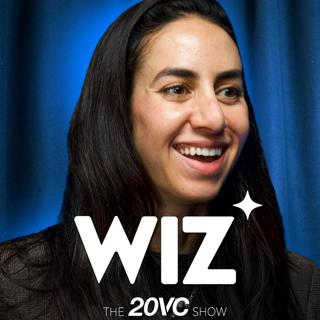
20Growth: How Wiz Built a $30BN Brand in Enterprise | What Worked vs What Was a Mega Failure: Lessons Learned | Why Marketers Make the Worst CMOs & What To Look for in Growth with Raaz Herzberg

20Growth: How Wiz Built a $30BN Brand in Enterprise | What Worked vs What Was a Mega Failure: Lessons Learned | Why Marketers Make the Worst CMOs & What To Look for in Growth with Raaz Herzberg

Raaz Herberg is the Chief Marketing Officer and VP Product Strategy at Wiz, the fastest-growing cloud security company in history. As one of the first 10 employees, Raaz has helped scale the business from nothing to a multi-billion-dollar ARR business. Before Wiz, Raaz was a Senior PM working on Azure at Microsoft.  AGENDA: 03:51 What No One Knows About The Early Wiz Days 09:08 Most Effective Marketing Wiz Ever Did? Lessons from it? 24:11 How Wiz Mastered Enterprise Sales and Product Development 39:12 The Value of Proof of Concept an Why Everyone Gets Them Wrong 44:23 Why The Best Leaders Give More Equity Than They Should 52:55 The Impact of COVID on Business Operations 01:01:33 What in AI is No One Talking About That Everyone Should Be? 01:07:29 Why Does Raaz Think Custom Tools Will Dominate the Enterprise?

12 Joulu 20251h 16min

20VC OGs: SpaceX Valued at $800BN & Harvey Raises $160M at an $8BN Price | Airwallex Raises $330M and The Battle with Keith Rabois | Netflix Acquires Warner Brothers | IPO Market Predictions for 2026: Anthropic, Stripe, Databricks and SpaceX

20VC OGs: SpaceX Valued at $800BN & Harvey Raises $160M at an $8BN Price | Airwallex Raises $330M and The Battle with Keith Rabois | Netflix Acquires Warner Brothers | IPO Market Predictions for 2026: Anthropic, Stripe, Databricks and SpaceX

AGENDA: 03:46 SpaceX's $800 Billion Valuation: A Deep Dive 09:18 IPO Market Predictions for 2026 18:18 Netflix's Bold Move: Acquiring Warner Brothers 27:43 Tiger's New Fund Strategy 33:02 Databricks' Head of AI $500 Million Seed Round 36:38 Harvey Raises $160M at an $8BN Valuation 48:22 Will LLMs Kill the App Layer 01:02:02 Google's AI Capabilities 01:06:58 Chinese Open Source Models in US Startups 01:08:57 Airwallex Raises $330M at an $8BN Valuation 01:23:50 Prediction Markets and Insider Trading

11 Joulu 20251h 31min

20VC: Kalshi's $1BN Raise, the Polymarket Feud, and the Battle to Replace Traditional Media

20VC: Kalshi's $1BN Raise, the Polymarket Feud, and the Battle to Replace Traditional Media

Tarek Mansour is the Co-Founder and CEO @ Kalshi, the leader in the world of prediction markets. Just last week, they announced their $1BN raise at an $11BN valuation. In total, they have raised $1.59BN from some of the best, including Sequoia, a16z, General Catalyst, IVP, Meritech, and more. They also last week announced exclusive partnerships with CNN and CNBC, marking their move into mainstream media and news.  AGENDA: 03:28 Why Did Kalshi Need to Raise $1BN 10:35 Why is Kalshi vs Polymarket Such a Fierce Rivalry? 20:44 The Future of Prediction Markets 25:09 Why Does Kalshi Partner with CNN When They Could Replace Them? 26:27 Why Did Tarek Fight For the Rights of his Early Investors So Much? 27:25 What Makes Alfred Lin The Best? 29:19 Does Having Sequoia as an Investor Change the Game? 36:58 Are Teenage Founders Today Emotionally Ready to Lead Companies 38:30 Quick Fire Round: Celebrity Investors, Relationships with Parents

8 Joulu 202547min

20VC: Inside Bending Spoons Acquisition Machine: Evernote, Eventbrite, Vimeo | How Evernote Evaluates Acquisitions and New Product Ideas | How Evernote Mastered Product Launches, User Retention and Monetisation with Federico Simionato

20VC: Inside Bending Spoons Acquisition Machine: Evernote, Eventbrite, Vimeo | How Evernote Evaluates Acquisitions and New Product Ideas | How Evernote Mastered Product Launches, User Retention and Monetisation with Federico Simionato

Bending Spoons is the acquisition machine of the tech world. They have acquired the likes of Evernote, Vimeo, Eventbrite, Streamyard and more. However, they never open their gates to the secrets behind Evernote's product machine. Today that changes with Federico Simionato joining 20Product. Fede has been a Product Lead at Bending Spoons for 8 years where he has led product teams at Evernote, WeTransfer and more.   AGENDA: 03:02 From Dentist Games to $11BN Bending Spoons 04:54 Advice for Aspiring Product Managers 05:38 Building a Coveted Brand at Bending Spoons 07:43 Evaluating and Testing New Product Ideas 13:35 How Evernote has Mastered User Retention 25:24 The Impact of AI on Product Design and Prototyping 31:19 How Bending Spoons Does Product Launches and Lessons Learned 33:27 How Every Product Team Should Do Monthly Updates to Users 36:38 Recording and Transparency in Updates 38:06 Lessons from Failed Product Launches 45:14 Structuring Teams and Acquisitions 47:12 Monetization Strategies and Push Notifications 57:21 Quick Fire Round: Insights and Reflections

5 Joulu 20251h 5min

Suosittua kategoriassa Liike-elämä ja talous

sijotuskasti
mimmit-sijoittaa
psykopodiaa-podcast
rss-rahapodi
ostan-asuntoja-podcast
rss-lahtijat
pomojen-suusta
taloudellinen-mielenrauha
oppimisen-psykologia
rahapuhetta
sijoituspodi
rss-seuraava-potilas
kasvun-kipuja
rss-viisas-raha-podi
rss-neuvottelija-sami-miettinen
io-techin-tekniikkapodcast
sijoitusovi-podcast
rss-uskalla-yrittaa
rss-h-asselmoilanen
rss-merja-mahkan-rahat