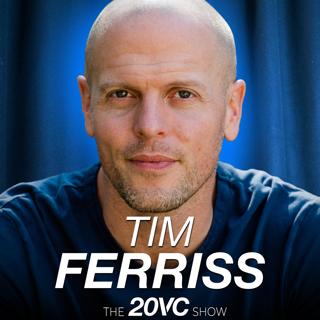
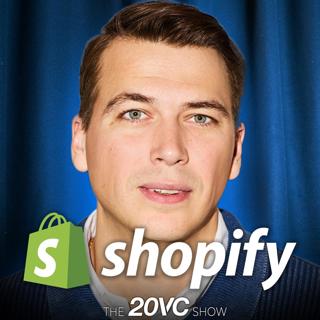
20VC: Tony Fadell "The Father of The iPod" on Mentors, Self-Doubt, Vulnerability, His Relationship To Money, Why Entrepreneurs Need to Be Coachable, Why VCs Need To Be More Direct & Why The First Trillionaire Will Innovate Around Climate Change

20VC: Tony Fadell "The Father of The iPod" on Mentors, Self-Doubt, Vulnerability, His Relationship To Money, Why Entrepreneurs Need to Be Coachable, Why VCs Need To Be More Direct & Why The First Trillionaire Will Innovate Around Climate Change

Tony Fadell, often referred to as "the father of the iPod," is currently Principal @ Future Shape, a global investment and advisory firm coaching engineers and scientists working on foundational deep technology. Prior to Future Shape, Tony was the Founder & CEO @ Nest Labs, the company was ultimately acquired by Google for a reported $3.2Bn. Before Nest, Tony spent an incredible 9 years at Apple Inc, where, as SVP of Apple's iPod division, he led the team that created the first 18 generations of the iPod and the first three generations of the iPhone. Fun facts, Tony has filed more than 300 patents for his work and is also a prolific angel investor having invested in the likes of mmhmm and Nothing to name a few.

In Today's Episode With Tony Fadell You Will Learn:

I. The building blocks of an entrepreneur

What was the moment that Tony realised that he wanted to be an entrepreneur?

"I got my first money when I was in third grade, because I had an egg route. We'd go get eggs from the farmer, and I'd load them in my wagon. Then my younger brother and I would go door to door around the neighborhood, and we'd sell eggs. And that was an every week or every other week situation. And I got money in my hands. And I was like, Oh my God, I can do whatever I want with that money – I don't have to ask anybody, I can just do it. And so that was the level of freedom that, especially when you're young, feels really cool. And then as I got older, I started to buy Atari video game cartridges for my 2600 (yes, I'm that old!), and that was really, really fun too."

What was the biggest lesson that Tony learned from his father on sales and building trusted relationships?

"And he said, very clearly, Look, this is a relationship. If I make this person successful, he's gonna want to come back to me over, and over, and over. But if I sell him something and it doesn't sell, and he has to discount and he loses money, he's not going to come back. Even if I don't have the right product, I'll tell him where to go to get the right product they're looking for, or if they're picking the wrong one, I'll tell them, here's the right one, because my job is to make them successful. Because if they're successful, they'll come back to me year after year after year. And even when we have a down year, they're going to trust me, and they're going to come back."

II. Reflections on experience

How does Tony Fadell think about and assess his own relationship to money? How has it changed over the years?

"So my relationship to money now is that it's just a means to make change happen. And so literally, for me, I can just have a backpack, my computer, my phone, a couple of roller bags with my clothes. And that's enough to live life with my family. I don't need all this other stuff. COVID taught me that even further."

How does Tony determine true friendships vs transactional relationships?

"If it's not a reference – if it's not coming from somebody saying, Hey, you really need to meet this person – I take everything with a grain of salt. With anybody who comes to me cold, I think they probably want something. I try to find that out through the network, Do you know this person? What are they about?"

III. Tony Fadell on becoming a mentor

Why does Tony Fadell believe that founders have to be "coachable"?

"I think anybody who's trying to do something that the world has never seen before, or trying to work with people who are, they'd better be coachable. Because you're going to be so narrowly focused, you're going to be so heads down, you're going to be so on a mission, that sometimes you'll be blinded, and you'll need somebody to come from left field and go, Wait a second, dude, you're not thinking about this right."

What are the core signs that an individual is coachable?

  1. Trustworthiness

2. Willingness to listen

What does Tony believe is the right way to deliver advice without fluff?

"First, it's about trust. You have to be able to have a trusted relationship with somebody. And second, there are different ways of delivering a message. You can deliver a message the first time in an iron-fist-in-a-velvet-glove kind of way. But sometimes the velvet glove is going to come off."

How do people make mistakes when giving advice?

"I'm in too many board meetings; we have over 200 investments. I've seen all kinds of different CEOs and different boards, where the investors don't want to feel like they're going to get a bad rep because the CEO is going to say something if they say something negative."

What does Tony Fadell advise founders when it comes to finding mentors?

"Usually, a really great mentor is going to be highly selective. They're going to be like, I don't want to work with you. They only have so much time for people who are actually coachable."

What are the characteristics of the best mentors?

"You're gonna have tough love with them, you're gonna say things that they don't want to hear, you're not going to be liked all the time. Hopefully, one day, you'll be respected if not liked. And that's what it means to be a mentor."

IV. Changing perceptions

How does Tony assess his own relationship to self-doubt?

"Everyone goes through imposter syndrome. Everyone does. We all have gone through it, I go through it. Because you know what, when you're doing stuff you've never done before, and you're changing the world, no one else has done it either. No one else has done it either. That means it's okay. And I always say, if you don't have butterflies in your stomach each day, you're either not paying attention, or you're not pushing hard enough and taking enough risk."

What are Tony's views on failure?

"Now, there's taking stupid risks versus risk mitigation and taking calculated risks. But you should always be living on the edge of pushing yourself because that's where the growth is, that's where the change is happening."

Does one learn more from success than from failure?

"How we do and change the world is through the same method. We go do, and then we fail, and then we learn from that, and then we do again."

What does Tony mean when he says, "do, fail, learn."

"Look, it's do, fail, learn; do, fail, learn. There's no such thing as learn and then you're able to do. No, no, no. When you really learn in life is after you've tried to do it."

What is the right way for entrepreneurs to present their boldest of ambitions?

"Look at Elon now. If he was pitching what he's doing now 15 years ago, people would go, No way! A few people, like Jurvetson and others, said, Yeah, sure, okay, great. But very few people would get behind that huge boldness."

"So what they do is – and this is what I've had to do – they start and just pitch that simple 'What's the next three to four years look like?' and never tell anybody about the big picture. Because you scare most people off."

How do investors need to change how they think about ambition and upside?

5.) Why does Tony believe the first trillionaire will originate from the climate change space? Why is the majority of plastics recycling total BS today? Why does Tony believe we need to fundamentally transform our economies? How do funding markets need to change to fund this structural reshaping of society?

Jaksot(1389)

20VC: Cerebras CEO on Why Raise $1BN and Delay the IPO | NVIDIA Showing Signs They Are Worried About Growth | Concentration of Value in Mag7: Will the AI Train Come to a Halt | Can the US Supply the Energy for AI with Andrew Feldman

20VC: Cerebras CEO on Why Raise $1BN and Delay the IPO | NVIDIA Showing Signs They Are Worried About Growth | Concentration of Value in Mag7: Will the AI Train Come to a Halt | Can the US Supply the Energy for AI with Andrew Feldman

Andrew Feldman is Co-Founder & CEO of Cerebras, building the world's fastest AI inference and training. Cerebras recently closed a $1.1BN Series G round at an $8.1 billion valuation, backed by top names including Fidelity, Atreides, Tiger Global, Valor Equity and 1789 Capital. Under his leadership, they've leapfrogged GPU limits in inference, operate at trillions of tokens per month, and are filing to go public soon. AGENDA: 02:43 Why We Did Not IPO and Raised $1BN From Fidelity 05:03 Analysis of Chip and Compute Landscape Today 07:14 NVIDIA Showing Signs They Are Running Out of Ideas 13:57 The Real Questions to Ask on Chip Depreciation 24:54 Energy Requirements for AI: Is it Feasible? 29:25 Mag7 Value Concentration: Feature or a Bug 31:57 Talent is the Bottleneck and Trump Makes it Worse 32:55 The War for Talent: Secrets No One Sees 34:22 Evaluating the Data Centre Economy: Many Will Lose Money 38:01 Three Changes the US Could Make to Beat China in AI 42:30 Why 80% of our Revenues are in the UAE 47:26 Quick Fire Questions 58:59 Why Work Life Balance is Total BS

6 Loka 1h 4min

20Growth: How to Use Influencers to Scale Growth Insanely Fast | How to Optimise User Onboaring for Growth | How the Best Growth Teams Create Organic Growth and Community | Why LTV/CAC Models are BS with Ketty Slonimsky

20Growth: How to Use Influencers to Scale Growth Insanely Fast | How to Optimise User Onboaring for Growth | How the Best Growth Teams Create Organic Growth and Community | Why LTV/CAC Models are BS with Ketty Slonimsky

Ketty Slonimsky is Chief Growth Officer at Palta, the platform behind apps like Flo (the #1 female health app with 77M+ MAU), Simple, and Zing AI, where she leads a centralized growth function across the portfolio. She was previously first VP Product & Growth at HeliosX (£900M+ ARR, bootstrapped D2C healthtech), has advised companies like SonderMind, Runna, Guardio, Cheddar, P&G Digital Ventures, and is a board advisor at HeliosX. AGENDA: 02:33 What is Growth and When to Hire For It 06:04 Three Profiles of Successful Growth Leaders 10:07 Challenges and Learnings from Failed Ventures 21:17 How to Optimise User Onboarding for Growth 26:14 Biggest Lessons on Retention 30:25 How to Artificially Create Organic Growth and Community Building 32:10 Why LTV Models are BS 37:35 How to Use Influencers to Grow Insanely Fast 47:07 The Metrics that Matter in Growth 49:48 Push Notifications and Engagement: What To Do vs What Not to Do? 51:57 Quick Fire Round

3 Loka 1h

20VC: Are Burn Multiples BS in an AI World | Sam Altman Needs $1TRN of Energy | Klarna, Figma, Stubhub, all Down: Are Public Markets Turning? | FiveTran and DBT: Is the Wave of Consolidation About to Begin?

20VC: Are Burn Multiples BS in an AI World | Sam Altman Needs $1TRN of Energy | Klarna, Figma, Stubhub, all Down: Are Public Markets Turning? | FiveTran and DBT: Is the Wave of Consolidation About to Begin?

AGENDA: 03:58 Understanding Burn Multiples and Capital Efficiency in an AI World 11:54 What Metrics Founders Need to Focus on in a World of AI 19:31 The Role of Kingmakers in Venture Capital: Harvey, Abridge, Profound 33:42 Klarna, Figma, Stubhub, all Down: Are Public Markets Turning? 36:35 OpenAI Needs the Same Energy as Japan… WTF! 41:09 How Can We Fund the $1TRN Sam Altman Needs for Energy 52:39 FiveTran and DBT: Is the Wave of Consolidation About to Begin? 59:44 Does Private Equity Need to Change in a World of AI 01:06:23 Political Expression and Corporate Responsibility

2 Loka 1h 16min

20VC: OpenAI and Anthropic Will Build Their Own Chips | NVIDIA Will Be Worth $10TRN | How to Solve the Energy Required for AI... Nuclear | Why China is Behind the US in the Race for AGI with Jonathan Ross, Groq Founder

20VC: OpenAI and Anthropic Will Build Their Own Chips | NVIDIA Will Be Worth $10TRN | How to Solve the Energy Required for AI... Nuclear | Why China is Behind the US in the Race for AGI with Jonathan Ross, Groq Founder

Jonathan Ross is the Founder & CEO of Groq, the AI chip company redefining inference at scale. Under his leadership, Groq has raised over $3B from top investors. The company has reached a valuation of nearly $7B, positioning itself as one of NVIDIA's most formidable challengers. Previously at Google, Jonathan led the team that built the first Tensor Processing Unit (TPU), making him one of the leading architects of modern AI hardware. AGENDA: 00:00 The Future of AI and Compute 05:07 Why the Hyperscalers Have to Keep Spending Recklessly on AI 12:49 Why OpenAI and Anthropic Will Have to Build Their Own Chips 19:47 OpenAI and Anthropic Will be $5BN Companies: The Bull Case 29:50 Why China is Behind the US in AI and Deepseek is More Expensive to Run 33:55 How Europe Could Compete in AI and Why the US is More Risk Averse Than Europe 42:51 Why AI Will Lead to Too Many Not Too Few Jobs 43:19 Deflationary Pressures and New Job Markets 45:51 The Future of Vibe Coding 47:14 Why AI Companies Should Strive to Have Low Margins 49:31 Why We Have to Have Nuclear Energy and How to Bring it Back 56:55 How Permits are Ruining the Potential of AI 01:03:58 Why OpenAI and Anthropic are so Undervalued 01:16:53 Quickfire: Biggest Fear, Nvidia: $10TRN, Zuck Buying AI: Work or Not

29 Syys 1h 21min

20Product: Revolut Business $1BN Revenue: Five of the Biggest Product Lessons | How Revolut Structures Product and Design Teams | How Revolut Experiments and Invests in New Product Bets | How Revolut Ships Product So Fast with James Gibson

20Product: Revolut Business $1BN Revenue: Five of the Biggest Product Lessons | How Revolut Structures Product and Design Teams | How Revolut Experiments and Invests in New Product Bets | How Revolut Ships Product So Fast with James Gibson

James Gibson is Head of Revolut Business. Under his leadership, Revolut Business now processes over $33 billion in monthly transaction volume and generates more than $1BN in annualised revenue. AGENDA: 04:10 Is Consulting the Worst Background for Aspiring PMs 07:09 How Revolut Hires for it's Product Team 17:21 How Revolut Sets Goals: What Works, What Does Not 19:37 How Revolut Structures Their Product Teams 22:13 How Revolut Structures Product Review Sessions 27:23 New Bets Process at Revolut 29:11 How Revolut Balances Super Users and General Customers 36:55 How Revolut Drives Product Velocity and Efficiency 39:26 Future of Product with AI 44:56 Quick Fire Questions and Reflections

26 Syys 54min

20VC: NVIDIA Invests $100BN Into OpenAI | Is Triple, Triple, Double, Double Dead | Navan Files to go Public & Notion Hits $500M ARR | The Impact of H1B Visas on Startups in the US

20VC: NVIDIA Invests $100BN Into OpenAI | Is Triple, Triple, Double, Double Dead | Navan Files to go Public & Notion Hits $500M ARR | The Impact of H1B Visas on Startups in the US

AGENDA: 00:00 Why I am 100% Equities and 0% Cash 04:35 Nvidia's Massive $100BN Investment in OpenAI 08:39 Is Anthropic Negatively Positioned by OpenAI Gaining NVIDIA Investment 27:30 Is Triple, Triple, Double, Double Dead 44:00 Navan Files to Go Public at $8BN 49:31 Lockup Periods and Liquidity 50:35 Impact of H-1B Visa Changes on Startups 01:02:42: Notion Hits $500M ARR Re-Accelerating 01:09:42 Why Founder Friendly is Total BS Today

25 Syys 1h 19min

20VC: General Catalyst CEO Hemant Taneja on The Future of Venture Capital: Chanel vs Walmart | Lessons Scaling GC to $40BN in AUM | Investing $5BN+ Into Stripe Over 14 Rounds | Investing Hundreds of Millions into Anthropic at $60BN Valuation

20VC: General Catalyst CEO Hemant Taneja on The Future of Venture Capital: Chanel vs Walmart | Lessons Scaling GC to $40BN in AUM | Investing $5BN+ Into Stripe Over 14 Rounds | Investing Hundreds of Millions into Anthropic at $60BN Valuation

Hemant Taneja is the CEO and leader of General Catalyst, the firm he has scaled over the last decade into one of the largest with over $40BN in AUM. He has been one of the most influential investors of the past two decades, leading early bets in Stripe, Snap, Gusto, Samsara, Grammarly, and Canva. He also played a pivotal role in Livongo's $18.5B merger with Teladoc, one of the largest digital health deals in history. AGENDA: 00:00 Introduction 03:37 Is Hemant a CEO or an Investor? 05:42 With $40BN AUM Is General Catalyst Still a VC Firm? 12:11 Has Trump Done More to Hurt or Help the US? 13:25 No One is Talking About the True Impact of AI on Jobs 21:30 Is Hemant Concerned by the Concentration of Value in MAG 7? 27:30 Has Trump Done More to Hurt or Help the US? 30:27 GC's Anthropic Investment: Upside from a $60BN Price 37:06 Do Margins Matter in a World of AI 45:23 Does Revenue Growth Matter in a World of AI 49:39 Why it is BS to Turn Down a Company Based on Price 56:06 We Have Invested $5BN Into Stripe Over 14 Rounds 01:00:02 VC is About To Be Flooded with Retail Investment: What Does It Mean for VC 01:08:51 "What I Learned Losing the Series A of Snap, Stripe, Samsara" 01:11:25 Future of Venture Capital: Walmart vs Chanel

22 Syys 1h 27min

20VC: Why 90% of Founders Build Startups Wrong | Why AI Growth Rates are Sustainable & Remote Work is BS and the AI Talent War | Competing with Brett Taylor and Sierra: Who Wins the Customer Service War with Jesse Zhang, Decagon

20VC: Why 90% of Founders Build Startups Wrong | Why AI Growth Rates are Sustainable & Remote Work is BS and the AI Talent War | Competing with Brett Taylor and Sierra: Who Wins the Customer Service War with Jesse Zhang, Decagon

Jesse Zhang is the Co-Founder and CEO @ Decagon, the conversational AI platform for customer experience. As one of the fastest growing companies in the valley, they have raised over $230M at a last round price of $1.5BN. Prior to Decagon, Jesse founded Lowkey (acquired by Niantic), studied CS at Harvard, and worked at places like Google, HRT, Citadel, and Intel. AGENDA: 00:00 Introduction and Sponsor Messages 03:43 Olympiad Mathematician to Startup Founder 05:34 Selling to Niantic and What I Did Differently the Second Time 07:16 Why 90% of Founders Build Companies the Wrong Way 12:19 Scaling to $50M ARR in 15 Months 31:31 Is the AI Talent War Out of Hand: How To Compete with Meta Pay Packets 32:38 Why Remote Work is Total BS 34:06 Competitors in AI Customer Experience: Sierra, Intercom and more 37:34 AI Market Predictions 44:56 Embracing Stress and Winning Culture 50:13 Quick Fire Questions: Most Underrated AI Founder, Biggest Changed Opinion

19 Syys 59min

Suosittua kategoriassa Liike-elämä ja talous

sijotuskasti
psykopodiaa-podcast
mimmit-sijoittaa
rss-rahapodi
herrasmieshakkerit
lakicast
rss-rahamania
ostan-asuntoja-podcast
rss-neuvottelija-sami-miettinen
rss-startup-ministerio
rss-lahtijat
oppimisen-psykologia
pari-sanaa-lastensuojelusta
taloudellinen-mielenrauha
leadcast
syo-nuku-saasta
rahapuhetta
rss-myyntipodi
rss-bisnesta-bebeja
rss-karon-grilli