20VC: Tony Fadell "The Father of The iPod" on Mentors, Self-Doubt, Vulnerability, His Relationship To Money, Why Entrepreneurs Need to Be Coachable, Why VCs Need To Be More Direct & Why The First Trillionaire Will Innovate Around Climate Change

20VC: Tony Fadell "The Father of The iPod" on Mentors, Self-Doubt, Vulnerability, His Relationship To Money, Why Entrepreneurs Need to Be Coachable, Why VCs Need To Be More Direct & Why The First Trillionaire Will Innovate Around Climate Change

Tony Fadell, often referred to as "the father of the iPod," is currently Principal @ Future Shape, a global investment and advisory firm coaching engineers and scientists working on foundational deep technology. Prior to Future Shape, Tony was the Founder & CEO @ Nest Labs, the company was ultimately acquired by Google for a reported $3.2Bn. Before Nest, Tony spent an incredible 9 years at Apple Inc, where, as SVP of Apple's iPod division, he led the team that created the first 18 generations of the iPod and the first three generations of the iPhone. Fun facts, Tony has filed more than 300 patents for his work and is also a prolific angel investor having invested in the likes of mmhmm and Nothing to name a few.

In Today's Episode With Tony Fadell You Will Learn:

I. The building blocks of an entrepreneur

What was the moment that Tony realised that he wanted to be an entrepreneur?

"I got my first money when I was in third grade, because I had an egg route. We'd go get eggs from the farmer, and I'd load them in my wagon. Then my younger brother and I would go door to door around the neighborhood, and we'd sell eggs. And that was an every week or every other week situation. And I got money in my hands. And I was like, Oh my God, I can do whatever I want with that money – I don't have to ask anybody, I can just do it. And so that was the level of freedom that, especially when you're young, feels really cool. And then as I got older, I started to buy Atari video game cartridges for my 2600 (yes, I'm that old!), and that was really, really fun too."

What was the biggest lesson that Tony learned from his father on sales and building trusted relationships?

"And he said, very clearly, Look, this is a relationship. If I make this person successful, he's gonna want to come back to me over, and over, and over. But if I sell him something and it doesn't sell, and he has to discount and he loses money, he's not going to come back. Even if I don't have the right product, I'll tell him where to go to get the right product they're looking for, or if they're picking the wrong one, I'll tell them, here's the right one, because my job is to make them successful. Because if they're successful, they'll come back to me year after year after year. And even when we have a down year, they're going to trust me, and they're going to come back."

II. Reflections on experience

How does Tony Fadell think about and assess his own relationship to money? How has it changed over the years?

"So my relationship to money now is that it's just a means to make change happen. And so literally, for me, I can just have a backpack, my computer, my phone, a couple of roller bags with my clothes. And that's enough to live life with my family. I don't need all this other stuff. COVID taught me that even further."

How does Tony determine true friendships vs transactional relationships?

"If it's not a reference – if it's not coming from somebody saying, Hey, you really need to meet this person – I take everything with a grain of salt. With anybody who comes to me cold, I think they probably want something. I try to find that out through the network, Do you know this person? What are they about?"

III. Tony Fadell on becoming a mentor

Why does Tony Fadell believe that founders have to be "coachable"?

"I think anybody who's trying to do something that the world has never seen before, or trying to work with people who are, they'd better be coachable. Because you're going to be so narrowly focused, you're going to be so heads down, you're going to be so on a mission, that sometimes you'll be blinded, and you'll need somebody to come from left field and go, Wait a second, dude, you're not thinking about this right."

What are the core signs that an individual is coachable?

  1. Trustworthiness

2. Willingness to listen

What does Tony believe is the right way to deliver advice without fluff?

"First, it's about trust. You have to be able to have a trusted relationship with somebody. And second, there are different ways of delivering a message. You can deliver a message the first time in an iron-fist-in-a-velvet-glove kind of way. But sometimes the velvet glove is going to come off."

How do people make mistakes when giving advice?

"I'm in too many board meetings; we have over 200 investments. I've seen all kinds of different CEOs and different boards, where the investors don't want to feel like they're going to get a bad rep because the CEO is going to say something if they say something negative."

What does Tony Fadell advise founders when it comes to finding mentors?

"Usually, a really great mentor is going to be highly selective. They're going to be like, I don't want to work with you. They only have so much time for people who are actually coachable."

What are the characteristics of the best mentors?

"You're gonna have tough love with them, you're gonna say things that they don't want to hear, you're not going to be liked all the time. Hopefully, one day, you'll be respected if not liked. And that's what it means to be a mentor."

IV. Changing perceptions

How does Tony assess his own relationship to self-doubt?

"Everyone goes through imposter syndrome. Everyone does. We all have gone through it, I go through it. Because you know what, when you're doing stuff you've never done before, and you're changing the world, no one else has done it either. No one else has done it either. That means it's okay. And I always say, if you don't have butterflies in your stomach each day, you're either not paying attention, or you're not pushing hard enough and taking enough risk."

What are Tony's views on failure?

"Now, there's taking stupid risks versus risk mitigation and taking calculated risks. But you should always be living on the edge of pushing yourself because that's where the growth is, that's where the change is happening."

Does one learn more from success than from failure?

"How we do and change the world is through the same method. We go do, and then we fail, and then we learn from that, and then we do again."

What does Tony mean when he says, "do, fail, learn."

"Look, it's do, fail, learn; do, fail, learn. There's no such thing as learn and then you're able to do. No, no, no. When you really learn in life is after you've tried to do it."

What is the right way for entrepreneurs to present their boldest of ambitions?

"Look at Elon now. If he was pitching what he's doing now 15 years ago, people would go, No way! A few people, like Jurvetson and others, said, Yeah, sure, okay, great. But very few people would get behind that huge boldness."

"So what they do is – and this is what I've had to do – they start and just pitch that simple 'What's the next three to four years look like?' and never tell anybody about the big picture. Because you scare most people off."

How do investors need to change how they think about ambition and upside?

5.) Why does Tony believe the first trillionaire will originate from the climate change space? Why is the majority of plastics recycling total BS today? Why does Tony believe we need to fundamentally transform our economies? How do funding markets need to change to fund this structural reshaping of society?

Jaksot(1390)

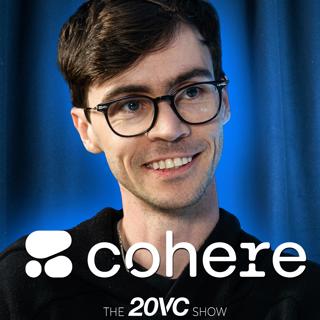
20VC: Cohere Founder on How Cohere Compete with OpenAI and Anthropic $BNs | Why Counties Should Fund Their Own Models & the Need for Model Sovereignty | How Sam Altman Has Done a Disservice to AI with Nick Frosst

20VC: Cohere Founder on How Cohere Compete with OpenAI and Anthropic $BNs | Why Counties Should Fund Their Own Models & the Need for Model Sovereignty | How Sam Altman Has Done a Disservice to AI with Nick Frosst

Nick Frosst is a Canadian AI researcher and entrepreneur, best known as co-founder of Cohere, the enterprise-focused LLM. Cohere has raised over $900 million, most recently a $500 million round, bringing its valuation to $6.8 billion. Under his leadership, Cohere hit $100M in ARR. Prior to founding Cohere, Nick was a researcher at Google Brain and a protégé of Geoffrey Hinton. AGENDA: 00:00 – Biggest lessons from Geoff Hinton at Google Brain? 02:10 – Did Google completely sleep at the wheel and miss ChatGPT? 05:45 – Is data or compute the real bottleneck in AI's future? 07:20 – Does GPT5 Prove That Scaling Laws are BS? 13:30 – Are AI benchmarks just total BS? 17:00 – Would Cohere spend $5M on a single AI researcher? 19:40 – What is nonsense in AI that everyone is talking about? 25:30 – What is no one talking about in AI that everyone should be talking about? 33:00 – How do Cohere compete with OpenAI and Anthropic's billions? 44:30 – Why does being American actually hurt tech companies today? 45:10 – Should countries fund their own models? Is model sovereignty the future? 52:00 – Why has Sam Altman actually done a disservice to AI?

1 Syys 1h 7min
20Product: Why Most CPOs are Bad | Why You Do Not Need PMs in a World of AI | Why the Design Stage is Dead and How to Use Vibe Coding to Replace It | The Three Roles All Founders End Up Firing on Repeat with Jason James @ Tezi

20Product: Why Most CPOs are Bad | Why You Do Not Need PMs in a World of AI | Why the Design Stage is Dead and How to Use Vibe Coding to Replace It | The Three Roles All Founders End Up Firing on Repeat with Jason James @ Tezi

Jason James is the Co-Founder of Tezi and one of the leading product minds in the valley. Prior to Tezi, Jason was the VP Product at Instacart and before that was Head of Product and Design at Thumbtack. AGENDA: 00:00 Product lessons scaling Instacart to $40B – what really moves the needle 02:15 Why "quick optimizations" won't build billion-dollar products 04:30 MVPs are dead? How AI is reshaping product development 07:00 Do startups even need PMs anymore in the age of AI? 11:30 The biggest product mistake Jason made building Tezi 16:30 Why most hiring managers fail at recruiting 20:00 The resume trap: how to spot if someone was just "on the elevator up" 26:00 The three roles founders always end up firing 28:00 Are most CPOs actually terrible? 36:30 The myth of startup "culture" – why growth is the only thing that matters 43:00 Did DoorDash actually beat Instacart? The inside take 48:00 Fundraising secrets founders never realize until it's too late

29 Elo 53min

20VC: Anthropic's $10BN Round | Klarna's IPO Broken Down | Inside a16z's 72 Deal Seed Investment Machine | Martin Casado: Is Consensus Investing the Only Game | Why Satya is Chatting S*** on SaaS Apps Disappearing featuring Marc Benioff

20VC: Anthropic's $10BN Round | Klarna's IPO Broken Down | Inside a16z's 72 Deal Seed Investment Machine | Martin Casado: Is Consensus Investing the Only Game | Why Satya is Chatting S*** on SaaS Apps Disappearing featuring Marc Benioff

AGENDA: ​​00:00 – Marc Benioff vs Snowflake, Databricks & Palantir: Who Wins the Data Cloud War? 05:10 – Does Benioff Feel The Need to Buy AI Talent Like Zuck Is? 09:00 – What Salesforce has Learned From Palantir on Forward Deployed Engineers? 18:00 – Will SaaS apps disappear in an AI world? Why Satya is Chatting S*** 23:40 – Are SDRs really screwed by AI… or just evolving? 26:10 – Benioff on Who Wins: OpenAI or Anthropic? 30:00 – Nat Friedman reports to Alex Wang: Genius move or career downgrade? 34:00 – Anthropic's $10B round: Have we hit peak AI hype? 47:00 – Klarna's wild ride: From $45B to $6B to IPO at $15B 55:00 – Inside a16z's seed machine: 72 bets vs Sequoia's 27 57:45 – Martìn Casado: Is consensus investing dangerous—or the only game? 01:05:00 – The big lesson: consensus, contrarian, and why investing is harder than ever

28 Elo 1h 11min
20VC: Do Margins Matter in AI? | Is Defensibility Gone For Good? | Is Vertical SaaS Dead in a World of AI | What SaaS Rules Are BS and No Longer Apply in a World of AI | The Future of Venture: Why Chanel vs Walmart is BS with Byron Deeter

20VC: Do Margins Matter in AI? | Is Defensibility Gone For Good? | Is Vertical SaaS Dead in a World of AI | What SaaS Rules Are BS and No Longer Apply in a World of AI | The Future of Venture: Why Chanel vs Walmart is BS with Byron Deeter

Byron Deeter is a Partner at Bessemer Venture Partners, and one of the most renowned SaaS investors. Byron has led 19 unicorn investments, including IPO successes like ServiceTitan, Procore, Twilio, Box, Gainsight, Intercom, DocuSign, SendGrid. His portfolio includes eight companies that have gone public. Insane. Agenda: 00:00 – Why are the stakes in AI higher than ever before? 05:20 – Is defensibility in AI gone for good? 07:40 – Do margins even matter when backing the next Anthropic or Perplexity? 09:50 – How does Byron think about future dilution when investing in AI today? 12:10 – With 40% of venture money going to 10 deals, is there any point investing elsewhere? 13:40 – Is vertical SaaS dead? Is there any point when the large players can own it? 18:00 – Will AI shift from the tech budget to the human labor budget and unlock trillions? 21:10 – Are we entering the era of billion-dollar businesses built by 10 people? 25:20 – Is treble-treble-double-double now too slow for AI companies? 33:10 – In today's AI gold rush, is it better to scream the loudest or just build the best product? 41:10 – What specific growth rates are best in class, good and not good enough today? 55:00 – Is venture now just a game of scale — Chanel vs. Walmart?

25 Elo 1h 21min
20VC: Databricks at $100BN | Chamath's SPAC Revival: Peak Mania? | OpenAI Staff Cash Out Billions & Sam Altman Will Spend Trillions | CoreWeave's $11B Debt Bet & Nubank's $2.5B Profit Shocker

20VC: Databricks at $100BN | Chamath's SPAC Revival: Peak Mania? | OpenAI Staff Cash Out Billions & Sam Altman Will Spend Trillions | CoreWeave's $11B Debt Bet & Nubank's $2.5B Profit Shocker

Agenda: 00:00 – Databricks hits $100B: Bubble or just the beginning? 03:15 – Is Databricks actually undervalued at 25x revenue? 07:40 – Are we on the verge of the biggest IPO wave ever? 11:30 – Can Andreessen's Databricks bet return $30B+? 18:10 – Who really gets rich when mega-unicorns IPO? 19:30 – Is the return of Chamath's SPACs the ultimate bubble signal? 28:00 – Should OpenAI staff be cashing out billions in secondaries? 33:30 – Founder raises $130M… then walks away. Is this the new normal? 36:30 – Nubank's $2.5B profit: The best FinTech in the world? 48:00 – On Running at $15B: Can consumer brands still be VC-backed rockets? 52:00 – CoreWeave takes on $11B in debt: smart bet or ticking time bomb? 1:11:00 – Will AI spend really hit trillions—or is it all hype?

21 Elo 1h 27min
20VC: Lovable CEO Anton Osika on $120M in ARR in 7 Months | The Honest Truth About Defensibility and Unit Economics for AI Startups | The State of Foundation Models: Long Grok, Short OpenAI, Why | Replit vs Lovable vs Bolt: What Happens

20VC: Lovable CEO Anton Osika on $120M in ARR in 7 Months | The Honest Truth About Defensibility and Unit Economics for AI Startups | The State of Foundation Models: Long Grok, Short OpenAI, Why | Replit vs Lovable vs Bolt: What Happens

Anton Osika is the Co-Founder and CEO @ Lovable, the fastest growing company on the planet. In just 7 months, they have scaled from $0 to $120M in ARR. They have raised over $200M in funding from some of the best including Accel, Creandum and 20VC. Their latest round priced the company at a whopping $2BN. Agenda for Today: 00:00 – Is AI an Arms Race… Or Just a Talent War? 03:45 – How Does Anton Compete with Zuck's $100M Packages for Talent 07:30 – Founder Mode vs. Structure: Can Chaos Scale? 10:15 – The Brutal Truth About Defensibility in AI Startups 13:20 – Unit Economics: Are AI Companies Doomed to Bleed Cash? 17:00 – GPT-5: Game-Changer or Overhyped Disappointment? 20:10 – How Lovable Hit $100M ARR in Just 7 Months? 25:15 – Replit, Figma, Bolt: Which Competitor is the Best? 30:00 – The Security Bombshells No One Talks About 36:40 – Should Anyone Still Study Computer Science? 40:30 – Work-Life Balance Is Dead: Inside Anton's 10x Culture 56:00 – OpenAI, Anthropic, or Grok: Who Wins the AI Wars?

18 Elo 1h 8min
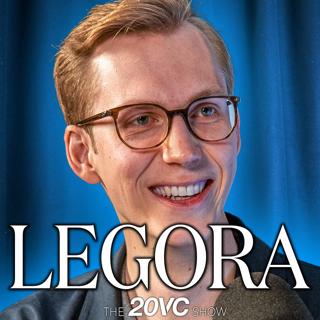
20VC: 15 Term Sheets in 7 Days and Choosing Benchmark | Harvey vs Legora: Who Wins Legal and How to Play When You Have $600M Less Funding | Are AI Models Plateauing Today | Building a 9-9-6 Culture From Stockholm with Max Junestrand

20VC: 15 Term Sheets in 7 Days and Choosing Benchmark | Harvey vs Legora: Who Wins Legal and How to Play When You Have $600M Less Funding | Are AI Models Plateauing Today | Building a 9-9-6 Culture From Stockholm with Max Junestrand

Max Junestrand is the Co-Founder and CEO @ Legora, the collaborative AI powering the next generation of lawyers. Now this is an insane story for many reasons; first, Max turned down a multi-million dollar career in gaming to build Legora. Second, he has raised from the best of the best including Benchmark and IVP. Third, he has scaled the firm with 1/6th of the capital of his closest competitor, Harvey have raised a reported $800M while Legora have raised just $120M. Agenda: 00:03 – From Pro Gamer to AI Founder: How World of Warcraft Shaped Max's Mindset 04:58 – The $5–10M Gaming Career He Walked Away From 07:55 – Are AI Models Plateauing… or Just Getting Started? 10:02 – Swarms of LLMs: The 100x Cost Bet That Could Change Legal Forever 12:00 – Partnering With the Lawyers You're "Killing" 15:00 – How He Cracked Sweden's Hardest-to-Enter Law Firm 21:45 – The $500K Coffee That Saved the Company at YC 30:00 – Closing 15 Term Sheets in 7 Days – Why Benchmark Won 36:00 – Beating a $5BN Rival With a Fraction of the Funding 53:50 – Building a Cult Culture: The 9-9-6 Mentality in Europe

15 Elo 1h 20min
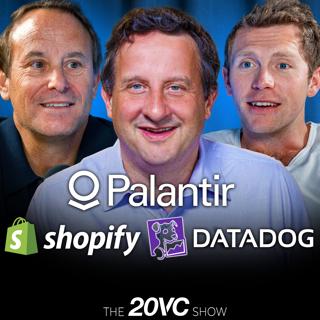
20VC: GPT5: Sam Altman's Masterplan or a Gift To Anthropic | Palantir & Shopify Crush Earnings | Monday & Datadog Perform But Hit Hard by Wall St | Should Perplexity Buy Chrome for $34.5BN |

20VC: GPT5: Sam Altman's Masterplan or a Gift To Anthropic | Palantir & Shopify Crush Earnings | Monday & Datadog Perform But Hit Hard by Wall St | Should Perplexity Buy Chrome for $34.5BN |

AGENDA: 00:04 – Was GPT-5 the Biggest AI Letdown Yet? 00:17 – Is OpenAI's Real Target Anthropic's $6B Revenue? 00:22 – Why Anthropic Might Secretly Be Worried 00:28 – The Hidden Business Strategy Behind OpenAI's "Underwhelming" Launch 00:32 – Should Perplexity Really Try to Buy Chrome for $34.5B? 00:35 – The $3B N8N Deal: Genius Bet or Bubble FOMO? 00:38 – Why Datadog's Best Quarter Ever Still Tanked the Stock 00:44 – Palantir's 50% Growth at Scale – Can It Last? Is Palantir Overpriced? 00:53 – Shopify's Ruthless Path to 91% Revenue Growth With 30% Fewer Staff 01:01 – Are Seed and Series A Valuations Now at Dangerous Highs? 01:06 – What Does The Highest Levels of Capital Concentration Mean For Early Stage Founders? 01:15 – Could Palantir Hit a $2 Trillion Market Cap by 2030?

14 Elo 1h 22min

Suosittua kategoriassa Liike-elämä ja talous

sijotuskasti
psykopodiaa-podcast
mimmit-sijoittaa
rss-rahapodi
herrasmieshakkerit
lakicast
rss-rahamania
ostan-asuntoja-podcast
rss-neuvottelija-sami-miettinen
rss-startup-ministerio
rss-lahtijat
oppimisen-psykologia
pari-sanaa-lastensuojelusta
taloudellinen-mielenrauha
leadcast
syo-nuku-saasta
rahapuhetta
rss-myyntipodi
rss-bisnesta-bebeja
rss-karon-grilli