20VC: The Memo: How to Raise a Venture Capital Fund (Part I) | The Core Lessons from Raising $400M Over The Last Four Years| The Biggest Mistakes VCs Make When Fundraising | How To Find and Build Relationships with New LPs

20VC: The Memo: How to Raise a Venture Capital Fund (Part I) | The Core Lessons from Raising $400M Over The Last Four Years| The Biggest Mistakes VCs Make When Fundraising | How To Find and Build Relationships with New LPs

How To Raise a Venture Capital Fund

Over the last 4 years, I have raised around $400M across different vehicles from many different types of investors. Today I am going to break down the early stages of how to raise a venture capital fund and then stay tuned for a follow-up to this where we will break down a fundraising deck for a fund, what to do, what not to do etc. But to the first element.

Your Fund Size is Your Strategy:

The most important decision you will make is the size of fund you raise. So much of your strategy and approach will change according to your fund size target (LP type, messaging, documentation, structure etc). Remember, your fund size is your strategy. If you are raising a $10M Fund, you are likely writing collaborative checks alongside a follower, if you are raising a $75M fund, you will likely be leading early-stage seed rounds. These are very different strategies and ways of investing.

MISTAKE: The single biggest mistake I see fund managers make is they go out to fundraise with too high a target fundraise. One of the most important elements in raising for a fund is creating the feeling of momentum in your raise. The more of the fund you have raised and the speed with which you have raised those funds dictate that momentum. So the smaller the fund, the easier it is to create that heat and momentum in your raise.

LESSON: Figure out your minimum viable fund size (MVFS). Do this by examining your portfolio construction. In other words, how many investments you want to make in the fund (the level of diversification) and then alongside that, the average check size you would like to invest in each company. Many people forget to discount the fees when doing this math and so the traditional fund will charge 2% fees per year and so across the life of the fund (usually 10 years), that is 20% of the fund allocated to fees.

Example:

We are raising a $10M Fund.

20% is allocated to fees for the manager and so we are left with $8M of investable capital.

A good level of diversification for an early-stage fund is 30 companies and so with this fund size, I would recommend 32 investments with an average of $250K per company. That is the $8M in invested capital. Big tip, I often see managers raising a seed fund and are only planning to make 15 investments, this is simply not enough. You have to have enough diversification in the portfolio if you are at the seed stage. No one is that good a picker. Likewise, I sometimes see 100 or even 200 investments per fund, this is the spray-and-pray approach, and although works for some, your upside is inherently capped when you run the maths on fund sizes with this many investments.

A big element to point out in this example is we have left no allocation for reserves. For those that do not know, reserves are the dollars you set aside to re-invest in existing portfolio companies. Different funds reserve different amounts, on the low end there is 0% reserves and on the high end some even have 70% of the fund reserved for follow-on rounds.

In this example, given the size of the fund being $10M with a seed focus, I would recommend we have a no-reserves policy. Any breakout companies you can take to LPs and create SPVs to concentrate further capital into the company. This is also better for you as the manager as you then have deal by deal carry on the SPVs that are not tied to the performance of the entire fund.

So now we know we know $10M is our MVFS as we want to make at least 30 investments and we want to invest at least $250K per company. Great, next step.

Set a target that is on the lower end, you can always have a hard cap that is significantly higher but you do not want the target to be too far away that LPs question whether you will be able to raise the fund at all. This is one of the biggest reasons why many do not invest in a first time fund, they are unsure whether the fund will be raised at all.

The Team:

Alongside the size of the fund, the team composition is everything, simply put, LPs like managers who have invested in the stage you are wanting to invest in moving forward. They like to see track record.

IMPORTANT: I see so many angels write checks into breakout Series B companies and then go out and try and raise a seed fund with this as their track record. Do not do this, this does not prove you are a good seed investor but merely shows you have access at the Series B. These are very different things.

With regards to track record, in the past, TVPI or paper mark-ups were enough, now there is a much greater focus on DPI (returned capital to investors). LPs want to see that you have invested before at that stage and they also want to see that the team has worked together before. You want to remove the barriers to no. If you have not worked with the partners you are raising with before, LPs will have this as a red flag, and as team risk, it is that simple.

Navigating the World of LPs (Limited Partners)

The size of the fund you are raising will massively dictate the type of LPs that will invest in your fund.

MISTAKE: You have to change your messaging and product marketing with each type of LP you are selling to. A large endowment fund will want a very different product to a Fund of Funds.

Example: If you are a large endowment, you will invest in early funds but you want the manager to show you a pathway to them, in the future, being able to take not a $10M check but a $50M check from the endowment. Whereas the Fund of Funds will likely want you to stay small with each fund. So when discussing fund plans, it is crucial to keep these different desires in mind.

If you are raising a $10M fund, you will be too small for institutional LPs and will raise from individuals and family offices. An LP will never want to be more than 20% of the LP dollars in a fund and so the size at which an institutional LP (really the smallest fund of funds) would be interested is when you raise $25M+ and they can invest $5M. Generalisation but a good rule of thumb to have.

LP Composition of Your Fund:

Speaking of one LP being 20% of the fund dollars, it is helpful to consider the LP composition you would like to have for your fund. The most important element; you want to have a diversified LP base. A diversified LP base is important in two different forms:

  1. No LP should be more than 20% of the fund at a maximum. That said you do not want to have so many investors in your fund it is unmanageable. LPs need time and attention and so it is important to keep that in mind when considering how many you raise from. Some LPs will want preferred terms or economics for coming into the first close or being one of the first investors, if you can, do not do this. It sets a precedent for what you will and will not accept and then for all subsequent investors, they will want the same terms and rights.
  2. You want to have a diversification of LP type (endowments, fund of funds, founders, GPs at funds etc). Why? In different market cycles, different LPs will be impacted and so if you only raise from one LP type, if a market turns against that LP class, then your next fund is in danger.

Example:

We will see the death of many mico-funds ($10M and below). Why? The majority raised their funds from GPs at larger funds and from public company founders. With the changing market environment, most GPs are no longer writing LP checks and most public market founders have had their net worths cut in half by the value of their company in the public market and so likewise, are no longer writing LP checks. In this case, the next funds for these funds will be in trouble as their core LP base is no longer as active as they used to be. We are seeing this today.

Prediction:

  • 50% of the micro-funds raised in the last 2 years will not raise subsequent funds.

Going back to the question of diversification, my preference and what we have at 20VC, the majority of dollars are concentrated from a small number of investors. Of a $140M fund, we have $100M invested from 5 large institutions. These are a combination of endowments, Family Offices, a High Net Worth Individual and a Fund of Funds. The remaining $40M originates from smaller institutions or individuals, for us we have over 50 making up that final $40M. For me, I really wanted to have a community around 20VC Fund and so we have over 40 unicorn founders invested personally in the fund as LPs.

Bonus Points: The best managers select their LPs to play a certain role or help with a potential weakness the manager has. For example, I was nervous I did not have good coverage of the Australian or LATAM startup market and so I was thrilled to add founders from Atlassian, Linktree, Mercado Libre, Rappi and Nubank as LPs to help in regions where I do not have such an active presence. If you can, structure your LP base to fill gaps you have in your ability.

Status Check In:

Now we know our minimum viable fund size, we know the team composition we are going out to raise with, we know the LP type that we are looking to raise money from and we know how we want our desired fund cap table to look.

Now we are ready to move to the LPs themselves.

Fill Your Restaurant with Friendlies:

As I said, the appearance of your raise having heat and momentum is important.

Mistake: The biggest mistake I see early fund managers make is they go out to large institutional investors that they do not have an existing relationship and spend 3-4 months trying to raise from them. They lose heat, they lose morale and the raise goes nowhere.

Whatever fund size you are raising, do not do this. Fill your restaurant with friendlies first. What does this mean? Go to anyone you know who would be interested in investing in your fund and lock them in to invest. Create the feeling that progress is being made and you have momentum.

BONUS POINTS: The best managers bring their LPs with them for the fundraise journey. With each large or notable investor that invests in your fund, send an email to the LPs that have already committed to let them know about this new notable investor. This will make them feel like you have momentum, they are in a winner and many will then suggest more LP names, wanting to bring in their friends.

MISTAKE: Do not set a minimum check size, some of the most helpful LPs in all of my funds have been the smallest checks. Setting a minimum check size will inhibit many of the friendlies from investing and prevent that early momentum.

The bigger the name the incoming investor has the better. You can use it for social validity when you go out to raise from people you know less well or not at all. Different names carry different weight, one mistake I see many make is they get a big name invested in their fund but it is common knowledge to everyone that this LP has done 200 or 300 fund investments, in which case, it does not carry much weight that they invested in your fund. Be mindful of this as it can show naivety if you place too much weight on a name that has invested in so many funds.

Discovery is Everything:

The world of LPs is very different to the world of venture. 99% of LPs do not tweet, write blogs or go on podcasts. Discovery is everything. When I say discovery I literally mean finding the name of the individual and the name of the organization that is right for you to meet.

This can take the form of several different ways but the most prominent for me are:

  1. The Most Powerful: Create an LP acquisition flywheel. What do I mean by this? When an LP commits to invest in your fund. Say to them, "thank you so much for your faith and support in me, now we are on the same team, what 3 other LPs do you think would be perfect for the fund?" Given they have already invested, they already believe in you and so 90% of them will come back with 3 names and make the intro. Do this with each LP that commits and you will create an LP acquisition flywheel.

Bonus Point: The top 1% of managers raising will already know which LPs are in the network of the LP that has just committed and will ask for those 3 specific intros. They will then send personalized emails to the LP that has just committed. The LP is then able to forward that email to the potential LP you want to meet. You want to minimize the friction on behalf of the introducer and so writing the forwardable email is a great way to do this.

  1. The Most Likely to Commit: LPs are like VCs. When one of their portfolio managers makes an intro and recommendation to a potential fund investment, they will place a lot more weight on it than they would have otherwise. So get your VC friends to introduce you to their LPs, it is that simple. Remember, you have to remove the friction from the introducer. So, make sure to send the email they can forward to the LP. Make this personalized and concise.

Mistake: Many VCs do not like to introduce other managers to their LPs as they view it as competition. This is moronic. If the manager asking for the intro is really good, they will raise their fund with or without your intro. If they are not good, then you can politely say it would not be a fit for your LP and move on. Do not be too protective of your LPs from other managers.

  1. The Cold Outbound: I am not going to lie cold outbound for LPs is really hard. Here is what I would suggest:

  • Pitchbook: It is expensive and many cannot afford it but if you can, it is worth it for LP discovery. They have thousands of LPs of different types on the platform all with their emails and contact details. Those are less useful as a cold email to an LP is unlikely to convert but just finding their names and the names of their organization is what is important. You can then take that to Linkedin to then find the mutual connections you have with that person and ask for a warm intro.
  • Linkedin: Many LPs have the funds that they have invested in on their Linkedin profiles with the title "Limited Partner". If they are invested in a fund that is aligned with the strategy that you are raising for, there is a strong chance they might be a fit. For example, I invest in micro-funds and have invested in Chapter One, Scribble, Rahul from Superhuman and Todd's Fund, and Cocoa Ventures, so you see this and see I like sub $25M funds with a specific angle.
  • Clearbit: Often you will know the name of the institution but not the name or position of the person within the institution that you are looking to raise from. Download a Google Chrome Plugin called Clearbit. With Clearbit you can simply insert the URL for the organization you would like to speak with and then all the people within it will appear and you can select from title and their email will be provided. Again, if you do not want to cold email, you now have their name which you can take to your community, to ask for the intro.

MISTAKE: LPs invest in lines, not dots. Especially for institutional LPs, it is rare that an institution will meet you and invest in you without an existing relationship and without having followed your work before. A mistake many make is they go to large institutions and expect them to write a check for this fund, it will likely be at best for the fund after this one or most likely the third fund. This does not mean you should not go to them with your first fund but you should not prioritize them and you should not expect them to commit. I would instead go in with the mindset of we are not going to get an investment here, so I want to leave the room understanding what they need to see me do with this first fund, to invest in the next fund. The more detailed you can get them to be the more you can hold them to account for when you come back to them for Fund II.

Example: If they say, we want to see you are able to price and lead seed rounds and we are not sure you can right now. Great. Now when you come back to them in 12 months' time, you can prioritize the fact that you have led 80% of the rounds you invested in, and their core concern there has been de-risked.

In terms of how I think about LP relationship building, I always meet 2 new LPs every week. I ensure with every quarter, I have a check-in with them and ensure they have our quarterly update. This allows them to follow your progress, learn how you like to invest, and communicate with your LPs. It also really serves to build trust. Doing this not in a fundraising process also removes the power imbalance that is inherent within a fundraise and allows a much more natural relationship to be created.

Jaksot(1389)

20VC: How MIT Selects Venture Managers to Invest in | The Three Categories of Check MIT Writes Into Funds | How MIT Builds Their Venture Fund Portfolio | How MIT Approach Direct Investing | Why Being an LP Has Never Been Harder with Ryan Akkina @ MIT

20VC: How MIT Selects Venture Managers to Invest in | The Three Categories of Check MIT Writes Into Funds | How MIT Builds Their Venture Fund Portfolio | How MIT Approach Direct Investing | Why Being an LP Has Never Been Harder with Ryan Akkina @ MIT

Ryan Akkina is a member of the Global Investment Team at the MIT Investment Management Company (MITIMCo), which is responsible for managing MIT's endowment and pension plans. Ryan has invested in the likes of Sequoia, Kleiner Perkins, a16z, Greenoaks and Initialized to name a few. Ryan also leads many of MITIMCo's direct co-investments including most notably into Coupang and Rippling. Prior to joining MITIMCo, Ryan was a consultant at McKinsey & Company. In Today's Episode with Ryan Akkina We Discuss: 1. From Engineer to LP with MIT: How did Ryan make his way into the world of fund investing as an LP with MIT? Why did he turn down the chance to be a VC early in his career? What does Ryan know now that he wishes he had known when he started at MIT? 2. The Manager Evaluation Process for MIT: What does Ryan look for most when investing in new managers? How important is track record when evaluating a new manager? What is the biggest mistake Ryan has made in picking a manager? What did he not see that he wish he had seen? How did that change his process? 3. How MIT Builds Their Portfolio: How does MIT construct their portfolio from private to public to everything in between? What are the three different types of check sizes that MIT writes when investing in new managers? What are the most common reasons why MIT will not re-up with a manager? What are the single biggest reasons why great managers turn bad? 4. MIT: The Direct Investor: Why does MIT see so much opportunity in direct investing? How does MIT approach the direct investing process? How do they approach underwriting themselves vs working with their managers in the process? How do MIT think about the right number of direct deals to make up their portfolio? How do they approach check sizing on a per-company direct investment? What has been Ryan's biggest direct investing mistake? How did that change his approach and mindset? 5. LP Markets Today and Where We Go From Here: Are LPs open for business today? What type of firms will not struggle? Which will? How does Ryan view liquidity windows today? When will M&A and IPO markets open? What would Ryan most like to change about the world of LPs? Why does Ryan believe the LP incentive structure in terms of compensation is broken?

29 Tammi 202457min

20VC: Are the SEC Overreaching with its Approach to Crypto? Should Gensler Step Down? How do US Elections Impact Crypto Markets? How Did SBF and FTX Impact Crypto Long Term and more with Dave Ripley, CEO @ Kraken

20VC: Are the SEC Overreaching with its Approach to Crypto? Should Gensler Step Down? How do US Elections Impact Crypto Markets? How Did SBF and FTX Impact Crypto Long Term and more with Dave Ripley, CEO @ Kraken

Dave Ripley is the CEO @ Kraken, one of the world's largest cryptocurrency exchanges, valued in 2022 at a whopping $10.8BN. Prior to Kraken, Dave was the Co-Founder of Glidera, a market-leading Blockchain technology company that Kraken acquired in 2016. In Today's Episode with Dave Ripley: 1. From Boston Consulting Group to CEO of Kraken: How did Dave first make his way into the world of crypto? What are the single hardest elements of a CEO transition? What does Dave know now that he wishes he had known about CEOship? 2. What is the Usage for Crypto: Other than as a store of value, what application usage does crypto serve? Global payments are fine as is and are improving, why do they need crypto? Global remittance is served by Remote and Deel, why do they need crypto? No applications have been provided well, what really is the use case that makes sense? 3. Should Gensler Be Let Go and The SEC is Wrong: Why is the approach of the SEC completely flawed? Should Gensler be fired for his ineffectiveness? What is the right policy stance and approach to take from here?

26 Tammi 202430min
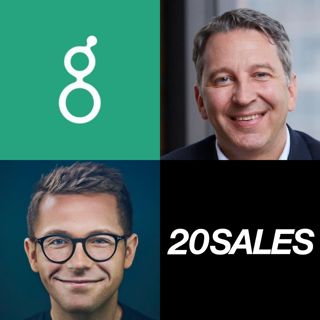
20Sales: How to Scale Into Enterprise Effectively and the Biggest Mistakes Made When Making the Move From PLG to Enterprise, Why Discovery Today is F***** & The Biggest Lessons on How to Do Sales Team Compensation with Sean Murray, CRO @ Greenhouse

20Sales: How to Scale Into Enterprise Effectively and the Biggest Mistakes Made When Making the Move From PLG to Enterprise, Why Discovery Today is F***** & The Biggest Lessons on How to Do Sales Team Compensation with Sean Murray, CRO @ Greenhouse

Sean Murray is the CRO @ Greenhouse which is the fourth company Sean has scaled successfully into the enterprise. Sean's prior roles include revenue leadership positions at Saleloft (CRO), Xactly (VP Sales), and CEB, now Gartner (Head of MID Global Sales). In Today's Episode with Sean Murray 1. The Origin Story: Is a Love of Sales Born: How did Sean first fall in love with Sales? What does Sean know now that he wishes he had known when he started his career in sales? What is Sean's biggest advice to a young person entering the sales world today? 2. Sales has Changed; You Need to Change with It: Why do CMOs need to be good sellers and CROs need to be good marketers today? Have we seen the total blending of sales and marketing today? Should we get rid of all sales teams and just have content marketing teams? 3. How to Move into the Enterprise Successfully: What are the three biggest mistakes startups make when scaling into the enterprise? What easy wins can they do early in the sales process to enterprises to get a good start? How important are logos? Does social validity really work in enterprise? How should sales teams use discounting in enterprise sales most effectively? What is the right way for sales leaders and CROs to budget for enterprise? Is there a way to test enterprise without committing the company and a lot of resources? 4. How to Build the Best Sales Team Today: What is the right hiring process for all new sales hires? What are the questions you have to ask in the interviews? What do the case studies entail? What are signals of the best reps? What are the biggest mistakes teams make when hiring new sales reps? What have been Sean's biggest lessons on comp and negotiation with new reps?

24 Tammi 20241h 10min

20VC: Why Small Markets are Better Than Big Markets, The Biggest Delusion of Early Stage VC, Why AI Investing is like a Horserace and Why The Most Ambitious Companies Growing the Fastest are not the Best Investments with Adam Fisher, Partner @ Bessemer

20VC: Why Small Markets are Better Than Big Markets, The Biggest Delusion of Early Stage VC, Why AI Investing is like a Horserace and Why The Most Ambitious Companies Growing the Fastest are not the Best Investments with Adam Fisher, Partner @ Bessemer

Adam Fisher is a Partner @ Bessemer Venture Partners and one of the most successful investors in Israel over the last two decades with seed investments in Fiverr, Wix, Melio, HiBob and more. Adam has now made over 60 investments and has had an incredible 23 successful exits. Adam has now been in venture for over 27 years having started his career at Jerusalem Venture Partners in 1996. In Today's Episode with Adam Fisher We Discuss: 1. Lessons from 27 Years in Venture Capital: How did Adam first make his way into the world of venture straight out of college? Does Adam agree with Doug Leone that VC has changed from a "boutique, high margin business to a commoditized, low margin industry"? What does Adam know now that he wishes he had known when he started in venture? 2. How to Pick Winners: 23 Exits in 60 Investments: To what extent does Adam think pattern recognition is a good thing? When is it bad? Does Adam prefer to invest in outsider founders approaching a problem with fresh eyes or insider founders who know the problem back to front? Why does Adam believe that "category creation is BS"? Why does Adam not like to invest in big, hugely ambitious markets? Why are smaller markets best? 3. The Deal: Mastering the Art of Negotiation and the Deal: How does Adam reflect on his own relationship to price? When doing an investment, does Adam think about who would do the next round? How important is ownership to Adam? Does he want it all on first check? Why does Adam not like to invest in hot AI rounds? What have been Adam's single biggest investing mistakes? How did it change his approach? 4. Mastering the Art of Portfolio Management: Why does Adam believe that it is impossible to know which of your portfolio will be the breakout winners early on? How does Adam approach reserve allocations with this in mind? How does Adam know when is the right time to sell a position? What does Adam believe was the biggest sin of the zero interest rate environment period?

22 Tammi 20241h 11min

20VC: How Duolingo Scaled to 8M TikTok Followers, How to Create Viral Content, Why Most Companies Suck at Content Marketing and How to Change & Why You Should Not Work with Content Agencies with Zaria Parvez, Global Social Media Manager @ Duolingo

20VC: How Duolingo Scaled to 8M TikTok Followers, How to Create Viral Content, Why Most Companies Suck at Content Marketing and How to Change & Why You Should Not Work with Content Agencies with Zaria Parvez, Global Social Media Manager @ Duolingo

Zaria Parvez is Duolingo's Senior Global Social Media Manager where she is famed for scaling Duolingo's TikTok from 50K followers in September 2021 to 8M followers today. The Duolingo TikTok has 143 viral videos (view counts of 1M or higher) due to Zaria's creativity. What started as a test-and-learn initiative has become Duolingo's most successful social buzz and word-of-mouth initiative to date – all because of Zaria's insights, instincts, and expertise. In Today's Episode with Zaria Parvez: 1. From College Student to TikTok Star: How did Zaria make her way into the world of social media and Duolingo? When did Zaria realize the power of TikTok? What did she do as a first step? What does Zaria know now about growing on TikTok that she wishes she'd known when she started? 2. How to Create a Viral Video: What have been Zaria's biggest lessons in what it takes to create a viral video? What does Zaria mean when she says the best content is "medicine to candy"? What does the ideation process look like for new content ideas? How much budget should be set aside for new content? What does Zaria mean when she says Duolingo's TikTok needs to view like a "sitcom"? 3. How to Tie Success in Content Back to Hard Dollars: How is "success" in content measured at Duolingo? How fast does Zaria know if a video is a hit or not? What is the right cadence to post? How should companies determine whether content is ultimately successful or not? What is the single metric that Zaria is focused on today? 4. How to Build the Best Content Team: Why should companies not work with content agencies if they want the best results? Why does Zaria believe you have to hire troublemakers if you want success in content? What are the single biggest mistakes companies make w

19 Tammi 202451min

20VC: Palantir CTO on The Broken Incentive Structure of How Governments Buy Defence, The Danger of Defence Spending at Historic Lows, How Elections and Wars Change Government Defence Buying & Why Budgets are Anti-Creative with Shyam Sankar

20VC: Palantir CTO on The Broken Incentive Structure of How Governments Buy Defence, The Danger of Defence Spending at Historic Lows, How Elections and Wars Change Government Defence Buying & Why Budgets are Anti-Creative with Shyam Sankar

Shyam Sankar is Chief Technology Officer and Executive Vice President of Palantir Technologies in addition to the Chairman of Ginkgo Bioworks. Shyam holds a B.S. in Electrical and Computer Engineering from Cornell University and a M.S. in Management Science and Engineering from Stanford University. In Today's Episode with Shyam Sankar: 1. Journey to the Top of Defence: How did Shyam make his way into the world of startups and get a role with Kevin Hartz at Xoom? How did seeing Shyam's parents lose everything impact his mindset and drive? What does Shyam know now that he wishes he had known when he started his career? 2. How the World's Governments Buy Defence: What is the playbook for selling defence to different governments? Why is the way that governments purchase and procure so broken? If Shyam were head of the DOD, what would he change? Why does the DOD "need to pick winners"? Which governments are the best to work with? Which are the worst? 3. A World In Conflict: What Changes: How does conflict change the buying process and urgency for governments? How do elections change the buying cadence and process for different governments? Looking forward to 2024, how does Shyam predict the state of different global conflicts? 4. Hiring 101: You Have To Hire Artists: What have been Shyam's single biggest lessons on what it takes to hire the best of the best? Why does Shyam believe that hiring great people is like talent management in Hollywood? Why does Shyam believe talent should be "shielded from budgets"? What have been some of Shyam's biggest hiring mistakes? How did he learn from them?

17 Tammi 20241h

20VC: Hubspot Co-Founder Brian Halligan on Leadership Lessons Scaling Hubspot to a $28BN Market Cap | The Best Series A Investment in Venture History & What Makes Sequoia so Successful?

20VC: Hubspot Co-Founder Brian Halligan on Leadership Lessons Scaling Hubspot to a $28BN Market Cap | The Best Series A Investment in Venture History & What Makes Sequoia so Successful?

Brian Halligan is the Co-Founder and Executive Chairperson of HubSpot. Brian led the business as CEO for 15 years from Day 1 to a $30BN public company with 7,000 employees. Among Brian numerous achievements, Brian is famed for coining the term "inbound marketing", he is a globally recognised author, he is also an incredible teacher having developed MIT's popular Scaling Entrepreneurial Ventures class. In addition to all of this, he is also the Co-Founder of Propeller Ventures, a $100 million climate tech venture fund, specializing in ocean innovation investments. In Today's Episode with Brian Halligan We Discuss: 1. The Makings of a Generational Defining Entrepreneur: How did the first job as a paperboy lead to the founding of a $30BN company? How does Brian analyse the importance of luck vs skill in success? What is Brian running from? What is he running towards? 2. How to Be the Best Leader from 15 Years as CEO: What are Brian's biggest lessons in leadership from Elon Musk and Jensen Huang? How has Brian's leadership style changed over time? Why is the way leaders prioritise what they do today completely broken? How can leaders use quarterly goals to prioritise most effectively? Does Brian believe people are born CEOs? Are MBAs worth it for CEOs? 3. How to Build the Best Team: What is the #1 failure condition of teams today? Why does Brian believe most of your employees are mercenaries and not missionaries? Is that ok? Why do recovery plans never work? Once lost, can trust in teams be regained? Are people destined for certain stages of company growth? Why does culture always break when teams hit 100 people? 4. The Best Deal in VC History: Why did Hubspot sell 47% of the company to General Catalyst in their Series A? How did Sequoia come to lead their Series D? How much of a needle mover is it for companies and founders to have Sequoia invest? Why did Brian sell secondary to Sequoia in the Series D? Is it the most costly mistake he has made?

15 Tammi 20241h 16min

20VC Exclusive: Keith Rabois on Rejoining Khosla Ventures

20VC Exclusive: Keith Rabois on Rejoining Khosla Ventures

Keith Rabois is a Managing Director @ Khosla Ventures and one of the most respected venture investors of the last decade. Keith has led investments in Stripe, Faire, Ramp, Affirm and many more. Just last week, Keith announced he would be rejoining Khosla from Founders Fund, where he spent an immensely successful 5 years as a General Partner. Prior to Founders Fund, Keith started his career at Khosla where he spent 6 years and led investments in DoorDash, Opendoor, Webflow and more. In Today's Episode with Keith Rabois We Discuss: 1. The Decision to Rejoin Khosla Ventures: Why did Keith decide to rejoin Khosla Ventures from Founders Fund? What did Keith miss most that Khosla did, that Founders Fund did not? How did Delian take the news? 2. Comparing Two Great Firms: Founders Fund vs Khosla Ventures: Investing Style: How does Keith compare the investing styles when analyzing FF and KV? Price Discipline: Which firm is more price-disciplined? Does price discipline even matter? What are the single biggest mistakes Keith has made on price? How did it change how he invests? Founder Type: What sort of founder would choose KV? What founder would choose FF? How did the depth & quality of investment decision-making compare between KV and FF? 3. What It Takes To Win in Venture in 2024: Liquidity: What have been Keith's biggest lessons on when is the right time to sell positions? Capital Planning: What have been Keith's biggest lessons on the most effective use of reserves? Why does Keith believe if you do not lose some deals as an investor, you are not competing for the right companies? Khosla Ventures recently raised $3BN. How important is the ability to support companies across their lifetime in 2024 vs stage specific? 4. Where is The Best Place to Invest: Why does Keith think seed is the best place to be investing today? Why despite the better risk/reward profile, does Keith think Series A is not the best place to invest? Does Keith believe we will see the return of growth investing in 2024? What does Keith predict for the M&A market in 2024? Did Figma kill all activity? When will the IPO windows open again? Why would Stripe go out this year? 5. Keith Rabois: AMA: Why did Keith not want to start his own fund? Will he ever? What have been Keith's biggest lessons from working with Vinod Khosla and Peter Thiel? What were Keith's biggest lessons from Roelof Botha on what it takes to be an effective board member? How does Keith think about bitcoin in 2024?

12 Tammi 20241h 6min

Suosittua kategoriassa Liike-elämä ja talous

sijotuskasti
mimmit-sijoittaa
psykopodiaa-podcast
rss-rahapodi
lakicast
herrasmieshakkerit
rss-rahamania
ostan-asuntoja-podcast
rss-neuvottelija-sami-miettinen
rss-lahtijat
rss-startup-ministerio
oppimisen-psykologia
taloudellinen-mielenrauha
pomojen-suusta
rss-strategian-seurassa
rss-myyntipodi
rss-uskalla-yrittaa
rss-ammattipodcast
rss-markkinointiradio
rss-karon-grilli