
Episode 20 - Noncontingent Reinforcement
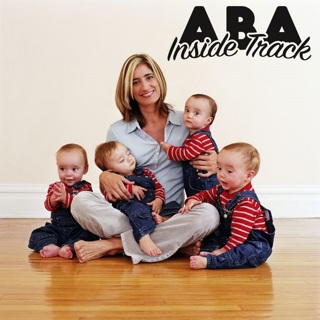
Subscribe on iTunes Subscribe on Google Play Subscribe on Stitcher Because noncontingent reinforcement goes beyond constant access to a bag of M+Ms, we bring you this, the latest episode of ABA Inside Track. Jackie and Rob are ready to meet your response-independent schedule needs, especially if those needs include a synopsis of the Hugga Bunch movie. Diana reviews NCR schedules, from dense to lean and everything in between, though expresses a preference for dense when candy is involved. Finally, a heated discussion ensues regarding extinction as a ruiner of contingency marriages. Listen closely: this episode is chock-full of putative possibilities. Articles discussed this episode: Hagopian, L.P., Fisher, W.W., & Legacy, S.M. (1994). Schedule effects of noncontingent reinforcement on attention-maintained destructive behavior in identical quadruplets. Journal of Applied Behavior Analysis, 27, 317-325. doi: 10.1901/jaba.1994.27-317 Wallce, M.D., Iwata, B.A., Hanley, G.P., Thompson, R.H., & Roscoe, E.M. (2012). Noncontingent reinforcement: A further examination of schedule effects during treatment. Journal of Applied Behavior Analysis, 45, 709-719. doi: 10.1901/jaba.2012.45-709 If you're interested in ordering CEs for listening to this episode, click here to go to the store page. You'll need to enter your name, BCBA #, and the two episode secret code words to complete the purchase. Email us at abainsidetrack@gmail.com for further assistance.
30 Marras 20161h 11min

Episode 20 Preview
Subscribe on iTunes Subscribe on Google Play Subscribe on Stitcher Next week, we're talking about the somewhat misunderstood treatment: non-contingent reinforcement. And before we even get into the topic, Jackie gets belligerent. So you know it'll be a good episode. Then, in errata, we review updates to the professional and ethical compliance code for behavior analysts in relation to reporting public health- and safety-related fines or tickets to the BACB. Let's hope none of our hypothetical scenarios every come to pass! Articles for next week: Hagopian, L.P., Fisher, W.W., & Legacy, S.M. (1994). Schedule effects of noncontingent reinforcement on attention-maintained destructive behavior in identical quadruplets. Journal of Applied Behavior Analysis, 27, 317-325. doi: 10.1901/jaba.1994.27-317 Wallce, M.D., Iwata, B.A., Hanley, G.P., Thompson, R.H., & Roscoe, E.M. (2012). Noncontingent reinforcement: A further examination of schedule effects during treatment. Journal of Applied Behavior Analysis, 45, 709-719. doi: 10.1901/jaba.2012.45-709
23 Marras 201612min

Episode 19 - Parent Training to Decrease Challenging Behavior
Subscribe on iTunes Subscribe on Google Play Subscribe on Stitcher Everyone needs help sometimes whether it's a family dealing with challenging behavior or podcast hosts avoiding nonsensical tangents. This week's episode spends most of it's running time with the former, reviewing research on how to help behavior analysts to help parents in the home. From tantrums in quadruplets to overcoming mealtime woes, we've got something for even the smartest parents and practitioners to learn. In regards to the latter--with Rob getting in character with his Fran Drescher nanny impression, Jackie bringing up fishing and Beyonce, and Diana comparing research to delicious gravy--we may have been less successful. Articles discussed this episode: Miles, N.I. & Wilder, D.A. (2009). The effects of behavioral skills training on caregiver implementation of guided compliance. Journal of Applied Behavior Analysis, 42, 405-410. doi: 10.1901/jaba.2009.42-405 Crone, R.M. & Mehta, S.S. (2016). Parent training on generalized use of behavior analytic strategies for decreasing the problem behavior of children with autism spectrum disorder: A data-based case study. Education and Treatment of Children, 39, 64-94. Stocco, C.S. & Thompson, R.H. (2015). Contingency analysis of caregiver behavior: Implications for parent training and future directions. Journal of Applied Behavior Analysis, 48, 417-435. doi: 10.1002/jaba.206 If you're interested in ordering CEs for listening to this episode, click here to go to the store page. You'll need to enter your name, BCBA #, and the two episode secret code words to complete the purchase. Email us at abainsidetrack@gmail.com for further assistance.
16 Marras 20161h 5min

Episode 19 Preview
Subscribe on iTunes Subscribe on Google Play Subscribe on Stitcher We're back with another preview episode to prepare for a full-length discussion on helping parents learn to respond to challenging behavior. But first, we get a bit ABA OFF-track as Rob recounts the time he almost met Neil Gaiman, Diana shares some recent Facebook links with the crowd, and Jackie recounts our BABAT rock star moment. And speaking of which, if you haven't listened to our BABAT special, please do so, if not for our sunny voices than for all of the cool movie music Rob edited in there. Articles for next week: Miles, N.I. & Wilder, D.A. (2009). The effects of behavioral skills training on caregiver implementation of guided compliance. Journal of Applied Behavior Analysis, 42, 405-410. doi: 10.1901/jaba.2009.42-405 Crone, R.M. & Mehta, S.S. (2016). Parent training on generalized use of behavior analytic strategies for decreasing the problem behavior of children with autism spectrum disorder: A data-based case study. Education and Treatment of Children, 39, 64-94. Stocco, C.S. & Thompson, R.H. (2015). Contingency analysis of caregiver behavior: Implications for parent training and future directions. Journal of Applied Behavior Analysis, 48, 417-435. doi: 10.1002/jaba.206
9 Marras 201617min

Episode 18 - Challenging Behavior From Point A to Point B
Subscribe on iTunes Subscribe on Google Play Subscribe on Stitcher Did you ever notice how hard it is to get from place to place? Is it the fact that your new location just isn't as much fun as your starting point? Is it that dawdling is its own reward? Or could it be some sort of existential crisis concerning the movement of your body through space and time as we all hurtle through space towards total entropy? This week we talk about challenging behavior around transitioning from place to place. We review a classic analysis of the function of SIB during transitions and get a glimpse into how our new computer overlords will make us all more efficient students as we move about the classroom. Invariably we wander from tangent to tangent: our favorite transition of all! Articles discussed this episode: McCord, B.E. & Thomson, R.J (2001). Functional analysis and treatment of self-injury associated with transitions. Journal of Applied Behavior Analysis, 34, 195-210. doi: 10.1901/jaba.2001.34-195 Hine, J.F., Ardoin, S.P., & Foster, T.E. (2015). Decreasing transition times in elementary school classrooms: Using computer-assisted instruction to automate intervention components. Journal of Applied Behavior Analysis, 48, 495-510. doi: 10.1002/jaba.233 Brewer, A.T., Strickland-Cohen, K., Dotson, W., & Williams, D.C. (2014). Advance notice for transition-related problem behavior: Practice guidelines. Behavior Analysis in Practice, 7, 117-125. doi:10.1007/s40617-014-0014-3 If you're interested in ordering CEs for listening to this episode, click here to go to the store page. You'll need to enter your name, BCBA #, and the two episode secret code words to complete the purchase. Email us at abainsidetrack@gmail.com for further assistance.
2 Marras 20161h 15min
Episode 18 Preview
Subscribe on iTunes Subscribe on Google Play Subscribe on Stitcher Next week we'll be discussing behavior analytic research on the topic of transitions. Moving from one place or activity to another can be a real source of challenging behavior with many individuals with autism and a real source of wasted time for any student. But why? And what can practitioners do to help? All that and errata including a fun discussion about what transitions we can't stand. Articles for next week: McCord, B.E. & Thomson, R.J (2001). Functional analysis and treatment of self-injury associated with transitions. Journal of Applied Behavior Analysis, 34, 195-210. doi: 10.1901/jaba.2001.34-195 Hine, J.F., Ardoin, S.P., & Foster, T.E. (2015). Decreasing transition times in elementary school classrooms: Using computer-assisted instruction to automate intervention components. Journal of Applied Behavior Analysis, 48, 495-510. doi: 10.1002/jaba.233 Brewer, A.T., Strickland-Cohen, K., Dotson, W., & Williams, D.C. (2014). Advance notice for transition-related problem behavior: Practice guidelines. Behavior Analysis in Practice, 7, 117-125. doi:10.1007/s40617-014-0014-3
26 Loka 201619min

BABAT Special 2016
Subscribe on iTunes Subscribe on Google Play Subscribe on Stitcher It's our super special episode at the BABAT Conference! We're recording LIVE from the top of the UMASS Amherst Student Center then saving it to go out prerecorded today. Your three hosts chat about the various goings-on during this two-day cavalcade of behavior analysis and pull in some special guests to share their own experiences at the conference. Come on and listen to the very first recorded ABA conference post-show in history! At least as far as I know of.
19 Loka 201654min

Episode 17 - (ETHICS) Ethics in Data Collection
Subscribe on iTunes Subscribe on Google Play Subscribe on Stitcher If you think you're a pro at tracking behavior, this week's episode may be a cue to reflect on just how easy it is to collect bad data. We're joined by special guest Dr. Amanda Karsten to discuss the ethics of taking good data as behavior analysts. Dr. Karsten reviews some great tips on how to go from data squirrel to data hero as well as some practical suggestions to get you using data ethically today! Plus, Diana shares a quiz to find out what kind of data you are and Jackie plugs her new ABA Christmas album. Rob sits in shock at the stark realization that he only uses data for evil. And for folks applying for continuing education credits, this episode counts towards 1 Ethics CE. Articles discussed this episode: LeBlanc, L.A., Raetz, P.B., Sellers, T.P., & Carr, J.E. (2016). A proposed model for selecting measurement procedures for the assessment and treatment of problem behavior. Behavior Analysis in Practice, 9, 77-83. doi: 10.1007/s40617-015-0063-2 Vollmer, T.R., Sloman, K.N., & St. Peter Pipkin, C. (2008). Practical implications of data reliability and treatment integrity monitoring. Behavior Analysis in Practice, 1, 4-11. Carey, M.K. & Bourret, J.C. (2014). Effects of data sampling on graphical depictions of learning. Journal of Applied Behavior Analylsis, 47, 749-764. doi: 10.1002/jaba.153 This episode provides 1 ETHICS CE. If you're interested in ordering CEs for listening to this episode, click here to go to the store page. You'll need to enter your name, BCBA #, and the two episode secret code words to complete the purchase. Email us at abainsidetrack@gmail.com for further assistance.
12 Loka 20161h 13min