Why do island Puerto Ricans criticize US-born Puerto Ricans?

Why do island Puerto Ricans criticize US-born Puerto Ricans?

Puerto Ricans on the island sometimes criticize Puerto Ricans born in the United States (often called "Nuyoricans", "Diaspora Boricuas", or simply "stateside Puerto Ricans") for several cultural, historical, and identity-based reasons. These tensions are rooted in complex emotions about authenticity, colonization, displacement, and survival. Here are the key reasons why this criticism happens:

🇵🇷 1. Perceived Loss of Cultural Authenticity

  • Some island-born Puerto Ricans feel that stateside Puerto Ricans have lost touch with “true” Puerto Rican culture — especially language (Spanish), customs, and day-to-day island experiences.
  • They may view diaspora Boricuas as “Americanized” or disconnected from the struggles of the island.

“You don’t live here, so you don’t get it.”

🌎 2. Different Lived Realities

  • Puerto Ricans in the U.S. often have access to better public services, full U.S. voting rights, and higher wages — while those on the island face austerity, blackouts, and a non-voting status.
  • This creates resentment when diaspora Puerto Ricans try to speak for the island without enduring the same hardships.

🗳️ 3. Influence Without Representation

  • Islanders sometimes criticize diaspora Boricuas for pushing political opinions (e.g., statehood, independence, or Spanish autonomy) while not living with the consequences on the island.
  • Some resent votes cast in referendums or lobbying in Washington by Puerto Ricans who don’t reside in Puerto Rico.

🌍 4. Gentrification and Return Migration

  • An increasing number of U.S.-born Puerto Ricans are moving back to the island — sometimes unknowingly contributing to gentrification and rising property prices.
  • Locals may see them as outsiders with privilege, even though they are technically Puerto Rican.

🧬 5. Questions of Identity and Belonging

  • There’s a deep debate over who gets to call themselves “truly Puerto Rican.” Is it bloodline, culture, birthplace, or language?
  • Many islanders struggle with accepting that identity can be fluid — that someone born in New York, Chicago, or Orlando can be just as Puerto Rican.

🔥 6. Colonial Trauma & Internalized Division

  • U.S. colonization has created lasting divides between islanders and the diaspora — often fueled by government neglect, forced migration, and cultural assimilation.
  • Sometimes the criticism is a reflection of deeper pain and frustration about the broader colonial condition.

🤝 Important Note:

Not all islanders feel this way, and there is growing recognition that unity between island and diaspora Puerto Ricans is crucial for change. But these tensions are real and must be acknowledged with empathy and honesty.

Tämä jakso on lisätty Podme-palveluun avoimen RSS-syötteen kautta eikä se ole Podmen omaa tuotantoa. Siksi jakso saattaa sisältää mainontaa.

Jaksot(63)

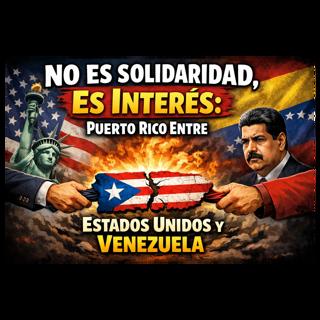
Puerto Rico en el Centro de una Lucha de Influencia

Puerto Rico en el Centro de una Lucha de Influencia

Puerto Rico is often spoken about in the language of solidarity, but history tells a different story. Whether it is the United States or Venezuela, attention toward Puerto Rico has rarely been driven ...

5 Tammi 1h 19min
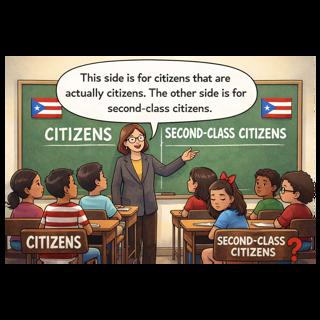
“I don’t care about clauses or anything else. As long as I have my U.S. citizenship, that’s all that matters.

“I don’t care about clauses or anything else. As long as I have my U.S. citizenship, that’s all that matters.

Many people say, “As long as I have U.S. citizenship, nothing else matters.” What’s often overlooked is that not all U.S. citizenship is equal under the law.Puerto Ricans did not receive citizenship t...

4 Tammi 2min
Sabías que los puertorriqueños ya fueron despojados de su ciudadanía una vez?

Sabías que los puertorriqueños ya fueron despojados de su ciudadanía una vez?

En 1898, los puertorriqueños eran ciudadanos españoles. Tenían derechos civiles, representación en el Parlamento español y recién habían conseguido autonomía con la Carta Autonómica.

1 Heinä 20251min

Health Consequences of a Processed Food Economy in Puerto Rico

Health Consequences of a Processed Food Economy in Puerto Rico

Puerto Rico imports over 85% of its food, much of which is ultra-processed, high in sodium, sugar, and unhealthy fats. This diet shift is linked to:

30 Kesä 20252min

La Crisis Alimentaria de Puerto Rico: De la Comida Casera a la Enfermedad Importada

La Crisis Alimentaria de Puerto Rico: De la Comida Casera a la Enfermedad Importada

Después de la Invasión de EE.UU.: Colapso de la Soberanía AlimentariaDesde 1898, las políticas coloniales de EE.UU.:

30 Kesä 20252min

Por Qué el Gobierno de EE. UU. Considera a Canadá y Groenlandia… Pero No a Puerto Rico?

Por Qué el Gobierno de EE. UU. Considera a Canadá y Groenlandia… Pero No a Puerto Rico?

Esta es una pregunta importante que revela mucho sobre cómo se trata a Puerto Rico: como una posesión, no como un socio. Aquí te explicamos por qué:

30 Kesä 20252min

Puede el Congreso de EE.UU. prohibir que hablemos español en el trabajo o en público?

Puede el Congreso de EE.UU. prohibir que hablemos español en el trabajo o en público?

xiste alguna ley que prohíba hablar español en Estados Unidos?

29 Kesä 20253min

Mi primera ves en puerto rico en 1985

Mi primera ves en puerto rico en 1985

1985 (14 años de edad):Viste campos de piña, caña de azúcar y plantaciones de frutas — un legado del rico pasado agrícola de Puerto Rico.Tus padres, nacidos en Lajas y Río Piedras, formaban parte de u...

29 Kesä 20252min

Suosittua kategoriassa Liike-elämä ja talous

sijotuskasti
psykopodiaa-podcast
rss-rahapodi
mimmit-sijoittaa
rss-oivalluksia-rahasta-elamasta
rss-rahamania
ostan-asuntoja-podcast
rahapuhetta
hyva-paha-johtaminen
pomojen-suusta
inderespodi
rss-sami-miettinen-neuvottelija
oppimisen-psykologia
yrittaja
rss-ammattipodcast
rss-bisneksen-pehmea-puoli
rss-sisalto-kuntoon
rss-lentopaivakirjat
rss-asiakaskokemusklubi
rss-brandi-20