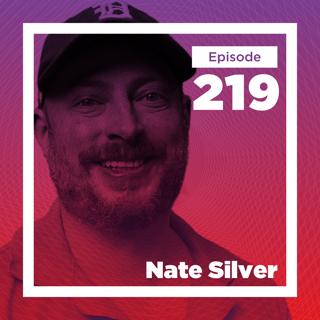
Nate Silver on Risk-takers, Politicians, and Poker Players
In his second appearance, Nate Silver joins the show to cover the intersections of predictions, politics, and poker with Tyler. They tackle how coin flips solve status quo bias, gambling's origins in divination, what kinds of betting Nate would ban, why he's been limited on several of the New York sports betting sites, how game theory changed poker tournaments, whether poker players make for good employees, running and leaving FiveThirtyEight, why funky batting stances have disappeared, AI's impact on sports analytics, the most underrated NBA statistic, Sam Bankman-Fried's place in "the River," the trait effective altruists need to develop, the stupidest risks Tyler and Nate would take, prediction markets, how many monumental political decisions have been done under the influence of drugs, and more. Read a full transcript enhanced with helpful links, or watch the full video. Recorded July 22nd, 2024. Other ways to connect Follow us on X and Instagram Follow Tyler on X Follow Nate on X Sign up for our newsletter Join our Discord Email us: cowenconvos@mercatus.gmu.edu Learn more about Conversations with Tyler and other Mercatus Center podcasts here.
21 Elo 202459min

Paul Bloom on the Psychology of Children, and the Morality of Empathy and Disgust
Paul Bloom is a renowned psychologist and writer specializing in moral psychology, particularly how moral thoughts and actions develop in children. But his interests and books explore a wide range of topics, including the science of pleasure, the morality of empathy, dehumanization, immoral vs moral punishments, and our feelings about animals and robots. Bloom is a professor at the University of Toronto and previously taught at Yale for over 20 years. Together Paul and Tyler explore whether psychologists understand day-to-day human behavior any better than normal folk, how babies can tell if you're a jerk, at what age children have the capacity to believe in God, why the trend in religion is toward monotheism, the morality of getting paid to strangle cats, whether disgust should be built into LLMs, the possibilities of AI therapists, the best test for a theory of mind, why people overestimate Paul's (and Tyler's) intelligence, why flattery is undersupplied, why we should train flattery and tax empathy, Carl Jung, Big Five personality theory, Principles of Psychology by William James, the social psychology of the Hebrew Bible, his most successful unusual work habit, what he'll work on next, and more. Read a full transcript enhanced with helpful links, or watch the full video. Recorded May 13th, 2024. Other ways to connect Follow us on X and Instagram Follow Tyler on X Follow Paul on X Sign up for our newsletter Join our Discord Email us: cowenconvos@mercatus.gmu.edu Learn more about Conversations with Tyler and other Mercatus Center podcasts here.
7 Elo 202459min
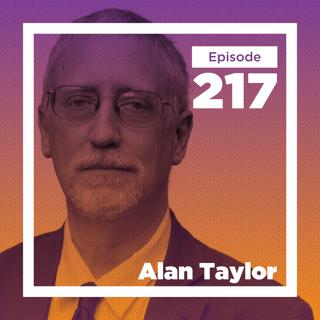
Alan Taylor on Revolutionary Ironies and the Continental Civil War
Two-time Pulitzer Prize winner Alan Taylor is Tyler's pick for one of the greatest living historians. His many books cover the early American Republic, American westward expansion, the War of 1812, Virginian slavery, Thomas Jefferson, the revolutionary settlements in Maine, and more. He's currently the Thomas Jefferson Chair of History at the University of Virginia. Tyler and Taylor take a walking tour of early history through North America covering the decisions, and ripples of those decisions, that shaped revolution and independence, including why Canada didn't join the American revolution, why America in turn never conquered Canada, American's early obsession with the collapse of the Republic, how democratic the Jacksonians were, Texas/Mexico tensions over escaped African American slaves, America's refusal to recognize Cuban independence, how many American Tories went north post-revolution, Napoleon III's war with Mexico, why the US Government considered attacking Canada after the Civil War, and much more. Read a full transcript enhanced with helpful links, or watch the full video. Recorded May 9th, 2024. Other ways to connect Follow us on X and Instagram Follow Tyler on X Sign up for our newsletter Join our Discord Email us: cowenconvos@mercatus.gmu.edu Learn more about Conversations with Tyler and other Mercatus Center podcasts here. Photo Credit: (c) Dan Addison UVA University Communications
24 Heinä 202457min
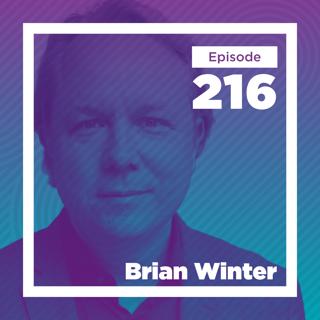
Brian Winter on Brazil, Argentina, and the Future of Latin America
Register for the DC Listener Meetup It's not just the churrasco that made him fall in love with Brazil. Brian Winter has been studying and writing about Latin America for over 20 years. He's been tracking the struggles and triumphs of the region as it's dealt with decades of coups, violence, and shifting economics. His work offers a nuanced perspective on Latin America's persistent challenges and remarkable resilience. Together Brian and Tyler discuss the politics and economics of nearly every country from the equator down. They cover the future of migration into Brazil, what it's doing right in agriculture, the cultural shift in race politics, crime in Rio and São Paulo, the effectiveness and future consequences of Bukele's police state in El Salvador, the economic growth of Columbia despite continued violence, the prevalence of startups and psychoanalysis in Argentina, Uruguay's reduction in poverty levels, the beautiful ugliness of Sao Paulo, where Brian will explore next, and more. Read a full transcript enhanced with helpful links, or watch the full video. Recorded April 15th, 2024. Other ways to connect Follow us on X and Instagram Follow Tyler on X Follow Brian on X Sign up for our newsletter Join our Discord Email us: cowenconvos@mercatus.gmu.edu Learn more about Conversations with Tyler and other Mercatus Center podcasts here.
10 Heinä 202458min
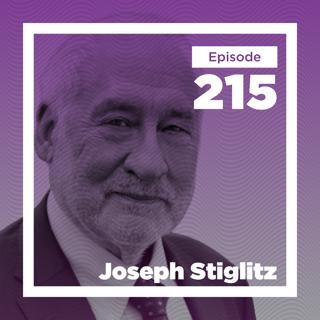
Joseph Stiglitz on Pioneering Economic Theories, Policy Challenges, and His Intellectual Legacy
Nobel Prize-winning economist Joseph Stiglitz joined Tyler for a discussion that weaves through Joe's career and key contributions, including what he learned from giving an 8-lecture in Japan, how being a debater influenced his intellectual development, why he tried to abolish fraternities at Amherst, how studying Kenyan sharecropping led to one of his most influential papers, what he thinks today of Georgism and the YIMBY movement, why he was too right-wing for Cambridge, why he left Gary, Indiana, his current views on high trading volumes and liquidity, the biggest difference between him and Paul Krugman, what working in Washington, DC taught him about hierarchies, what he'll do next, and more. Read a full transcript enhanced with helpful links, or watch the full video. Recorded April 22nd, 2024. Other ways to connect Follow us on X and Instagram Follow Tyler on X Follow Joseph on X Sign up for our newsletter Join our Discord Email us: cowenconvos@mercatus.gmu.edu Learn more about Conversations with Tyler and other Mercatus Center podcasts here.
26 Kesä 202449min
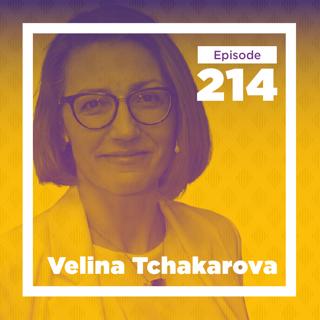
Velina Tchakarova on China, Russia, and the Future of Geopolitics
Take our Listener Survey You could try playing out the four-dimensional chess game of how the global order will shift in the next 10-15 years for yourself, or you could hire Velina Tchakarova. Founder of the consultancy FACE, Velina is a geopolitical strategist guiding businesses and organizations to anticipate the outcomes of global conflicts, shifting alliances, and bleeding edge technologies on the world stage. In a globe-trotting conversation, Tyler and Velina start in the Balkans and then head to Russia, China, North Korea, and finally circle back to Putin's interest in the Baltics. She gives her take on whether the Balkan Wars still matter today, the future of Bulgarian nationalism, what predicts which Eastern European countries will remain closer to Russia, why China will not attack Taiwan, Putin's next move after Ukraine, where a nuclear weapon is most likely to be used next, how she sources intel, her unique approach to scenario-planning, and more. Read a full transcript enhanced with helpful links, or watch the full video. Recorded May 20th, 2024. Other ways to connect Follow us on X and Instagram Follow Tyler on X Follow Velina on X Sign up for our newsletter Join our Discord Email us: cowenconvos@mercatus.gmu.edu Learn more about Conversations with Tyler and other Mercatus Center podcasts here.
12 Kesä 202451min
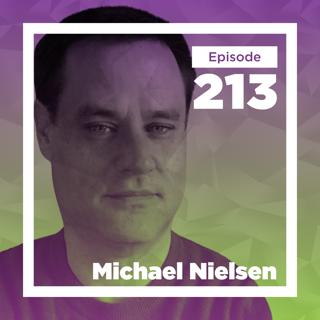
Michael Nielsen on Collaboration, Quantum Computing, and Civilization's Fragility
Take our Listener Survey Michael Nielsen is a scientist who helped pioneer quantum computing and the modern open science movement. He's worked at Y Combinator, co-authored on scientific progress with Patrick Collison, and is a prolific writer, reader, commentator, and mentor. He joined Tyler to discuss why the universe is so beautiful to human eyes (but not ears), how to find good collaborators, the influence of Simone Weil, where Olaf Stapledon's understand of the social word went wrong, potential applications of quantum computing, the (rising) status of linear algebra, what makes for physicists who age well, finding young mentors, why some scientific fields have pre-print platforms and others don't, how so many crummy journals survive, the threat of cheap nukes, the many unknowns of Mars colonization, techniques for paying closer attention, what you learn when visiting the USS Midway, why he changed his mind about Emergent Ventures, why he didn't join OpenAI in 2015, what he'll learn next, and more. Read a full transcript enhanced with helpful links, or watch the full video. Recorded March 24th, 2024. Other ways to connect Follow us on X and Instagram Follow Tyler on X Follow Michael on X Sign up for our newsletter Join our Discord Email us: cowenconvos@mercatus.gmu.edu Learn more about Conversations with Tyler and other Mercatus Center podcasts here.
29 Touko 20241h 2min
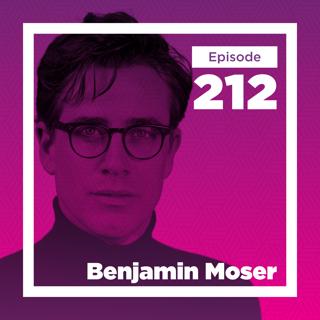
Benjamin Moser on the Dutch Masters, Brazil, and Cultural Icons
Take our Listener Survey Benjamin Moser is a Pulitzer Prize-winning writer celebrated for his in-depth studies of literary and cultural figures such as Susan Sontag and Clarice Lispector. His latest book, which details a twenty-year love affair with the Dutch masters, is one of Tyler's favorite books on art criticism ever. Benjamin joined Tyler to discuss why Vermeer was almost forgotten, how Rembrandt was so productive, what auctions of the old masters reveals about current approaches to painting, why Dutch art hangs best in houses, what makes the Kunstmuseum in the Hague so special, why Dutch students won't read older books, Benjamin's favorite Dutch movie, the tensions within Dutch social tolerance, the joys of living in Utrecht, why Latin Americans make for harder interview subjects, whether Brasilia works as a city, why modernism persisted in Brazil, how to appreciate Clarice Lispector, Susan Sontag's (waning) influence, V.S. Naipaul's mentorship, Houston's intellectual culture, what he's learning next, and more. Read a full transcript enhanced with helpful links, or watch the full video. Recorded February 15th, 2024. Other ways to connect Follow us on X and Instagram Follow Tyler on X Sign up for our newsletter Join our Discord Email us: cowenconvos@mercatus.gmu.edu Learn more about Conversations with Tyler and other Mercatus Center podcasts here. Photo Credit: Philippe Quaisse
15 Touko 20241h 6min