Psychedelics Today - Kyle and Joe - Year End Recap
Psychedelics Today3 Tammi 2017

Psychedelics Today - Kyle and Joe - Year End Recap

Download It is the start of a New Year. People are saying 2016 has been pretty horrible, but 2016 has been pretty decent in regards to psychedelic science and research. We are hoping that 2017 will be a fruitful year as well. In this episode Kyle and Joe run through the year in review -- thoughts about the podcast and project as well as recap just a few of the psychedelic highlights of 2016. Kyle and Joe also talk about a Psychedelic Self Care and Integration course being offered for a short period of time, Psychedelic mentor-ship, speculations and visions for 2017, and much more! There was some discussion towards the end about rites of passage and human development. Kyle mentions writing a paper about this topic. You can check part of the paper out below the "Links" section. 2016 Psychedelic Highlights LSD & The Brain Psilocybin MDMA Other Let us know what else we missed! Links Dr Ben Sessa MD Psychedelic Science 2017 - Oakland, CA Psychedelic Integration & Self-Care Course Rites of Passage: The Importance of Transitions Ralph Metzner diagnoses the psychopathology of humans in the Western society into the categories of, "addiction, dissociation, autism, and amnesia" (Metzner, 1995). The Western culture suffers from these metaphoric diagnoses, which stems from a loss of ritual and also the disconnection from nature. Paul Shepard states that the Western Judeo-Christian civilization is slowly self-destructing and mentions that it is "ontogenic crippling" (Metzner, 1995). Shepard examines the developmental process throughout human history and investigating the development of surviving hunter-gather societies that are still alive today – which give a foundation of human development since hunter-gathers still possess some of the indigenous traits of ancient human ancestors. To see the developmental and evolutionary differences over time in the human species, Shepard models his analysis by looking at Paleolithic hunter-gather societies which he states are the most ecologically balances societies (Metzner, 1995). Shepard mentions that: With the advent of domestication, approximately twelve thousand years ago, civilized humanity began to pervert or lose the developmental practices that had functioned healthily for hundreds of thousands of years. (Metzner, 1995 pp. 56) The developmental practices that the Western world has lost but also chronically has become incomplete in human life are: the relationship between the infant/caregiver and the adolescence rites of passage (Metzner, 1995). In the Western culture it is thought that an infant must become independent at some point and early on attachment between the infant and caregiver might disrupt the developmental process. In fact, this is not true according to Jean Liedloff's who conducted case studies of Amazonian Indians. Jean's studies conclude and support Shepard's theory that: "babies and parties in hunter-gather societies have an intense early attachment that leads not to prolonged dependency but to a better-functioning nervous system." (Metzner, 1995, pp. 58) Metzner and Shepard create an argument based around human development and the disconnection from nature. From the ecopsychologist's viewpoint – humans are part of nature and our development; physically, mentally, spiritually, and emotionally matters on the relationship that humans have to nature (Metzner, 1995). As the Western world advances in the realm of science and technology the world begins to see great advancements and achievements, almost reaching a new frontier in human consciousness. At the same time, there exists a thought that if we cut the cord from nature – human life will slowly begin to become destructive and possibly cease to exist (Metzner, 1995). The development of agriculture and technology in the Western world has separated man from nature. This disconnection from nature has also stripped the Western culture of the idea and structure for successful rites of passages from adolescence to adulthood. Metzner (1995) mentions that: Some of the only remnants of manhood transition rites involving elders are the boot camp and combat initiations by the military. Beyond that, there is only the stunted futility of attempted peer-group initiation, whether in the pathetic form of college fraternity hazing or in a casual violence of juvenile street gangs, where twelve-year-olds carry handguns to school to avenge imagined insults to their "home" band. ( p. 58) What happens to a culture or society when structured rites of passages begin to vanish? Metzner points out and quotes Shepard by saying, "men [presumably he means "Western industrialized humans"] may now be the possessors of the world's flimsiest identity structure – by Paleolithic standards, childish adults." (Metzner, 1995, p. 58) This leaves the idea that maybe science and developmental psychology do not fully understand what it means to be human. It is obvious by the choices the Western culture makes are not adult-like. Indigenous cultures taught the children how to live a life that would keep balance for the next seven generations to come. Nowadays, the Western culture is only curious about the short term plan or goal. Instead of looking seven generations into the future, the culture looks only a few years ahead – making childish decisions to fill needs and desires. Most of this is driven by competition that is highly influenced to children at a young age by the culture (Metzner, 1995). Metzner and Shepard mention that without proper infant/caregiver relationship and adolescence rite of passage that basic human trust-mistrust is off. The Western culture usually lashes back at the natural world with anger – feeling that nature has deceived the society and failed. Shepard mentions that the Western culture is suffering from an "epidemic of the psychopathic mutilation of ontogeny" (Metzner, 1995 pp. 58). If these ancient techniques and practices cannot be restored, what type of society is ahead for the Western culture? Erikson mentions that adolescents that have not fully transitioned to adulthood often become, "remarkably clannish, intolerant and cruel in their exclusion to others who are 'different' in skin color or cultural background" (Metzner, 1995 pp. 57). Resource: Metzner, Ralph. (1995). The Psychopathology of the Human-Nature Relationship. Roszak, T., Gomes, M., & Kanner, A. (Eds.), Ecopsychology: restoring the Earth and healing the mind (pp.55-67). Berkley, Los Angeles, CA: Sierra Club Books. Recent Posts & Episodes [pt_view id="34a4e22z59"]

Tämä jakso on lisätty Podme-palveluun avoimen RSS-syötteen kautta eikä se ole Podmen omaa tuotantoa. Siksi jakso saattaa sisältää mainontaa.

Jaksot(774)

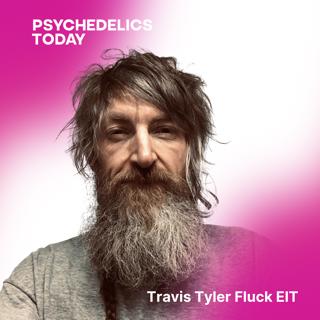
PT 656 - Travis Tyler Fluck: Denver Mushroom Decriminalization, Mutual Aid, and the Future of Psychedelic Culture

PT 656 - Travis Tyler Fluck: Denver Mushroom Decriminalization, Mutual Aid, and the Future of Psychedelic Culture

Denver mushroom decriminalization changed the national conversation around psilocybin access, personal use, and grassroots psychedelic reform. In this episode of Psychedelics Today, Joe Moore speaks w...

11 Touko 1h 43min

PT 655 - Martha Hammel and Tasia Poinsatte - Aspen Psychedelic Symposium

PT 655 - Martha Hammel and Tasia Poinsatte - Aspen Psychedelic Symposium

Aspen Psychedelic Symposium is the focus of this conversation with Martha Hammel of the Aspen Psychedelic Resource Center and Tasia Poinsatte of Healing Advocacy Fund. They join Joe Moore to discuss t...

8 Touko 54min

PT 654 - Erica Rex - Seeing What Is There

PT 654 - Erica Rex - Seeing What Is There

Seeing What Is There is at the center of this conversation with journalist and author Erica Rex, who joins Joe Moore to discuss her book Seeing What Is There: My Search for Sanity in the Psychedelic E...

23 Huhti 1h 20min

PT 653 - Dr. Michael Alpert and Peter Alberding - ALS, Existential Distress, and Ketamine Therapy

PT 653 - Dr. Michael Alpert and Peter Alberding - ALS, Existential Distress, and Ketamine Therapy

ALS and ketamine therapy are at the center of this conversation with psychiatrist Dr. Michael Alpert and Peter Alberding, who was diagnosed with ALS in late 2023. Alpert is a Boston-area psychiatrist ...

16 Huhti 1h 19min

PT 652 - Esme Dark - Psychedelics, Somatics and the Shadow

PT 652 - Esme Dark - Psychedelics, Somatics and the Shadow

Dr. Esme Dark joins Kyle Buller for a conversation on psychedelic therapy, somatic psychotherapy, and shadow work. Based in Australia, Dark is a clinical psychologist, somatic psychotherapist, and psy...

25 Maalis 1h 14min

PT 651 - Betty Aldworth & Ismail Ali: MAPS Co-Executive Directors on Leadership, Research, and the Future of Psychedelics

PT 651 - Betty Aldworth & Ismail Ali: MAPS Co-Executive Directors on Leadership, Research, and the Future of Psychedelics

MAPS co-executive directors Betty Aldworth and Ismail Ali join Psychedelics Today to talk about leading one of the most visible organizations in the psychedelic field during a period of transition. Th...

19 Maalis 1h 22min

PT 650 - Joe Moore Psychedelics Today on Leadership, Integration, and the Psychedelic Landscape

PT 650 - Joe Moore Psychedelics Today on Leadership, Integration, and the Psychedelic Landscape

Jen Davenport joins Psychedelics Today to interview co-founder Joe Moore about the growth of Psychedelics Today, the broader psychedelic ecosystem, and how professionals are beginning to engage with p...

9 Maalis 1h 6min

PT 649 - Melissa Lavasani and Jay Kopelman

PT 649 - Melissa Lavasani and Jay Kopelman

Melissa Lavasani & Jay Kopelman join our podcast to discuss how psychedelic policy is actually moving in Washington, DC. Lavasani leads Psychedelic Medicine Coalition, a DC-based advocacy organization...

19 Helmi 1h 10min

Suosittua kategoriassa Tiede

tiedekulma-podcast
rss-poliisin-mieli
docemilia
rss-mita-tulisi-tietaa
rss-lapsuuden-rakentajat-podcast
filocast-filosofian-perusteet
rss-tiedetta-vai-tarinaa
rss-lihavuudesta-podcast
rss-bios-podcast
rss-duodecim-lehti
rss-metsantuntijat-podcast