
Peter Mandler - Democracy and the desire for more education

Peter Mandler - Democracy and the desire for more education

Greater social equality and civil rights lead to a greater demand for education, as individuals seek to leverage their improved standing in society.

About Peter Mandler

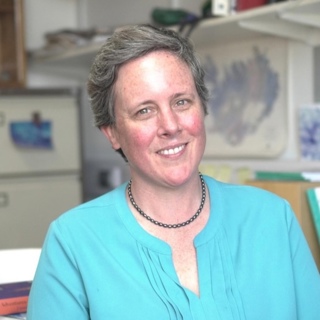
"I am Professor of Modern Cultural History at the University of Cambridge.

I’m a historian of modern Britain and of the modern world. Over the last 20 years, I’ve aligned my work representing historians as academics and teachers with my research in education: I’ve become immersed in the recent history of education. My main interest is asking why people have gotten more and more education over the last generation or two."

Key Points

• Democratic systems were developed in many countries throughout the 20th century. Their establishment ushered in a greater demand for education. • The Flynn effect describes the increase in measurable intelligence occurring in developed and developing countries likely to be the result of increased mobility. • Greater social equality and civil rights lead to a greater demand for education, as individuals seek to leverage their improved standing in society.

I think there are a few main factors that affect our demand for education. These are prominent circumstances that have affected a large part of the world over the last century. The most obvious is democracy. Democracy arrived in most places at the beginning of the 20th century, and since then it has typically expanded the demand for education.

Initially, this trend began, as the elite classes were forced to concede universal suffrage. At the time, elites needed a way to ensure a ruly and well-behaved electorate. In response to this concern, they implanted schools in every community. As democracy became embedded in societies, the education system began to work for democracy, rather than attempt to control it.

I believe newly and fully democratised populations understand that education is a necessary piece of equipment for citizenship. As such, individuals pursue it up to the age of citizenship, which is usually 18. Regardless, there’s a pretty good correlation between democratising societies and the provision of education.

Tämä jakso on lisätty Podme-palveluun avoimen RSS-syötteen kautta eikä se ole Podmen omaa tuotantoa. Siksi jakso saattaa sisältää mainontaa.

Jaksot(100)

The resurgence of civic duties | Simon Reid-Henry

The resurgence of civic duties | Simon Reid-Henry

Civic duties are essentially the ways in which citizens agree to abide by the rules and to contribute to the life of a national society. About Simon Reid-Henry "I am a research professor at the Peace ...

16 Maalis 14min

What is "prejudice" ? | Jessie Munton

What is "prejudice" ? | Jessie Munton

I think prejudice is best conceptualized as a phenomenon that can be supported by a whole range of mental states that will include beliefs, habits, emotions, and also attentional dispositions. About J...

12 Maalis 16min

Global Public Investment | Simon Reid-Henry

Global Public Investment | Simon Reid-Henry

The world today is overburdened with challenges that supersede the boundaries of nation states, and therefore of national governments, to address on their own. About Simon Reid-Henry "I am a research ...

9 Maalis 18min

On ignorance and forgetting | Jessie Munton

On ignorance and forgetting | Jessie Munton

I'm interested in the beliefs that we're not forming, the evidence that we're not attending to or using, the belief states that perhaps we form. What I think of as negative epistemology is the project...

5 Maalis 19min

The empire of democracy | Simon Reid-Henry

The empire of democracy | Simon Reid-Henry

"How do we understand, as it were, our era of democracy, which I argue began really as recently as the 1970s from previous eras, and what is it that is fundamentally at the core of the democracy we li...

2 Maalis 19min

The life of the mind | Jessie Munton

The life of the mind | Jessie Munton

On the one hand, we have that sense of really close identification with our minds. On the other hand, we're often surprised at the ways in which they operate. About Jessie Munton "​​I'm an Associate P...

26 Helmi 19min

Volcanoes and the origins of life | Tamsin Mather

Volcanoes and the origins of life | Tamsin Mather

We don't really understand how life got going on this planet. There are various candidates for where the first molecules of life might have evolved, and some of those candidates are deeply volcanic. A...

23 Helmi 18min
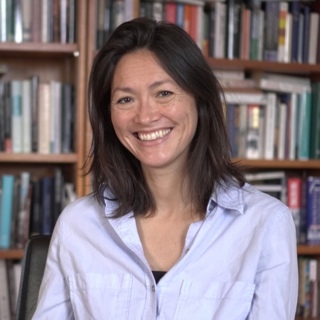
The origin myth of the modern West | Naoíse Mac Sweeney

The origin myth of the modern West | Naoíse Mac Sweeney

We in the modern West still look back to ancient Greece as our imagined origin. We're still obsessed with ancient Greece. About Naoise Mac Sweeney  "I'm Professor of Greek Archaeology at the Universit...

19 Helmi 14min

Suosittua kategoriassa Koulutus

rss-murhan-anatomia
aamukahvilla
psykopodiaa-podcast
rss-luonnollinen-synnytys-podcast
adhd-podi
voi-hyvin-meditaatiot-2
rss-liian-kuuma-peruna
psykologia
rss-rahamania
rss-koira-haudattuna
rss-arkea-ja-aurinkoa-podcast-espanjasta
koulu-podcast-2
rss-uskonto-on-tylsaa
rss-spessu
kesken
rss-vapaudu-voimaasi
ihminen-tavattavissa-tommy-hellsten-instituutti
rss-duodecim-lehti
solu-ja-molekyylibiologian-perusteet
taytta-tavaraa