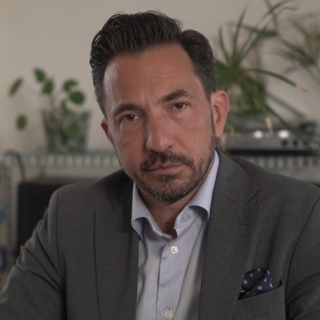
Buzz Baum - Being a scientist: journey into the unknown

Buzz Baum - Being a scientist: journey into the unknown

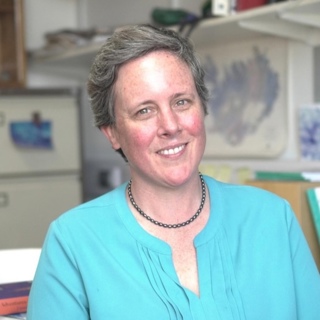
Buzz Baum, Cell Biologist at the MRC Laboratory of Molecular Biology in Cambridge, discusses what it really means to be a scientist.

About Buzz Baum

"I’m a Cell Biologist at the MRC Laboratory of Molecular Biology in Cambridge.

I am fascinated by the process by which one cell becomes two. I research how this process led to the origins of life on Earth, how it can go wrong to cause diseases like cancer, and how we might be able to solve them."

Key Points

• Science is about the creative process of discovery, about going out into a place where you know that the things you’ve learned may be wrong and taking that to the next step, in collaboration with others. • If you don’t get pleasure from seeing that one thing that disproves your hypothesis, or from rethinking your hypothesis, or from doing an experiment just to check your equipment works, then it’s very hard to be a scientist. • One of the strengths of science is collaboration: different voices each having their own ideas, each listening to one another. The more different voices you have, the better the science is.

A journey into the unknown

I like to think about science, and maybe the scientist, as a bit like one of these explorers who’s got a map of the world. It’s a flat map. They imagine a two-dimensional world and they’re going out exploring in the 1400s, 1500s, to map continents. And because it’s really a journey into the unknown, where you don’t know where you’re going, you have a map, but it’s not a very good one. You also have tools like telescopes, lenses, which can help you to explore, to see things that maybe the previous generation of explorers didn’t before our better ships, better microscopes, better telescopes.

So you go into new lands and try to map them out and get a better picture of the world that’s out there. I think one of the difficulties about explaining science is in understanding what it’s like to do science. When we learn science in school, we tend to mainly learn facts about the world – but we don’t have to memorise them and that can make it quite boring. I found it boring anyway. In art, you learn, you’re taught to like, to play and to create all these things. But if you want to discover new places, you really have to throw yourself into the unknown. You will have tools that can help you, but you don’t know what you’re going to see.

research explained, academic insights, expert voices, university knowledge, public scholarship, critical thinking, world events explained, humanities decoded, social issues explored, science for citizens, open access education, informed debates, big ideas, how the world works, deep dives, scholarly storytelling, learn something new, global challenges, trusted knowledge, EXPeditions platform

Tämä jakso on lisätty Podme-palveluun avoimen RSS-syötteen kautta eikä se ole Podmen omaa tuotantoa. Siksi jakso saattaa sisältää mainontaa.

Jaksot(100)

The resurgence of civic duties | Simon Reid-Henry

The resurgence of civic duties | Simon Reid-Henry

Civic duties are essentially the ways in which citizens agree to abide by the rules and to contribute to the life of a national society. About Simon Reid-Henry "I am a research professor at the Peace ...

16 Maalis 14min
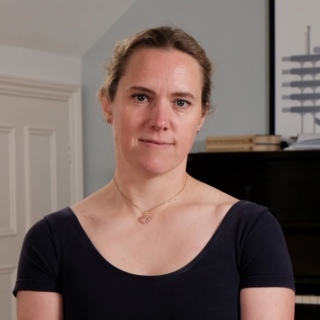
What is "prejudice" ? | Jessie Munton

What is "prejudice" ? | Jessie Munton

I think prejudice is best conceptualized as a phenomenon that can be supported by a whole range of mental states that will include beliefs, habits, emotions, and also attentional dispositions. About J...

12 Maalis 16min

Global Public Investment | Simon Reid-Henry

Global Public Investment | Simon Reid-Henry

The world today is overburdened with challenges that supersede the boundaries of nation states, and therefore of national governments, to address on their own. About Simon Reid-Henry "I am a research ...

9 Maalis 18min

On ignorance and forgetting | Jessie Munton

On ignorance and forgetting | Jessie Munton

I'm interested in the beliefs that we're not forming, the evidence that we're not attending to or using, the belief states that perhaps we form. What I think of as negative epistemology is the project...

5 Maalis 19min

The empire of democracy | Simon Reid-Henry

The empire of democracy | Simon Reid-Henry

"How do we understand, as it were, our era of democracy, which I argue began really as recently as the 1970s from previous eras, and what is it that is fundamentally at the core of the democracy we li...

2 Maalis 19min

The life of the mind | Jessie Munton

The life of the mind | Jessie Munton

On the one hand, we have that sense of really close identification with our minds. On the other hand, we're often surprised at the ways in which they operate. About Jessie Munton "​​I'm an Associate P...

26 Helmi 19min

Volcanoes and the origins of life | Tamsin Mather

Volcanoes and the origins of life | Tamsin Mather

We don't really understand how life got going on this planet. There are various candidates for where the first molecules of life might have evolved, and some of those candidates are deeply volcanic. A...

23 Helmi 18min
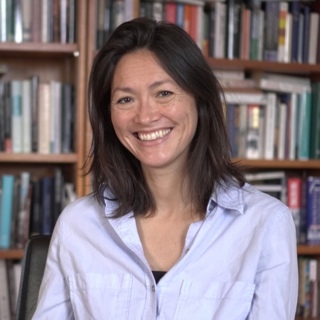
The origin myth of the modern West | Naoíse Mac Sweeney

The origin myth of the modern West | Naoíse Mac Sweeney

We in the modern West still look back to ancient Greece as our imagined origin. We're still obsessed with ancient Greece. About Naoise Mac Sweeney  "I'm Professor of Greek Archaeology at the Universit...

19 Helmi 14min

Suosittua kategoriassa Koulutus

rss-murhan-anatomia
aamukahvilla
psykopodiaa-podcast
rss-luonnollinen-synnytys-podcast
voi-hyvin-meditaatiot-2
psykologia
adhd-podi
rss-liian-kuuma-peruna
rss-uskonto-on-tylsaa
kesken
rss-koira-haudattuna
rss-duodecim-lehti
koulu-podcast-2
rss-arkea-ja-aurinkoa-podcast-espanjasta
rss-spessu
rss-rahamania
ihminen-tavattavissa-tommy-hellsten-instituutti
rss-vapaudu-voimaasi
aloita-meditaatio
rss-niinku-asia-on