Philippe Sands - The Nuremberg moment and the birth of international law

Philippe Sands - The Nuremberg moment and the birth of international law

The Nuremberg moment happened in 1945: a group of countries came together to create the first-ever international criminal tribunal with jurisdiction over crimes against humanity and war crimes.

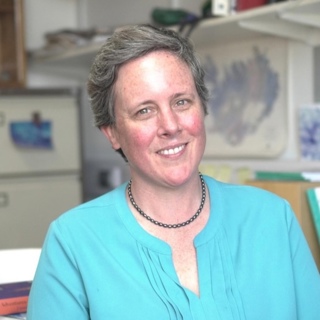
About Philippe Sands "I’m Professor of Law at University College London, a Barrister at Matrix Chambers and a writer."

Key Points

• The Nuremberg moment happened in 1945: a group of countries came together to create the first-ever international criminal tribunal with jurisdiction over crimes against humanity and war crimes. • What followed Nuremberg was the creation of new international treaties preventing genocide, and the coining of the idea of human rights – that each of us has individual rights and collective rights. • We are in the very early stages of a change that will take many decades, if not centuries, to bear full fruition. The birth of international law

The Nuremberg moment happened in 1945: a group of countries came together to create the first-ever international criminal tribunal with jurisdiction over crimes against humanity and war crimes. It was the famous Nuremberg tribunal, and it sat for about a year in the German city of Nuremberg, trying a number of senior Nazis for crimes committed during their rule.

What the Nuremberg moment did was determine, for the first time in human history, that the rights of a state, of a sovereign, of a king, of an emperor, of a president, of a Führer were not unlimited in respect of the power it exercised over its people – that individuals and groups had rights. These rights were encapsulated in two new inventions from the summer of 1945. One was the concept of crimes against humanity – the protection of individuals – which was coined by a professor of international law at Cambridge University called Hersch Lauterpacht. The other was the crime of genocide, invented by another Polish lawyer, Raphael Lemkin. This was not about individuals, but about the protection of groups. In this Nuremberg moment, in 1945, the idea that we all have rights as individuals and as members of a group, or groups, came of age, and it has prospered ever since.

Tämä jakso on lisätty Podme-palveluun avoimen RSS-syötteen kautta eikä se ole Podmen omaa tuotantoa. Siksi jakso saattaa sisältää mainontaa.

Jaksot(100)

The resurgence of civic duties | Simon Reid-Henry

The resurgence of civic duties | Simon Reid-Henry

Civic duties are essentially the ways in which citizens agree to abide by the rules and to contribute to the life of a national society. About Simon Reid-Henry "I am a research professor at the Peace ...

16 Maalis 14min
What is "prejudice" ? | Jessie Munton

What is "prejudice" ? | Jessie Munton

I think prejudice is best conceptualized as a phenomenon that can be supported by a whole range of mental states that will include beliefs, habits, emotions, and also attentional dispositions. About J...

12 Maalis 16min

Global Public Investment | Simon Reid-Henry

Global Public Investment | Simon Reid-Henry

The world today is overburdened with challenges that supersede the boundaries of nation states, and therefore of national governments, to address on their own. About Simon Reid-Henry "I am a research ...

9 Maalis 18min

On ignorance and forgetting | Jessie Munton

On ignorance and forgetting | Jessie Munton

I'm interested in the beliefs that we're not forming, the evidence that we're not attending to or using, the belief states that perhaps we form. What I think of as negative epistemology is the project...

5 Maalis 19min

The empire of democracy | Simon Reid-Henry

The empire of democracy | Simon Reid-Henry

"How do we understand, as it were, our era of democracy, which I argue began really as recently as the 1970s from previous eras, and what is it that is fundamentally at the core of the democracy we li...

2 Maalis 19min

The life of the mind | Jessie Munton

The life of the mind | Jessie Munton

On the one hand, we have that sense of really close identification with our minds. On the other hand, we're often surprised at the ways in which they operate. About Jessie Munton "​​I'm an Associate P...

26 Helmi 19min

Volcanoes and the origins of life | Tamsin Mather

Volcanoes and the origins of life | Tamsin Mather

We don't really understand how life got going on this planet. There are various candidates for where the first molecules of life might have evolved, and some of those candidates are deeply volcanic. A...

23 Helmi 18min
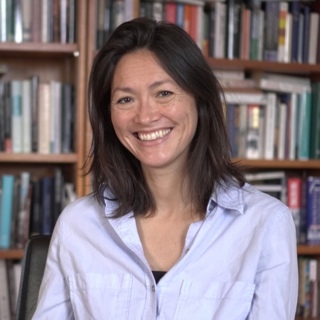
The origin myth of the modern West | Naoíse Mac Sweeney

The origin myth of the modern West | Naoíse Mac Sweeney

We in the modern West still look back to ancient Greece as our imagined origin. We're still obsessed with ancient Greece. About Naoise Mac Sweeney  "I'm Professor of Greek Archaeology at the Universit...

19 Helmi 14min

Suosittua kategoriassa Koulutus

rss-murhan-anatomia
aamukahvilla
psykopodiaa-podcast
rss-luonnollinen-synnytys-podcast
voi-hyvin-meditaatiot-2
psykologia
adhd-podi
rss-liian-kuuma-peruna
rss-uskonto-on-tylsaa
kesken
rss-koira-haudattuna
rss-duodecim-lehti
koulu-podcast-2
rss-arkea-ja-aurinkoa-podcast-espanjasta
rss-spessu
rss-rahamania
ihminen-tavattavissa-tommy-hellsten-instituutti
rss-vapaudu-voimaasi
aloita-meditaatio
rss-niinku-asia-on