
Kehinde Andrews - Race and the global economy

Kehinde Andrews - Race and the global economy

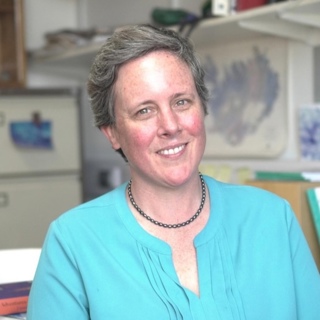
Kehinde Andrews, Professor of Black Studies at Birmingham City University, discusses race and the global economy.

About Kehinde Andrews "I am Professor of Black Studies at Birmingham City University and the Chair of the Harambee Organisation of Black Unity.

My research focuses on understanding race and racism and, really importantly, on how the community is mobilised to combat the problems that we face."

Key Points

• The West is rich because the rest are poor. From slavery, through empire to economic colonialism, Western countries have always found ways to extract resources from the underdeveloped world. • Post-war institutions like the IMF and the World Bank represent what Malcolm X called “benevolent imperialism”. They enable the continuation of exploitation under the guise of development and investment. • The only way underdeveloped countries can develop is to take themselves out of the system that is oppressing them.

Exploiting Africa

The only way to understand what is happening now is to put it in its historical context. Africa is a perfect place to start. Walter Rodney wrote an excellent book called How Europe Underdeveloped Africa. Today Africa, and particularly so-called Sub-Saharan Africa, is the poorest part of the world. Why? People often point to corruption or a lack of advanced technology. But again: why?

You need a historical understanding to answer these questions. Africa was first underdeveloped by slavery, which took out or murdered tens of millions of people. The lower estimate is 40 million; the higher estimate is 100 million. This draining of resources completely shattered Africa’s political economy, which was ahead of Europe’s political economy when Europeans arrived. Things weren’t much better after slavery because Africa was so depleted. This is why Europe could take over. Europe’s major powers carved up the continent among themselves, draining its resources.

After independence, the focus shifted to economic colonialism. From chocolate companies like Cadbury’s to tire companies in Congo, the major corporations operating in Africa are still foreign-owned, still draining out all of the resources. You can’t understand poverty in Africa without understanding the historical forces that created it.

Tämä jakso on lisätty Podme-palveluun avoimen RSS-syötteen kautta eikä se ole Podmen omaa tuotantoa. Siksi jakso saattaa sisältää mainontaa.

Jaksot(100)

The resurgence of civic duties | Simon Reid-Henry

The resurgence of civic duties | Simon Reid-Henry

Civic duties are essentially the ways in which citizens agree to abide by the rules and to contribute to the life of a national society. About Simon Reid-Henry "I am a research professor at the Peace ...

16 Maalis 14min
What is "prejudice" ? | Jessie Munton

What is "prejudice" ? | Jessie Munton

I think prejudice is best conceptualized as a phenomenon that can be supported by a whole range of mental states that will include beliefs, habits, emotions, and also attentional dispositions. About J...

12 Maalis 16min

Global Public Investment | Simon Reid-Henry

Global Public Investment | Simon Reid-Henry

The world today is overburdened with challenges that supersede the boundaries of nation states, and therefore of national governments, to address on their own. About Simon Reid-Henry "I am a research ...

9 Maalis 18min

On ignorance and forgetting | Jessie Munton

On ignorance and forgetting | Jessie Munton

I'm interested in the beliefs that we're not forming, the evidence that we're not attending to or using, the belief states that perhaps we form. What I think of as negative epistemology is the project...

5 Maalis 19min

The empire of democracy | Simon Reid-Henry

The empire of democracy | Simon Reid-Henry

"How do we understand, as it were, our era of democracy, which I argue began really as recently as the 1970s from previous eras, and what is it that is fundamentally at the core of the democracy we li...

2 Maalis 19min

The life of the mind | Jessie Munton

The life of the mind | Jessie Munton

On the one hand, we have that sense of really close identification with our minds. On the other hand, we're often surprised at the ways in which they operate. About Jessie Munton "​​I'm an Associate P...

26 Helmi 19min

Volcanoes and the origins of life | Tamsin Mather

Volcanoes and the origins of life | Tamsin Mather

We don't really understand how life got going on this planet. There are various candidates for where the first molecules of life might have evolved, and some of those candidates are deeply volcanic. A...

23 Helmi 18min
The origin myth of the modern West | Naoíse Mac Sweeney

The origin myth of the modern West | Naoíse Mac Sweeney

We in the modern West still look back to ancient Greece as our imagined origin. We're still obsessed with ancient Greece. About Naoise Mac Sweeney  "I'm Professor of Greek Archaeology at the Universit...

19 Helmi 14min

Suosittua kategoriassa Koulutus

rss-murhan-anatomia
aamukahvilla
psykopodiaa-podcast
rss-luonnollinen-synnytys-podcast
adhd-podi
voi-hyvin-meditaatiot-2
rss-liian-kuuma-peruna
psykologia
rss-rahamania
rss-koira-haudattuna
rss-arkea-ja-aurinkoa-podcast-espanjasta
koulu-podcast-2
rss-uskonto-on-tylsaa
rss-spessu
kesken
rss-vapaudu-voimaasi
ihminen-tavattavissa-tommy-hellsten-instituutti
rss-duodecim-lehti
solu-ja-molekyylibiologian-perusteet
taytta-tavaraa