

Wormhole Token Launch: Everything You Need to Know
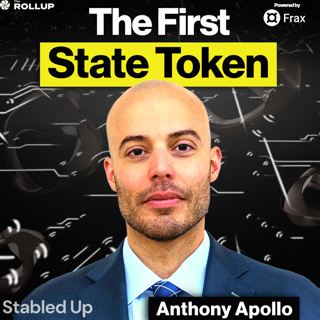
Finally! Wormhole $W token is here. After a three year journey of shipping filled of ups and downs, Wormhole has announced they are taking the path to decentralizing their community. If you've been navigating the onchain world, you've probably heard the buzz about Wormhole's token, $W (and hopefully qualified for the airdrop). Wormhole has long stood as a critical infrastructure in the blockchain world, offering a bridge that seamlessly connects over 30 chains across five different runtimes. At its core, $W aims to fortify the bridge between diverse blockchain ecosystems, rewarding those who've journeyed with Wormhole over the years. We discussed the reward distribution mechanism of the historic users of Wormhole and specific NFT communities like MadLads. We also talked about the emphasis on cross-chain governance and the general tokenomics of $W. From exploring incentives for governance participants to contemplating novel uses within the Wormhole ecosystem, Robinson and the Wormhole team have their sights set on targets for this year. Congrats to everyone who qualified, and hope you enjoy this!
3 Huhti 202444min
Modular March EP 16: Where Eclipse & SVM Fit in The Modular Thesis
Typically, you wouldn’t think of Solana having a strong footing in the modular thesis. After all, the design choices they have elegantly pioneered (credit where credit is due) revolve around scaling a single state machine. This simply won’t scale to billions of users, and they will need to modularize. However, the extremely performant and extensible Solana Virtual Machine (SVM) is an effective tool to build an extremely fast rollup atop Ethereum. We can all be friends here, right? Welcome to today's Modular March presentation, where we take our first dive as a team into the fascinating world of Eclipse and its modular approach to blockchain scalability and security. For those who've been around the block(chain), you know the drill: scalability often comes at the cost of complexity or security. Yet, Eclipse offers high throughput without the mess of state fragmentation via their flexible architecture. They're mixing the best of both worlds - Solana's speed and Ethereum's security, with a splash of Celestia for that decentralized data layer cherry on top. We enjoyed this presentation with Sydney while also trying to understand where the tradeoffs or weaknesses in this design lie. We found some edge-cases but what was most interesting was the application possibilities as a result of using the SVM. We had some solid takeaways, you’ll enjoy this.
2 Huhti 202442min
Modular March EP 15: Where Espresso Fits In The Modular Thesis
We really enjoyed this presentation. While we’ve had multiple shared sequencers talks on Modular March, each one has been far different. Today’s deep dive is around the game theory and incentive designs behind creating a rollup ecosystem which feels completely seamless and interoperable. At its core, Espresso leverages a two part system to enforce how transactions are ordered and finalized across rollups via its sequencer. This system mirrors Ethereum's, but with a twist, aiming to streamline interactions between different rollups and thereby improve user experience significantly. We discussed the based sequencing approach, their auction & lottery mechanism, and where Espresso fits in the broader modular thesis. While we are bullish on Espresso (and Ellie is amazing), we didn’t let their vision go untouched so to speak. There were areas where we pushed back around the incentive designs and whether or not this would actually work in practice. We also tried to understand why potentially making things more complex is really the solution for scaling the modular L2 landscape. Also, if Espresso is another chain with trust assumptions, what tradeoffs does that bring for rollup operators? Finally the big question…Will rollup operators really want to use Espresso if it could cause a big revenue reduction? Ellie flipped that narrative on its head, ever so graciously. She helped us understand how Espresso works under the hood and answered our questions. We were impressed and left feeling extremely optimistic on shared sequencing. Happy April Fools Day (no jokes here, yet!) & let’s have a great week!
1 Huhti 202448min
The Avail Unification Vision Unpacked
We’ve heard of the fragmentation problem many times in Modular March, and we’ve came to learn of a variety of solutions like shared sequencing, intents-based interop, and more. Today, in less than 10 minutes, we hear the vision from Avail’s head of product Dan Mills live from Modular Day in ETHDenver. Created in 2020 as part of Polygon, Avail emerged in response to Ethereum's shift toward a rollup-centric architecture, identifying a critical need for enhanced data availability in support of data-hungry rollups. Avail's foundational product, AvailDA, addresses this need by providing scalable, raw block space without necessitating base layer execution features (aka a specialized, modular blockchain). Through the use of validity proofs and KZG polynomial commitments, AvailDA ensures that light clients can trust the data's integrity through efficient random sampling. However, Dan thought past first order consequences and like many of us now realize, there will be thousands of chains. To counter this, Avail is introducing Nexus, a unification layer based on aggregating proofs from various chains to guarantee the accuracy of execution and state transitions. We also dive into Avail Fusion, the eventual security layer and third part of the Avail Trinity. Stay up to speed on the biggest upcoming modular project launch, Avail, in less than 10 minutes with Andy.
31 Maalis 202414min
Monolithic Vs. Modular Short Debate with Aptos Co-Founder Avery Ching
If you are modular-pilled this will be a refreshing short chat. If you want to understand the counterargument to building in a modularized fashion, you’ll enjoy this. Andy sat down with Avery Chang, co-founder of Aptos to discuss his perspective on the modular thesis and understand why he is building Aptos in a more integrated fashion. Avery shared his perspective on the intricate dance between modularity and monolithic architectures in blockchain design, and why Aptos leans into the latter with the elegance of a ‘finely tuned sports car’ as a reference. Avery addressed concerns regarding centralization and scalability, explaining that a unified stack simplifies development and security processes. He highlighted the strength of Aptos's community, with over 400 developers contributing to its codebase, underscoring the project's potential for decentralization and scalability. The conversation also delved into Aptos's adoption of the Move VM, which Avery advocates for its ability to reduce the risks associated with smart contract development and introduce formal verification to the ecosystem. Sometimes we can be stuck in tunnel vision with our steadfast beliefs of modularity. It’s good to hear the other side. We’re still modularity enthusiasts, don’t you worry.
30 Maalis 20245min
Modular March EP 14: Conversatism in The Modular Ecosystem with Lumio
What an interesting conversation this was. Going way back to the core ethos of cryptoeconomic systems, we took a bit of a journey through PoW, PoS, and now modularity. It was quite a different presentation from the previous Modular March episodes. We sat down with Alejo, a co-founder of Lumio, to discuss the memetic nature of crypto incentive systems with a focus on designing conservative systems which are aligned with Satoshi’s vision of blockchain. Alejo is an OG and is now building out Lumio, a moveVM based L2 on Ethereum which will likely utilize EigenDA. To be fair, we just briefly touched on what they are actually building and spent most of the time discussing the philosophical side of building in crypto, which we found interesting. Modularity is breaking apart the traditional mental frameworks for blockchain value accrual and design. See for yourself.
29 Maalis 202439min
Modular March EP 13: Where Across Fits In The Modular Thesis
Again, we find ourselves returning to the interoperability and fragmentation problem of the modular expansion. We’ll keep it real, there is nothing innovative of building hundreds of siloed execution environments. Even if you value sovereignty as much as the rest of us, having reachable allies in the onchain world is a necessity. As new L2s and appchains are launched (which is happening at an alarmingly high rate), the ability to seamlessly interact across chains becomes crucial for the broader adoption and user experience. In today’s video, we set out to learn if an intent-based design is a viable solution. We had the pleasure of sitting down with Hart, co-founder of UMA & Across, to discuss why he believes intents are the future of interoperability. This design employs third-party actors, known as relayers or solvers, who provide the liquidity needed for cross-chain transactions, thereby allowing sub one second transfers and enhanced security (no ‘honeypots’ for hackers). But, as always, we pushed back. Is there really a way to scale an intents based design to 1000s of chains? Is value transfer the only necessity of bridging in crypto or is there also a demand for messaging? Why are solvers sometimes slow to fill orders vs. extremely quick in other scenarios? We really vibe with Hart well, and he wasn’t fearful of any questioning on his mental models. We enjoyed hearing his perspectives and learning from him. You probably will, too.
28 Maalis 202452min
Modular March EP 12: The Business Logic Of RaaS & Shared Sequencers
After our episode with Tarun Chitra about value accrual in the modular stack, as well as thinking about it deeper we’ve came to our own conclusions. Josh Bowen, ex-Celestia team, and now founder of Astria blew it all out of the water today. Completely shifted the way we are thinking about RaaS providers, shared sequencers, and how they are approaching the competitive market of sequencing. We first dove into the modular architecture of Astria and their relationship with Celestia, and then dove deep into how Josh thinks about early stage tech markets. The vision behind Astria extends beyond facilitation of rollup deployment. Josh aspires to lower barriers to innovation in launching blockchains, in order to create a diverse ecosystem of rollups that transcend the limitations of existing setups. But, is this really possible? Can Astria do what other RaaS providers are doing at a tenth of the cost? Can they actually commoditize RaaS providers? Josh is a straight shooter and did not hold back when he pressed him about his mental models. We left quite impressed.
27 Maalis 20241h