

#225 – Daniel Kokotajlo on what a hyperspeed robot economy might look like

#225 – Daniel Kokotajlo on what a hyperspeed robot economy might look like

When Daniel Kokotajlo talks to security experts at major AI labs, they tell him something chilling: “Of course we’re probably penetrated by the CCP already, and if they really wanted something, they could take it.”

This isn’t paranoid speculation. It’s the working assumption of people whose job is to protect frontier AI models worth billions of dollars. And they’re not even trying that hard to stop it — because the security measures that might actually work would slow them down in the race against competitors.

Full transcript, highlights, and links to learn more: https://80k.info/dk

Daniel is the founder of the AI Futures Project and author of AI 2027, a detailed scenario showing how we might get from today’s AI systems to superintelligence by the end of the decade. Over a million people read it in the first few weeks, including US Vice President JD Vance. When Daniel talks to researchers at Anthropic, OpenAI, and DeepMind, they tell him the scenario feels less wild to them than to the general public — because many of them expect something like this to happen.

Daniel’s median timeline? 2029. But he’s genuinely uncertain, putting 10–20% probability on AI progress hitting a long plateau.

When he first published AI 2027, his median forecast for when superintelligence would arrive was 2028, rather than 2029. So what shifted his timelines recently? Partly a fascinating study from METR showing that AI coding assistants might actually be making experienced programmers slower — even though the programmers themselves think they’re being sped up. The study suggests a systematic bias toward overestimating AI effectiveness — which, ironically, is good news for timelines, because it means we have more breathing room than the hype suggests.

But Daniel is also closely tracking another METR result: AI systems can now reliably complete coding tasks that take humans about an hour. That capability has been doubling every six months in a remarkably straight line. Extrapolate a couple more years and you get systems completing month-long tasks. At that point, Daniel thinks we’re probably looking at genuine AI research automation — which could cause the whole process to accelerate dramatically.

At some point, superintelligent AI will be limited by its inability to directly affect the physical world. That’s when Daniel thinks superintelligent systems will pour resources into robotics, creating a robot economy in months.

Daniel paints a vivid picture: imagine transforming all car factories (which have similar components to robots) into robot production factories — much like historical wartime efforts to redirect production of domestic goods to military goods. Then imagine the frontier robots of today hooked up to a data centre running superintelligences controlling the robots’ movements to weld, screw, and build. Or an intermediate step might even be unskilled human workers coached through construction tasks by superintelligences via their phones.

There’s no reason that an effort like this isn’t possible in principle. And there would be enormous pressure to go this direction: whoever builds a superintelligence-powered robot economy first will get unheard-of economic and military advantages.

From there, Daniel expects the default trajectory to lead to AI takeover and human extinction — not because superintelligent AI will hate humans, but because it can better pursue its goals without us.

But Daniel has a better future in mind — one he puts roughly 25–30% odds that humanity will achieve. This future involves international coordination and hardware verification systems to enforce AI development agreements, plus democratic processes for deciding what values superintelligent AIs should have — because in a world with just a handful of superintelligent AI systems, those few minds will effectively control everything: the robot armies, the information people see, the shape of civilisation itself.

Right now, nobody knows how to specify what values those minds will have. We haven’t solved alignment. And we might only have a few more years to figure it out.

Daniel and host Luisa Rodriguez dive deep into these stakes in today’s interview.

What did you think of the episode? https://forms.gle/HRBhjDZ9gfM8woG5A

This episode was recorded on September 9, 2025.

Chapters:

  • Cold open (00:00:00)
  • Who’s Daniel Kokotajlo? (00:00:37)
  • Video: We’re Not Ready for Superintelligence (00:01:31)
  • Interview begins: Could China really steal frontier model weights? (00:36:26)
  • Why we might get a robot economy incredibly fast (00:42:34)
  • AI 2027’s alternate ending: The slowdown (01:01:29)
  • How to get to even better outcomes (01:07:18)
  • Updates Daniel’s made since publishing AI 2027 (01:15:13)
  • How plausible are longer timelines? (01:20:22)
  • What empirical evidence is Daniel looking out for to decide which way things are going? (01:40:27)
  • What post-AGI looks like (01:49:41)
  • Whistleblower protections and Daniel’s unsigned NDA (02:04:28)

Audio engineering: Milo McGuire, Simon Monsour, and Dominic Armstrong
Music: CORBIT
Coordination, transcriptions, and web: Katy Moore

Jaksot(326)

#231 – Paul Scharre on how AI-controlled robots will and won't change war

#231 – Paul Scharre on how AI-controlled robots will and won't change war

In 1983, Stanislav Petrov, a Soviet lieutenant colonel, sat in a bunker watching a red screen flash “MISSILE LAUNCH.” Protocol demanded he report it to superiors, which would very likely trigger a ret...

17 Joulu 20252h 45min

AI might let a few people control everything — permanently (article by Rose Hadshar)

AI might let a few people control everything — permanently (article by Rose Hadshar)

Power is already concentrated today: over 800 million people live on less than $3 a day, the three richest men in the world are worth over $1 trillion, and almost six billion people live in countries ...

12 Joulu 20251h

#230 – Dean Ball on how AI is a huge deal — but we shouldn’t regulate it yet

#230 – Dean Ball on how AI is a huge deal — but we shouldn’t regulate it yet

Former White House staffer Dean Ball thinks it's very likely some form of 'superintelligence' arrives in under 20 years. He thinks AI being used for bioweapon research is "a real threat model, obvious...

10 Joulu 20252h 54min

#229 – Marius Hobbhahn on the race to solve AI scheming before models go superhuman

#229 – Marius Hobbhahn on the race to solve AI scheming before models go superhuman

We often worry about AI models “hallucinating” or making honest mistakes. But what happens when a model knows the truth, but decides to deceive you anyway to achieve a goal of its own? This isn’t sci-...

3 Joulu 20253h 3min

Rob & Luisa chat kids, the 2016 fertility crash, and how the 50s invented parenting that makes us miserable

Rob & Luisa chat kids, the 2016 fertility crash, and how the 50s invented parenting that makes us miserable

Global fertility rates aren’t just falling: the rate of decline is accelerating. From 2006 to 2016, fertility dropped gradually, but since 2016 the rate of decline has increased 4.5-fold. In many weal...

25 Marras 20251h 59min
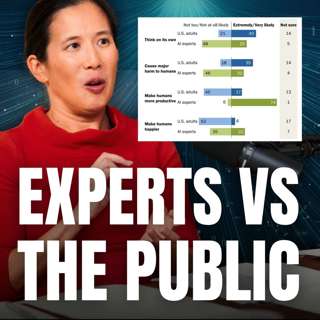
#228 – Eileen Yam on how we're completely out of touch with what the public thinks about AI

#228 – Eileen Yam on how we're completely out of touch with what the public thinks about AI

If you work in AI, you probably think it’s going to boost productivity, create wealth, advance science, and improve your life. If you’re a member of the American public, you probably strongly disagree...

20 Marras 20251h 43min

OpenAI: The nonprofit refuses to be killed (with Tyler Whitmer)

OpenAI: The nonprofit refuses to be killed (with Tyler Whitmer)

Last December, the OpenAI business put forward a plan to completely sideline its nonprofit board. But two state attorneys general have now blocked that effort and kept that board very much alive and k...

11 Marras 20251h 56min
#227 – Helen Toner on the geopolitics of AGI in China and the Middle East

#227 – Helen Toner on the geopolitics of AGI in China and the Middle East

With the US racing to develop AGI and superintelligence ahead of China, you might expect the two countries to be negotiating how they’ll deploy AI, including in the military, without coming to blows. ...

5 Marras 20252h 20min

Suosittua kategoriassa Koulutus

rss-murhan-anatomia
voi-hyvin-meditaatiot-2
rss-narsisti
psykopodiaa-podcast
adhd-podi
rahapuhetta
rss-uskonto-on-tylsaa
rss-liian-kuuma-peruna
rss-rahamania
kesken
rss-vapaudu-voimaasi
rss-niinku-asia-on
salainen-paivakirja
rss-duodecim-lehti
rss-tietoinen-yhteys-podcast-2
rss-koira-haudattuna
aloita-meditaatio
mielipaivakirja
esa-saarinen-filosofia-ja-systeemiajattelu
filocast-filosofian-perusteet