2025 NASA’s Innovative Advanced Concepts Symposium: Part 2 — Hopping robots and the search for exoplanet magnetospheres

2025 NASA’s Innovative Advanced Concepts Symposium: Part 2 — Hopping robots and the search for exoplanet magnetospheres

In this second installment of Planetary Radio’s coverage from the 2025 NASA Innovative Advanced Concepts Symposium in Philadelphia, Pennsylvania, host Sarah Al-Ahmed highlights more of the technologies presented by the NIAC fellows.

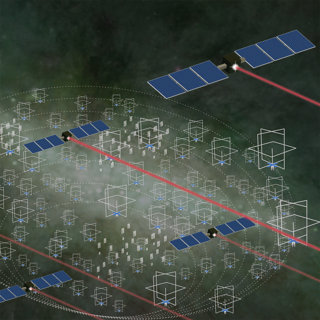
Mary Knapp of MIT Haystack Observatory shares her team’s Great Observatory for Long Wavelengths project, a space-based radio array designed to detect magnetic fields around distant exoplanets. Michael Hecht, also from MIT Haystack Observatory and principal investigator for the MOXIE experiment on NASA’s Perseverance rover, discusses Exploring Venus with Electrolysis, a concept that could turn Venus’s dense atmosphere into fuel for long-duration flight and exploration. Benjamin Hockman from NASA’s Jet Propulsion Laboratory introduces two projects: Gravity Poppers, tiny hopping probes that could map the interiors of asteroids and comets, and his team’s concept for a Venus balloon observatory. Finally, Justin Yim from the University of Illinois Urbana-Champaign presents LEAP, a legged robot designed to hop through the icy plumes of Saturn’s moon Enceladus in search of clues to its hidden ocean.

Then stay tuned for What’s Up with Dr. Bruce Betts, chief scientist of The Planetary Society.

Discover more at: https://www.planetary.org/planetary-radio/2025-niac-symposium-part-2

See omnystudio.com/listener for privacy information.

Jaksot(1321)

A Day of Action to save NASA science

A Day of Action to save NASA science

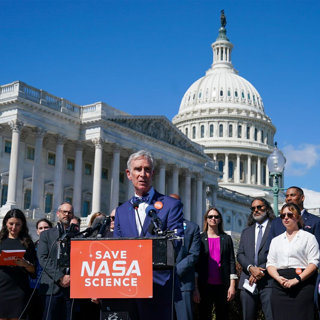
On October 6, 2025, hundreds of space advocates from across the United States joined The Planetary Society and 20 partner organizations on Capitol Hill to deliver one clear message: protect NASA’s sci...

8 Loka 20251h
Space Policy Edition: China’s growing space science ambitions

Space Policy Edition: China’s growing space science ambitions

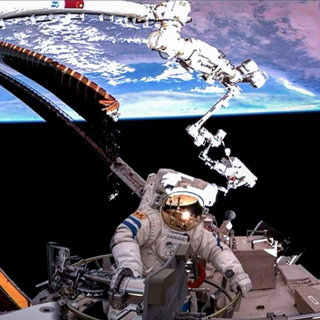
If the United States is indeed in a space race with China, then we cannot abandon space science. That’s the claim made by Maxwell Zhu and The Planetary Society’s chief of space policy, Casey Dreier, i...

3 Loka 202548min
Perseverance finds potential biosignatures in Jezero Crater

Perseverance finds potential biosignatures in Jezero Crater

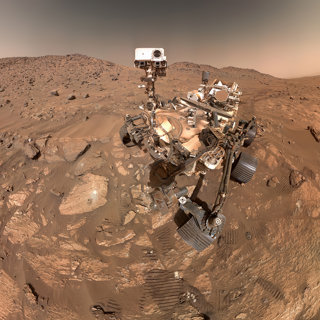
NASA’s Perseverance rover has made one of its most intriguing discoveries yet in Jezero Crater. A rock sample called Sapphire Canyon, drilled from the Bright Angel formation, contains unusual chemical...

1 Loka 20251h

Bill Nye: A star in Hollywood, a voice for NASA

Bill Nye: A star in Hollywood, a voice for NASA

Bill Nye, CEO of The Planetary Society, has officially joined the Hollywood Walk of Fame. In this episode, we speak with Bill about what this rare honor means to him and to science communication. Then...

24 Syys 202556min

Book Club Edition: Cosmos Award–winning author Dava Sobel

Book Club Edition: Cosmos Award–winning author Dava Sobel

Only six people have received The Planetary Society’s Cosmos Award for Outstanding Public Presentation of Science. We were honored to present it to author and historian Dava Sobel in May of 2025. She ...

19 Syys 202550min

A cosmic travel guide: 111 Places in Space That You Must Not Miss

A cosmic travel guide: 111 Places in Space That You Must Not Miss

Pack your cosmic suitcase. This week on Planetary Radio, host Sarah Al-Ahmed is joined by Mark McCaughrean, astronomer, science communicator, and former Senior Advisor for Science & Exploration at the...

17 Syys 20251h 7min

International Observe the Moon Night 2025

International Observe the Moon Night 2025

This week on Planetary Radio, we look forward to International Observe the Moon Night on October 4, 2025. Host Sarah Al-Ahmed speaks with Staci Horvath, outreach coordinator for NASA’s Solar System Ex...

10 Syys 202559min

Space Policy Edition: Does the rise of Elon mean the decline of NASA?

Space Policy Edition: Does the rise of Elon mean the decline of NASA?

NASA, the crown jewel of 20th-century technocratic liberalism, was the first to land humans on the Moon but now depends on SpaceX for its access to space. Atlantic writer Franklin Foer believes this r...

5 Syys 20251h

Suosittua kategoriassa Tiede

rss-mita-tulisi-tietaa
tiedekulma-podcast
utelias-mieli
mielipaivakirja
rss-poliisin-mieli
rss-duodecim-lehti
radio-antro
menologeja-tutkimusmatka-vaihdevuosiin
rss-metsa
rss-tiedetta-vai-tarinaa
rss-lihavuudesta-podcast
rss-sosiopodi