Regular Interlaboratory Counting Exchanges (RICE) - Explained

Regular Interlaboratory Counting Exchanges (RICE) - Explained

In this episode Neil and Ian explain the Regular Interlaboratory Counting Exchanges (RICE). The scheme assesses the proficiency of laboratories counting asbestos fibres in air. UK laboratories are required to be accredited by the United Kingdom Accreditation Service (UKAS) to ISO 17025 to undertake this particular analysis as part of assessing clearance under the Control of Asbestos Regulations (CAR).

Transcript

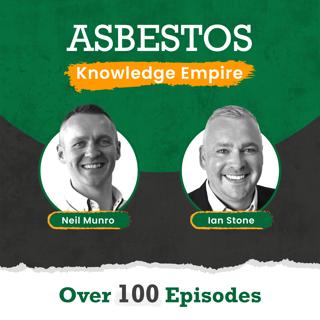
Ian: Welcome to Asbestos Knowledge Empire. I'm Ian Stone.

Neil: I'm Neil Munro.

Ian: So today we are talking about RICE.

Neil: Not the stuff you eat.

Ian: We are talking about the Regular Interlaboratory Counting Exchanges. That rolls a few time easy, it is not lame. So a few podcast ago we spoke about the AIMS which is the bulk analysis, the actual physical asbestos sampling analysis whereas RICE it is kind of a similar scheme but it is to check off our air analyst, our air management analyst. Again, it is an external scheme and it is run by HSE testing and monitoring again, and every so often, it's like once a quarter I think they send out a number of actual slides.

Neil: Yup. Again, these are real live ones sometimes but more often they are made up. And really it goes kind of against the day to day sort of air monitoring slides that the analyst see.

Ian: A lot of the time, yeah.

Neil: So it goes against, so you got heavily saturated fibers on some of the slides and sometimes it would be chrysotile fibers which are really sort of like fine and thin and hard to see, and they are on the borderline countable. Sometimes it would be sort of amphibole needle like fibers which are heavily stack in the actual slide itself which high counters. And then sometimes it would be very, very low counters where there is barely any fibers on the slides. And then sometimes I spot just a little tiny bit which is heavily populated.

Ian: In one area.

Neil: One area and they are the ones which fry all the counters out because when you've got 10 counters on and it is very subjective so the way that you count a slide it's random sort of graticules that you're counting, so it is kind of a bull's eye.

Ian: If you imagine a bull's eye or a target or like on a rifle the optical that a shooter would look through, that kind of target.

Neil: Yup, well those on the microscope and you move it around the slide and you just count within that target area.

Ian: And it is moved around the slide in a random, not in a systematic, not the same and we're counting 200 graticules on the slide.

Neil: So you can imagine if counters, they all count differently, so you're going to hit that random area.

Ian: Some will, some won't.

Neil: Some won't. And that sort of kind of the counter out. So they really have, once this sort of like quantify sometimes.

Ian: Again, this is kind of the air management analyst kind of getting raw slides in.

Neil: Yeah, because there are bogus.

Ian: There ae bogus. But again they keep you on your toes, they test you. They make sure that you are doing everything properly so when you are counting an air management slide you need to zoom all the way down through all the plains on the actual slides. What I mean by that is you zoom all the way down through the sample back all the way up through the sample because the different fibers can sit at different levels within that filter and you need to make sure that…

Neil: You're counting the whole slides.

Ian: Yeah, you are counting the whole slide. You are spotting all of those fibers that are on that actual filter. Yeah, and it is quite easy on some of them if you had just a quick scan over. On first impression you go, "Nah, there's nothing on this one." But then when you start zooming in and out of the filter you find the plain where the asbestos fiber are sitting whereas at first glance you're going, "There is nothing on it." And like you said the chrysotile ones are, they bsolutely bogus because they are so fine.

Neil: You've got to find focus on those slides to make sure that you do see all the fibers. To calibrate the microscope, you know, we use some calibration, imperial test slides they are called, and you have to see a certain band of on that test slide to make sure that you are in line you are seeing all the fibers that are countable.

Ian: And the band that we are talking about it is not like, it's difficult to explain. It is like once you set the microscope up you look at the bands and band one is easy, band two is alright, three is alright, four gets a bit more a little difficult, five… It is like you can just see it and that's on the microscope that's set up 100%. It is so fine and that is why you have to follow the procedures to set the microscope up correctly because if you don't you won't get to see the fifth band. If you can't see the fifth band, when you then count normal slides or RICE slides you are not going to see those fine minute fibers. And that's why it is so important and so key. So with the RICE exchanges, every UK accredited laboratory counts them it goes back to HSE then basically analyze the results of everything.

Neil: And then the lab. Our lab…

Ian: You are categorized.

Neil: You are categorized and you have to fit in within certain bounds. And we have to maintain that for our accreditation.

Ian: Yes, we do.

Neil: So far, suddenly there are fiber counters stopped being able to count properly we lose our accreditation.

Ian: Yeah, we can't then trade and do air managing.

Neil: Yeah, simple as that.

Ian: So it is great kind of quality control system for clients, again, through what we do. It gives you the confidence in the fact that we can do what we say we can do.

Neil: Again, complacency sits in all fields of work and this is just a way of ensuring and it is externally verified that our counters are still maintaining the standard required. In the addition to that, you know, the counters we have our own internal QC systems.

Ian: Yeah, we have our own set of slides don't we.

Neil: That RICE is quarterly, and QCs are, they are monthly, so the counters will have to count library slides and working slides.

Ian: Yeah, and what do we mean by working slides, so the quality department, so they pull people slides from actual working sites and take the labels of, relabel them as the working slide for everybody else to count that month, and everybody's slide gets pulled. So basically what you've recorded on site for your slides, your slides get taken out of the storage box, re-issued to everybody and then everybody else counts what you've counted.

Neil: Yeah, it is to double check. One, checking if everyone is still counting right, and two, it is to check off that individual counted that slide correctly on that occasion.

Ian: Yeah, it is kind of double check on that one.

Neil: Yes. There's lots that goes into obviously maintaining the quality within a UK accredited laboratory and that's just one of those.

Ian: Well, those hoops that we have to jump through that the analyst love doing.

Neil: But it is good. We work with asbestos, it is a hazardous material, and it does kill people and we can't afford to let standard slip.

Ian: No, definitely, no.

Neil: So we're really big on making sure that a department is on top of all of our necessary checks and quality controls.

Ian: Yeah, and the thing is we take it serious to the point of we just don't do the band minimum. We do more. We go above and beyond for those reasons. I mean, we want to be able to sleep at night to make sure that our guys are out there doing what they should be doing. And the only way to do it is to test and measure, and these kind of QCs system and the RICE system, the AIMS system, that's what they do. They test and measure our staff and staff performance.

Neil: It is definitely particularly important for the fiber counters because essentially as part of the of course those clearance of asbestos removal works before the enclosure or the area could be handed back to the occupants we have to follow those clearance and part of that is the air monitoring which includes the fiber counting. So before that area come down we need to be satisfied that the area is satisfactory and if their counter is not counting right then potentially they are going to pass off an area that's maybe not fit for re-occupation.

Ian: And that's it, because asbestos is so minute that's why we use microscopes. You might have an area that looks alright however there could be millions of fibers in the air. And that is what this check is doing. This is what its capturing. It is capturing the snapshot of air at that time and then the analyst is counting that actual sample to make sure and say, "Yes, I'm happy for the children to re-enter this classroom", "Yes, I am happy for the office workers to come back in to this area and sit within this environment all day every day." And that's why it is so vital and so important, and that's why the QC needs to be up there.

Neil: Yeah, and rises just the next level of the quality control, and again, it is the external verification. These results are published as part of the ongoing rising.

Ian: Hope you enjoyed that one. Thanks for listening. Remember, asbestos first not last.

Jaksot(119)

Pupil kicking a hole in a wall sparks school asbestos fear!

Pupil kicking a hole in a wall sparks school asbestos fear!

In this episode Neil and Ian discuss the recent news of a pupil kicking a hole in a wall which was found to contain asbestos. In 2021 how can this be a sudden accident?

29 Maalis 202117min

Interview with Mavis Nye and Paul Cook: ActionMeso - Raising awareness and eradicating asbestos and asbestos-related disease

Interview with Mavis Nye and Paul Cook: ActionMeso - Raising awareness and eradicating asbestos and asbestos-related disease

In this episode, Neil and Ian are joined by Mavis Nye and Paul Cook representing ActionMeso. #ActionMeso is a campaign that brings together the diverse mesothelioma community with a single voice. It i...

22 Maalis 202152min

What should contractors do when attending site?

What should contractors do when attending site?

In this episode Neil and Ian deep dive into looking at what contractors should do when attending sites. They cover what should happen with planned works as well as reactive works. Contractors should b...

15 Maalis 202122min

Reviewing your asset register to include all possible asbestos locations.

Reviewing your asset register to include all possible asbestos locations.

In this episode, Neil and Ian highlight the importance of reviewing your entire asset register so it includes all possible locations which may contain asbestos. Your asbestos register should include a...

8 Maalis 202116min

Fines for delaying asbestos removal works!

Fines for delaying asbestos removal works!

In this episode Neil and Ian discuss a recent case where a hotel owner was fined for delaying essential asbestos removal works. https://www.bbc.co.uk/news/uk-england-leeds-55329069 Get help with asbes...

1 Maalis 202113min

Why is UKAS accreditation so important for asbestos companies?

Why is UKAS accreditation so important for asbestos companies?

In the episode Neil and Ian are joined by fellow Acorn Director Paul Knights to discuss UKAS accreditation and its importance for asbestos companies?

22 Helmi 202128min

Asbestos victim sues Sir Richard Branson and Virgin Records

Asbestos victim sues Sir Richard Branson and Virgin Records

In this episode Neil and Ian discuss the case of Bernard Jones against Richard Branson and Virgin records. Mr. Jones claims he was exposed to asbestos whilst working at the company's London stores in ...

15 Helmi 202115min

Presidential Pardon for asbestos violator

Presidential Pardon for asbestos violator

In this episode Neil and Ian discuss the recent pardoning of David Rowland for violations of the Clean Air Act by removing asbestos without a valid license.

8 Helmi 202119min

Suosittua kategoriassa Liike-elämä ja talous

sijotuskasti
psykopodiaa-podcast
mimmit-sijoittaa
rss-rahapodi
rss-draivi
rss-lahtijat
oppimisen-psykologia
rss-rahamania
rss-porssipuhetta
taloudellinen-mielenrauha
rss-seuraava-potilas
rahapuhetta
rss-h-asselmoilanen
rss-paatos-podcast-suomen-kovimmat-paatoksentekijat-2
rss-paasipodi
rss-inderes
io-techin-tekniikkapodcast
pomojen-suusta
rss-viisas-raha-podi
rss-40-ajatusta-aanesta