
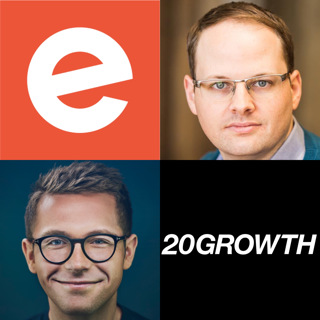
Welcome 20Growth: How To Hire a Head of Growth? What are Signs of World-Class Talent? How To Structure the Process? How To Onboard Growth Teams? The Relationship Between Head of Growth and CEO and more with Casey Winters, Chief Product Officer @ Eventbrit
Casey Winters is the Chief Product Officer at Eventbrite where he leads the PM, product design, research, and growth marketing teams. Prior to Eventbrite, Casey spent close to 3 years at Pinterest where he led the growth product team. At Pinterest, Casey turned SEO into a scalable acquisition strategy, increasing conversion to signups 5x. Before Pinterest, Casey started the marketing team at Grubhub and scaled Grubhub's demand-side acquisition and retention strategies. Casey played an instrumental role in scaling Grubhub from 3 cities to 1,000+ and from a $1 million series A to an IPO and $7.3 billion exit. If that was not enough, Casey has also advised the likes of Canva, Hipcamp, Reddit, Faire and Career Karma to name a few. In Today's Episode with Casey Winters You Will Learn: 1.) How Casey made his way into the world of startups and came to lead some of the most powerful growth orgs in the world from Pinterest to Grubhub to Eventbrite? 2.) How does Casey define "growth" and "Head of Growth"? When is the right time to start thinking about implementing a growth team? When should one hire a growth leader? How should founders structure the process of hiring a Head of Growth? What do the stages look like? What signals suggest A* talent? What questions does Casey always ask? What tests does Casey do? 3.) What does the optimal onboarding process look like for growth teams? What tasks should a growth team perform in their first few months? What are clear signs you have an amazing candidate in place? What are some obvious red flags? How do the best growth teams approach post-mortems? How are they structured? Who attends them? How often? 4.) What is the ideal relationship between the Head of Growth and the CEO? How often do they meet? What do the best CEOs expect from their growth teams? How does Casey approach the relationship between growth teams and product teams? How does one know when to have an independent growth team vs within the product or marketing team? 5.) Casey AMA: What has been a decision that Casey made without data to back it up? How did it go? What were Casey's lessons? How does Casey prevent past experiments from impacting his future tactics? How does Casey's management style differ when managing larger vs smaller growth teams? How has angel investing impacted his approach to scaling growth teams?
22 Syys 202143min

20VC: Investing Lessons From Rounds In Peloton and Square, Why Great Investing is Stock-Picking and Sector Penetration & The Next Decade in Venture, Is Tiger's The Right Model with Hans Tung, Managing Partner @ GGV Capital
Hans Tung is a Managing Partner at GGV Capital, one of the leading venture firms of the last 2 decades with a portfolio including Alibaba, Xiaomi, Peloton, Airbnb, Slack, and many more. As for Hans, he has been named to the Forbes Midas list nine consecutive years from 2013-2021, most recently ranking #3. His portfolio includes 18 unicorns including Affirm, Airbnb, Coinbase, Divvy Homes, Peloton, Poshmark, Slack, Wish and Xiaomi. In 2005, he was among the first Silicon Valley VCs to move to China full time, spending eight years investing in the fastest-changing tech landscape in the world before returning to Silicon Valley in 2013 to join GGV Capital. In Today's Episode with Hans Tung You Will Learn: 1.) How Hans made his way into the world of venture from founding his first two companies? How did seeing the booms and busts of the macro-financial markets impact both his investing mindset and the companies he likes to back? 2.) The Landscape: How does Hans analyze the current venture landscape today? How does one compete in a world of Tiger and crossover funds writing term sheets post first meeting? How does Hans think about his own price sensitivity today? How does he determine when to pay up vs when to say no? What have been some of his biggest lessons on price? 3.) Working with the likes of Peloton, Square, Alibaba, what have been some of Hans biggest lessons on market size? What do most investors get wrong when it comes to market sizing? How does Hans think about an attractive enough exit multiple for a growth stage check? What did Peloton teach Hans about insertion points when investing? 4.) How does Hans think about when is the right time to sell? What have been some of his biggest lessons on taking cash off the table? Despite the success, how does Hans ensure he has the mental plasticity to approach every new deal with a fresh perspective? What does he do to ensure he does not have an unconscious bias from his past successes? Item's Mentioned In Today's Episode with Hans Tung Hans' Favourite Book: Outliers: The Story of Success Hans' Most Recent Investment: JOKR
20 Syys 202138min
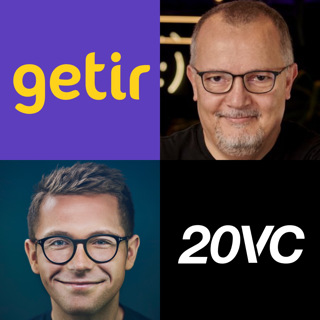
20VC: Getir Founder, Nazim Salur on The Future of Last Mile Convenience, Who Will Win? Lessons on Driver Acquisition and Efficiency, Zone Maturity and Time To Profitability and Scaling to 300 Cities in the US in 2022
Nazim Salur is the Founder & CEO of Getir, one of the leading rapid delivery service providers that distribute over 1,500 everyday items within minutes. With an established status in Turkey, where the company trends towards a super-app, and a London launch behind it, Getir has further European and US expansion plans on the horizon. To fuel this expansion, Getir has raised over $1BN from Sequoia and Mike Moritz, Silver Lake, Mubadala, and Tiger Global to name a few. Prior to founding Getir, Nazim launched his first tech startup in 2012, BiTaksi, which brought people taxis in three minutes. In Today's Episode with Nazim Salur You Will Learn: 1.) How Nazim made his way into the world of startups with his founding of BiTaksi and how that led to his realization of the need for Getir? 2.) Why does Nazim believe that owning the entire vertical stack is a superior model? What are the selection criteria for the micro-fulfillment sites? What makes one more attractive than another? How does Getir think about the balance between SKU minimization and consumer demand? How does Getir think about building defensibility through their warehouse management system? 3.) How did Getir acquire their first drivers? What worked? What did not work? How does their driver acquisition strategy change depending on location? What is the core measurement that Getir uses to measure driver efficiency? What is the secret to driver retention? How has Nazim seen driver acquisition costs change over time in mature markets? 4.) How did Getir acquire their first customers? What is the most important element for consumers; speed or choice? How does Getir think about allocating marketing spend efficiently today? How has Nazim seen CACs change over time with the maturation of markets? With the immense funding for the space, is Nazim concerned about this? 5.) What are the decision-making criteria for what makes an attractive region to expand into? How much capital does it take to launch a new region? What is the time to profitability on each zone? How has this changed over time? How does Nazim think about expansion into the US? What excites him most about the expansion? What elements will be most challenging?
16 Syys 202142min
20VC: Sequoia's Doug Leone on What Has Been Instrumental To Scaling Sequoia Over Generations, How Sequoia Think About International Expansion and What They Learned From China and India & Why When You Lose Pre-Seed You Become Private Equity
Doug Leone is the Global Managing Partner @ Sequoia Capital, one of the world's most renowned and successful venture firms with a portfolio including the likes of Google, Airbnb, Whatsapp, Stripe, Zoom and many more. As for Doug, he joined Sequoia over 33 years ago and has led investments in Nubank, Meraki, ServiceNow and TradeRepublic to name a few. In Today's Episode with Doug Leone You Will Learn: 1.) How a 5PM Monday meeting with Don Valentine led to Doug joining Sequoia over 33 years ago? What did Don ask Doug in the meeting? What does Doug believe led Don to offer him his first role at Sequoia? 2.) The Leader: How did Doug change when he made the transition from a "COO" role to more of a "CEO" role with Sequoia? Doug has previously said, "Sequoia is a team, not a family". What does he mean by this? How do Doug and Sequoia do to give the team an unwavering sense of duty to the Sequoia brand? What does Doug believe Sequoia have done so well to allow them to move seamlessly from generation to generation? 3.) The Investor: Doug's first 3 investments all went on to successful IPOs, how did this impact his mindset at the time? What does Doug mean when he discusses "the abyss" he went through post this time? How does Doug advise others going through the abyss? What are the signs certain people will make it through vs not? 4.) The Landscape Today: How does Doug think about and react to newer entrants like Tiger and Softbank? How does Doug think about and assess his own price sensitivity today? How does Doug determine when to be disciplined vs when to pay up? Through what lens does Doug assess the compression of deployment cycles in venture today? Should we "play the game on the field"? 5.) The Expansion: In 2005, Sequoia expanded to China. Why was this the right time? What was the decision-making process for the Sequoia China team? Why does Doug believe, "when you lose pre-seed, you become private equity"? How does Doug react to the notion that success in venture is cyclical and compounds? Item's Mentioned In Today's Episode with Doug Leone Doug's Favourite Book: The Fountainhead: Ayn Rand, Antifragile: Things that Gain from Disorder
14 Syys 202149min
20VC: The Crowdstrike Memo: Accel's Sameer Gandhi on Leading Multiple Internal Rounds for Crowdstrike, Telling George Kurtz to Go Shop His Term Sheet, How To Think Through Market Sizing & The Importance of Speed of Execution and Knowing When To Go Slow To
Sameer Gandhi is a Partner @ Accel, one of the leading venture firms of the last decade with a portfolio including the likes of Facebook, Dropbox, Atlassian, Hopin, Spotify and more. As for Sameer, he led investments in Crowdstrike, Dropbox, Flipkart, Spotify and more. Prior to Accel, Sameer spent close to 10 years as a Partner @ Sequoia. In Today's Episode with Sameer Gandhi You Will Learn: 1.) How Sameer first came to meet George, Crowdstrike Founder and CEO? How did a 30-minute meeting turn into a 2-hour discussion leading to Accel's investment? 2.)The Market: How did Sameer analyze and break down the market at the time of the investment? What hypothesis did he have on market evolution going in? What elements went as thought? In what way did the market evolve in a way Sameer did not expect? How does Sameer think through market timing today? Through what approach does Sameer assess market sizing today? 3.) Financing: How did Sameer build the confidence to lead multiple rounds of financing, one after the other? How did Sameer build the trust and strength of relationship with George to win each round? Why did Sameer advise George to "go shop his term sheet"? What was the rationale? How does Sameer advise founders on taking pre-emptive rounds today? 4.) Execution: What specifically allowed Crowdstrike to move so fast in the early days? Does Sameer believe that speed of execution is the strongest moat a company can have? How does Sameer advise companies today on services revenue? In what shape did this look with Crowdstrike in the early days? What is a healthy proportion of services to product revenue? 5.) The Team: How did George evolve and develop as a leader in the decade Sameer worked with him? What were some of the core inflection points that caused those changes? Who are some of the unsung heroes behind the scenes who moved the needle for Crowdstrike? What is Sameer's favorite memory from working with the company? Item's Mentioned In Today's Episode with Sameer Gandi Go to thetwentyminutevc.com to download the original Crowdstrike Investment Memo.
2 Syys 202136min
20VC: Marcelo Claure, CEO of Softbank Group International on Lessons From Investing $1BN Per Week with Masa Son, How Softbank Could Have Up To 8 Companies Go Public in LATAM Alone Next Year & How Softbank Analyse Both Deal Pricing and Competition Today
Marcelo Claure serves as CEO of SoftBank Group International and COO of SoftBank Group Corp., the world's largest tech investor. At Softbank, Marcelo oversees the company's strategic direction and its portfolio of operating companies, including WeWork, SB Energy, Fortress, Boston Dynamics, as well as SoftBank's stake in T-Mobile U.S. He also spearheads the SoftBank Latin America Fund, a $5 billion fund dedicated to investing in technology growth opportunities throughout the region. If that was not enough, Marcelo serves as Exec Chairman @ WeWork, is on the board of Arm, is the president of Club Bolívar, Bolivia's most popular and successful soccer team; co-owner and Chairman of Inter Miami CF and most recently co-owner of Girona FC. In Today's Episode with Marcelo Claure You Will Learn: 1.) How Marcelo made his way into the world of startups and came to found his first company, Brightstar? How did Brightstar lead to Marcelo meeting Masa and moving to Tokyo to invest $1BN per week with him? 2.) From spending a year with Masa in Tokyo, what did Marcelo learn about Masa that he did not know before? How did spending this time with Masa impact Marcelo's operating mindset and his investing mindset? What were the most memorable founder meetings that Marcelo and Masa had in that year? Why did those ones stand out? 3.) When starting Softbank's LATAM Fund, what hypothesis did Marcelo have going into investing in LATAM? Which were confirmed? On the flip side, which proved to be wrong? How does Marcelo respond to people that say "LATAM produces copycat companies"? Why does Marcelo bet that Softbank will have 8 portfolio companies in LATAM go public next year? 4.) How does Marcelo think about the importance of price and price discipline today? What is their decision-making framework when determining whether to pay up or not for a deal? What have been some of Marcelo's biggest misses? How did they impact his decision-making process moving forward? How does Softbank approach conflicts when investing today? 5.) How does Marcelo analyze the increasing competition in the LATAM ecosystem? How has his style changed as a result? Through what lens does Marcelo assess the role that Tiger has played over the last 18 months? Why does Marcelo think that other firms have trash-talked Softbank before? How does Marcelo see the venture landscape as fundamentally changed? Item's Mentioned In Today's Episode with Marcelo Claure Marcelo's Favourite Book: Endurance: Shackleton's Incredible Voyage to the Antarctic Marcelo's Most Recent Investment: Uala
30 Elo 202139min
20VC: Has Price Discipline Disappeared? Is it Possible to Build Ownership Over Time? Why Venture Is Less Collaborative Now Than Ever? How fast Do Breakout Companies Become Obvious? How To Construct an Optimised and Repeatable Investment Decision-Making Pr
Frank Rotman is a founding partner of QED Investors, one of the leading fintech-focused venture firms investing today with a portfolio including the likes of Klarna, Kavak, Quinto Andar, Credit Karma and more. As for Frank, prior to QED, Frank was one of the earliest analysts hired into Capital One and spent almost 13 years there helping build many of the company's business units and operational areas. Post Capital One, Frank went on to found a student lending company before joining up again with Nigel Morris to co-found QED. In Today's Episode with Frank Rotman You Will Learn: 1.) How Frank made his way into the world of venture having spent 13 years scaling Capital One? What was the founding moment for Nigel and Frank with QED? How does Nigel compare to poker to venture capital? Where are they similar? Where are they different? 2.) Does Frank feel that price discipline has disappeared in the venture market today? What have been some of Frank's biggest lessons on price? Is Frank concerned by the compression in deployment timelines for funds? How does Frank feel on the rise of pre-emptive rounds? In what way does Frank advise his founders when they are offered pre-emptive rounds? 3.) How important does Frank believe sizing your initial position is, from an ownership perspective? Is it possible to build ownership in your winners? What have been some lessons for Frank with regards to the speed of which breakout companies are clear? How does Frank assess and analyse bridge rounds and whether to participate or not? 4.) Why does Frank believe that the VC world is less collaborative than ever today? What has caused this? What can VCs do to change this? How do we solve the structural problem of VCs needing ownership for their business and founders not wanting excessive dilution? What does Frank believe is the most dangerous trend in the VC market today? 5.) How does Frank think about what he can do to improve his investment decision-making process? What repeatable process has Frank landed on that works? Where do many make mistakes here? How does Frank view the relationship between process and outcome? Item's Mentioned In Today's Episode with Frank Rotman Frank's Favourite Book: Tom Robbins Frank's Most Recent Investment: Hello Alice
26 Elo 202154min
20VC: Coinbase President & COO Emilie Choi on Building Coinbase Ventures into One of the Best Performing Funds with 0 Employees, How Coinbase Thinks Through Internal Resource Allocation and Prioritisation & Why, When and How To Hire Your COO and Head of C
Emilie Choi is the President and Chief Operating Officer @ Coinbase, the easiest place to buy and sell cryptocurrency. Prior to their IPO earlier this year, Coinbase raised funding from some of the best in the business including USV, a16z, Initialized and Ribbit to name a few. As for Emilie, before Coinbase she was Head of Corporate Development for @ LinkedIn and before Linkedin served in various positions at Warner Bros., including as Manager of Corporate Business Development and Strategy. If that was not enough, Emilie currently serves on the board of Naspers and ZipRecruiter. In Today's Episode with Emilie Choi You Will Learn: 1.) How Emilie made her way into the world of startups, came to lead Corp Dev @ Linkedin and how that led to her joining forces with Brian @ Coinbase as COO & President? What lessons did Emilie learn from Reid Hoffman and Jeff Weiner that she has taken with her to Coinbase? 2.) Corp-Dev Guide: Why are so many startups trying to hire Head of Corp Devs today? What are the signals that suggest now is the right time? How would Emilie structure the process of hiring a Head of Corp Dev? What questions should be asked? How can you test their skills? What mistakes do CEOs often make when hiring Head of Corp Devs? 3.) COO Guide: What does the role of COO really mean to Emilie? How does Emilie advise founders on whether they do actually need a COO? How would Emilie structure the process of hiring a COO? What are some common red flags that concern Emilie when hiring COO's? What is the right relationship between CEO and COO? 4.) Resource Allocation: How does Coinbase think about internal resource allocation between core product and their venture products? What was the thinking behind Coinbase Ventures? Why do they have no full-time staff? What is the core objective of the fund? Why does Emilie think it will be one of the best performing funds in venture? Item's Mentioned In Today's Episode with Emilie Choi Emilie's Favourite Book: The Secret History
23 Elo 202145min