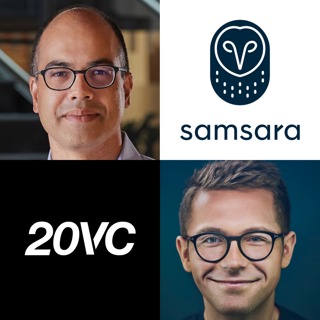
20VC: Why There Is A Revolution In VC, Why Boards Are Inherently Inefficient & Why Data Will Be Central To VC In The Future with Chris Farmer, General Partner @ SignalFire

20VC: Why There Is A Revolution In VC, Why Boards Are Inherently Inefficient & Why Data Will Be Central To VC In The Future with Chris Farmer, General Partner @ SignalFire

Chris Farmer is a General Partner @ SignalFire, as he describes, 'the most quantitative fund in the world.' Chris has also assembled 50 other on-demand advisors to aid portfolio companies including Slack CEO, Stewart Butterfield, AltSchool Founder, Max Ventilla and Pinterest President, Tim Kendall. SignalFire's portfolio includes the likes of Uber, ClassDojo and Rocksbox just to name a few. Prior to SignalFire, Chris was a Venture Partner @ General Catalyst where he aided the development of their seed program. Prior to General Catalyst, Chris spent 4 years as a VP @ Bessemer Venture Partners.

In Today's Episode You Will Learn:

1.) How Chris made his way into the world of venture and came to be Founding Partner @ Signal Fire?

2.) Why does Chris believe the VC industry has not changed in the last 40 years? Why are the old guard of VCs worried for the evolution?

3.) Why does Chris believe data and tech will be centre to the revolution that is happening in VC? How will data be used to enhance the VC value add to startups in the coming years?

4.) From interviewing over 500 Founders, what was the most common challenges and problems founders face today? How should VCs be positioning themselves to provide additional value?

5.) What does Chris believe boards are so inherently inefficient? What would Chris like to see change in the world of boards? How does Chris position himself in terms of, board to partner ratio?

Items Mentioned In Today's Show:

Chris' Fave Blog: Above The Crowd: Bill Gurley

Chris' Fave Book: The Success Equation

Chris' Most Recent Investment: Frame.io

As always you can follow Harry, The Twenty Minute VC and Chris on Twitter here!

Likewise, you can follow Harry on Snapchat here for mojito madness and all things 20VC.

So many problems start with your head: stress, depression, anxiety, fear of the future. What if there was some kind of exercise you could do, that would help you get your head in shape. That's where the Headspace app comes in. Headspace is meditation made simple. The Headspace app provides guided meditations you can use whenever you want, wherever you want, on your phone, computer or tablet. They have sessions focused on everything from dealing with stress and depression, to helping you eat more mindfully. So download the Headspace app and start your journey towards a happier, healthier life. Learn more at headspace.com/20vc. That's headspace.com/20vc.

Xero is beautiful, easy-to- use online accounting software for small businesses. With Xero, you can easily manage your accounting anytime, anywhere from your computer or mobile device.When you add Xero to your small business you are able to: Send online invoices and get paid faster. Get an instant view of your cash flow. Track your payroll and keep tabs on your inventory. Partner with your accountant and bookkeeper in real time whenever you like. You can also customize your Xero experience with over five hundred business apps, including advanced solutions for point-of- sale, time tracking, ecommerce and more. Sign up for a free thirty-day trial at Xero.com/20vc.

Jaksot(1390)

20VC: Lessons Building Nubank to the Largest Neobank in the World, How AI Changes The Future of Finance, Leadership Lessons from Sequoia's Doug Leone & What European and US Fintech Can Learn From LATAM with David Velez, Founder @ Nubank

20VC: Lessons Building Nubank to the Largest Neobank in the World, How AI Changes The Future of Finance, Leadership Lessons from Sequoia's Doug Leone & What European and US Fintech Can Learn From LATAM with David Velez, Founder @ Nubank

David Velez is the Founder and CEO of Nubank, one of the largest and fastest-growing financial institutions in the world. 1 in 2 people in Brazil alone have a Nubank account. Nubank's purple credit card in Mexico is the highest-rated NPS product of any consumer product in the world. Before founding Nubank in 2013, David was a partner at Sequoia Capital between 2011 and 2013, in charge of the firm's Latin American investments group. Before Sequoia, David worked in investment banking and growth equity at Goldman Sachs, Morgan Stanley and General Atlantic. In Today's Episode with David Velez We Discuss: 1. From Sequoia Partner to Creating One of the Largest Financial Institutions: What was the Sequoia interview process like? What questions did Doug Leone really dive into when hiring David? What impressed David most about how Sequoia interview and win talent? What are 1-2 of David's biggest lessons from working with Doug Leone? 2. From a Small House to a $BN Public Company: What does David believe are the 1-2 core but non-obvious reasons why Nubank scaled so fast? What does David believe are the most non-obvious but massive opportunities Nubank has to 10x from here? Why does David believe emerging market fintech providers will be more valuable than Western fintechs? What does David believe Western fintechs and regulators can learn from BRIC economy fintechs? 3. How AI Changes The Future of Financial Services: How does David believe AI will change financial services? What products are the lowest-hanging fruit? Which products will be harder for AI to serve? How will AI handle the ambiguity of which master to serve; the consumer and their experience or the bank and their fees and profit motive? Will banks need to own and operate their own models? If using other models, what will differentiate them when they are layers on top of someone else's technology? 4. David Velez: The Leader and Father: What does it mean to be a great listener? How does David approach it? What has been David's biggest lessons from Sequoia on culture? What works? What does not? What are David's biggest pieces of advice to raise kids that are not spoiled and are hard-working and humble? How does David think about "efficient giving" with the philanthropy he does today? What is the big paradox and challenge in philanthropy today?

11 Syys 20231h 4min

20Sales: Why Everyone is Responsible for Demand Generation, How to do Great Sales Discovery, How to Reduce Sales Cycles and Create Urgency and Deal Reviews; Good and Bad Reasons to Lose a Deal with Doug Adamic, CRO @ Brex

20Sales: Why Everyone is Responsible for Demand Generation, How to do Great Sales Discovery, How to Reduce Sales Cycles and Create Urgency and Deal Reviews; Good and Bad Reasons to Lose a Deal with Doug Adamic, CRO @ Brex

Doug Adamic is the CRO @ Brex and leads the company's revenue and growth strategy. Prior to Brex, Doug was most recently the Chief Revenue Officer at SAP Concur, a provider of travel spend management solutions and services. During his 16-year tenure oversaw an organization of 600+ employees. He was responsible for all aspects of revenue, generating go-to-market strategies and departments. Prior to SAP Concur, he had a five-year tenure as an Enterprise Sales Manager for Kronos, Inc. In Today's Episode with Doug Adamic We Discuss: 1. Entry into Sales: Does Doug believe that love of sales is innate or can be learned? When did he discover his love? What does Doug know now about sales he wish he had known when he started? What are 1-2 of his biggest takeaways from leading 600+ people at SAP? 2. Discovery, Pipeline and Qualification: What are the three core reasons why companies buy software today? How do the best sales teams use those needs to get deals done fast? What does great sales discovery mean today? Why do you have to make customers feel uncomfortable to understand their true needs? What are the biggest mistakes sales teams make when asking questions, determining customer pain, willingness to pay etc etc? Why does Doug believe that everyone in the company is responsible for demand creation? What are the core pillars to success in qualification? Where do so many go wrong? 3. Getting Deals Done: Why does Doug disagree that now is the hardest time to be selling? Are companies buying new software today? What is the secret to opening up organizations that say they are not open for buying new software? How can sales teams create multiple champions in a prospect? How can they determine who is really a buyer vs who is an influencer in a prospect? What are the biggest tactics that can be used to reduce sales cycles and create urgency in a sales process? 4. Discounting, Trust and Deal Reviews: What is a good reason to lose a deal? What is a bad reason to lose a deal? How does Doug and Brex conduct deal reviews? What makes a good vs a bad deal review? What is the fastest way to lose trust either with prospects or with customers? Why does Doug believe discounting is BS and should not be used?

8 Syys 202353min

20VC: Why Small Funds Outperform Large Funds & AUM is a Vanity Metric | Why 99% of Investments in AI Startups Will Go To Zero | Being a "Traction First" VC & Investing Lessons from Investing in Canva and Missing Figma with Nikhil Basu-Trivedi

20VC: Why Small Funds Outperform Large Funds & AUM is a Vanity Metric | Why 99% of Investments in AI Startups Will Go To Zero | Being a "Traction First" VC & Investing Lessons from Investing in Canva and Missing Figma with Nikhil Basu-Trivedi

Nikhil Basu Trivedi is Co-Founder & General Partner at Footwork, an early-stage focused venture firm investing its first fund. In his venture career, he has invested in the early rounds of several companies that have exited or are currently valued at over $1B, including Athelas, Canva, ClassDojo, Color Health, Frame.io, Imperfect Foods, Lattice, and The Farmer's Dog. Prior to Footwork, Nikhil was a Managing Director at Shasta Ventures, on the investment team at Insight Partners, and on the founding team at Artsy. In Today's Episode with Nikhil Basu Trivedi We Discuss: 1. From Summer Intern to Founding a Firm: The 13 Year Journey: How did Nikhil first make his way into venture as an intern at Insight Partners in NYC? What does Nikhil know now that he wishes he had known on his first day in venture? Why does Nikhil advise all young VCs to "not look at their business card"? Why does title not matter in venture? Should founders meet with Juniors as well as GPs and more senior people? 2. Small Funds Outperform Large Funds: Why does Nikhil believe that small funds outperform large funds? Why is AUM the biggest bullshit metric in VC? How does Nikhil advise seed stage founders who have offers from seed firms for smaller rounds at lower valuations and are weighing them against larger rounds with higher valuations from multi-stage funds? Does Nikhil believe that platform value-added services really provide any value? 3. The Art of Investing: What has been Nikhil's biggest investing win? How has it changed his approach to investing? How does Nikhil prioritize between people, traction, and market? What is most important? What has been Nikhil's biggest investing miss? How has that changed his approach? Does Nikhil believe the great founders are immediately obvious? Why is market size the single question that keeps Nikhil up the most? 4. The Dysfunctions of Venture Capital: What are the single biggest areas of misalignment between GP and LP? What do many GPs see and know well that LPs should know and see more of? What are the biggest ways that decision-making breaks down in a venture fund? Why does Nikhil believe that so much of the investment in AI is going to go up in flames?

6 Syys 20231h

20VC: The $3.1BN Meeting That Led to an Uber Acquisition, The Battle With Uber; How to Outcompete When You Have 10x Less Cash & The Marketing Campaigns That Led to Pakistan MDs Fleeing and Elon Musk Fanboying with Mudassir Sheikha, CEO @ Careem

20VC: The $3.1BN Meeting That Led to an Uber Acquisition, The Battle With Uber; How to Outcompete When You Have 10x Less Cash & The Marketing Campaigns That Led to Pakistan MDs Fleeing and Elon Musk Fanboying with Mudassir Sheikha, CEO @ Careem

Mudassir Sheikha is the CEO and Co-Founder of Careem. Over the last 11 years, Mudassir has scaled the service to more than 80 cities in 10 countries, with 1,400+ colleagues and more than 2.5 million Captains. With such success, in 2020 Uber announced they would be acquiring Careem for a reported $3.1BN. Prior to Careem, Mudassir co-founded "DeviceAnywhere", a company that was acquired by "Keynote" in 2008 before joining the management consulting firm "McKinsey & Company" in Dubai. In Today's Episode with Mudassir Sheikha We Discuss: 1. From McKinsey to $3.1BN Exit to Uber: What was the founding a-ha moment for Mudassir with Careem? What does Mudassir know now that he wishes he had known at the beginning? What does Mudassir believe he is running away from? 2. Finding Product-Market Fit: What is the single biggest mistake founders make when trying to find product-market fit? Does Mudassir believe you have to do things that do not scale, to scale? What did Careem do? What are some of Mudassir's biggest pieces of advice to founders on finding a core target audience and doing customer discovery the right way? 3. Competing with Giants: How To Win When You Cannot Outspend: How did Careem beat Uber when they had 1/100th of their budget? What advice does Mudassir have for founders who have competition that is much better funded? What is the story of spending the night in bunk beds and barely sleeping before raising $300M the next day? How did that happen? 4. The Acquisition: How it Went Down: How did Mudassir and Dara @ Uber first come to meet? How did Dara's approach contrast with the prior approach of Travis Kalanick? Why did Mudassir decide to sell and join Uber? What were the main reasons or arguments against the acquisition? 5. Talk to me About: Careem's Pakistan MD having to flee Pakistan for his safety post a marketing campaign? Elon Musk likes one of Careem's promotional videos and why? An investor who wired $1M with absolutely no paperwork? The catch up meeting that turned into a $3BN offer?

4 Syys 202347min

20VC: Spending $2M to Train a Single AI Model: What Matters More; Model Size or Data Size | Hallucinations: Feature or Bug | Will Everyone Have an AI Friend in the Future & Raising $150M from a16z with Noam Shazeer, Co-Founder & CEO @ Character.ai

20VC: Spending $2M to Train a Single AI Model: What Matters More; Model Size or Data Size | Hallucinations: Feature or Bug | Will Everyone Have an AI Friend in the Future & Raising $150M from a16z with Noam Shazeer, Co-Founder & CEO @ Character.ai

Noam Shazeer is the co-founder and CEO of Character.AI, a full-stack AI computing platform that gives people access to their own flexible superintelligence. A renowned computer scientist and researcher, Shazeer is one of the foremost experts in artificial intelligence (AI) and natural language processing (NLP). He is a key author for the Transformer, a revolutionary deep learning model enabling language understanding, machine translation, and text generation that has become the foundation of many NLP models. A former member of the Google Brain team, Shazeer led the development of spelling corrector capabilities within Gmail, the algorithm at the heart of AdSense. In Today's Episode with Noam Shazeer We Discuss: 1. Entry into the World of AI and NLP: How did Noam first make his way into the world of AI and come to work on spell corrector with Google? What are 1-2 of his biggest takeaways from spending 20 years at Google? What does Noam know now that he wishes he had known when he started Character? 2. Model Size or Data Size: What is more important, the size of the data or the size of the model? Does Noam agree that "we will not use models in a year that we have today?" What is the lifespan of a model? Does Noam agree that the companies that win are those that are able to switch between models with the most ease? With the majority of data being able to be downloaded from the internet, is there real value in data anymore? 3. The Biggest Barriers: What is the single biggest barrier to Character today? What are the most challenging elements of model training? Why did they need to spend $2M to train an early model? What are the most difficult elements of releasing a horizontal product with so many different use cases? Where does the value accrue in the race for AI dominance; startups or incumbents? 4. AI's Role on Society: Why does Noam believe that AI can create greater not worse human connections? Why is Noam not concerned by the speed of adoption of AI tools? What does Noam know about AI's impact on society that the world does not see?

31 Elo 202335min

20VC: Why AI Models are not a Moat, Where Does the Value in AI Accrue; Startups or Incumbents, What the World Has Got Wrong About AI, Why AI Needs a New Story and Who is the Right People to Tell it with Cris Valenzuela, Co-Founder & CEO @ Runway

20VC: Why AI Models are not a Moat, Where Does the Value in AI Accrue; Startups or Incumbents, What the World Has Got Wrong About AI, Why AI Needs a New Story and Who is the Right People to Tell it with Cris Valenzuela, Co-Founder & CEO @ Runway

Cris Valenzuela is the CEO and co-founder of Runway, the company that trains and builds generative AI models for content creation. To date, Cris has raised over $285M for the company from the likes of Lux Capital, Felicis, Coatue, Amplify, and Nvidia to name a few. Runway's customers include academy-nominated movies, TV shows, media companies, and creatives across industries. In Today's Episode with Cris Valenzuela We Discuss: 1. From Childhood in Chile to Founding one of the Hottest AI Startups: What was the founding moment for Cris with Runway? His investors described Cris as an "outsider". Does Cris believe he is an outsider? What are the biggest pros and cons of being an outsider? What does Cris believe he is running from? What is he running towards? 2. Models are not a Moat: Models 101: What does Cris believe is more important; model size or data size? Why does Cris believe that models are not a moat? How does Cris think about the lifespan of models? Will any used today be used in a year? Are hallucinations a feature or a bug? What are the nuances? 3. The World Has Got AI Wrong: We Need Different Stories: Why does Cris believe the world has got AI wrong? Why do we need different stories for what AI can do and will be? Who should tell them? Why do groups like screenwriters riot and protest if the tool is empowering and not replacing? 4. Company Building 101: Hiring and Fundraising: What are the biggest pieces of startup advice that are total BS? What has been the single biggest lesson Cris has learned when it comes to fundraising? Does Cris believe that VCs really add value? What have been the single biggest hiring mistakes that Cris has made? How has Cris structured their interview process to make it the best interview process in the world?

28 Elo 202341min

20Product: Enterprises are not Adopting AI Yet, When Will AI Break Into Enterprise, What are the Blockers, What Do Enterprises Need from AI & Why Services Companies Will Win in the Next 10 Years of AI Implementation with Howie Liu, Founder & CEO @ Airtabl

20Product: Enterprises are not Adopting AI Yet, When Will AI Break Into Enterprise, What are the Blockers, What Do Enterprises Need from AI & Why Services Companies Will Win in the Next 10 Years of AI Implementation with Howie Liu, Founder & CEO @ Airtabl

Howie Liu is the Founder and CEO @ Airtable, the fastest way to build apps for your business. To date, Howie has raised over $1BN with Airtable with the last round valuing the company at $11BN and an investor base including Benchmark, Thrive, Caffeinated, Greenoaks and Coatue to name a few. In Todays Episode with Howie Liu We Discuss: 1. Scaling into Enterprise: What are the single biggest challenges when moving from PLG to enterprise? Why does Howie believe you have only truly hit enterprise when you sign $1M contracts? How long did it take for Airtable to sign their first $1M ARR contract? How can founders know when is the right time to scale into enterprise? How does the product need to change with the scaling? 2. Enterprises: Do They Really Love AI: Why does Howie believe that enterprises are not jumping on AI yet? When does enterprise interest turn into enterprise buying and purchasing? What are the single biggest barriers to enterprises buying AI solutions today? Post-purchase, what are the biggest implementation challenges for enterprises with AI? 3. The Changing Sales Process: Are we seeing the bundling of tools within large enterprises today? Which categories and vendors are most vulnerable? Which will survive the cuts? What do vendors need to do to prove to CFOs that they need to remain in their budget? How has the customer success process changed over the last year with tightening budgets? 4. Howie Liu: AMA: Airtable famously got Benchmark to lead their Series C, how did this come to be when they famously always only do Series A? Why does Howie believe that it is total BS to suggest post-PMF, everything is good? What does Howie know now that he wishes he had known when he started Airtable?

25 Elo 202339min

20VC: NEW FORMAT: Mega Funds Will Come Back, Why Markups Have Corrupted VC, Why RIFs Should Always Be An Embarrassment To SaaS Founders and Why Pitching is BS and Fake with Jason Lemkin and Rick Zullo

20VC: NEW FORMAT: Mega Funds Will Come Back, Why Markups Have Corrupted VC, Why RIFs Should Always Be An Embarrassment To SaaS Founders and Why Pitching is BS and Fake with Jason Lemkin and Rick Zullo

Jason Lemkin is the Founder @ SaaStr one of the best-performing early-stage venture funds focused on SaaS. In the past, Jason has led investments in Algolia, Pipedrive, Salesloft, TalkDesk, and RevenueCat to name a few. Prior to SaaStr, Jason was an entrepreneur, selling EchoSign to Adobe for $100M where it is now a $250M ARR product. Rick Zullo is the Co-Founder and General Partner at Equal Ventures. Prior to co-founding Equal Ventures, Rick was an investor at Lightbank, Prior to Lightbank, Rick worked with investment firms Foundation Capital, Bowery Capital, and Lightview Capital. In Today's Episode We Discuss: 1. Why Venture Capital Needs It's Jerry Maguire Moment: Why does Rick believe that VC needs it's "Jerry Maguire" moment? What needs to change? What needs to stay the same? Why does Jason believe we will see even more mega funds in 2024 and 2025? 2. Unicorns are So 2019: Why does Jason believe that "unicorn investing is mostly dead for bigger funds and none of them are looking for a $1BN outcome anymore?" Why does Rick believe that multi-stage fund investing at seed simply does not make sense? What does Rick believe many founders need to know when they take multi-stage money at seed? Of the over 1,000 unicorns created over the last few years, how many of them do Rick and Jason feel are actually unicorns today? 3. Efficiency and Growth: We Need it All: Why does Jason believe, as a founder you should be embarrassed if you ever had a RIF (reduction in force)? Last year many founders got a pass on growth as they were more efficient. Is that pass over? Do they need to get back to growth? What is the single biggest reason that companies do not scale from seed to Series A? What happens to the many companies with years of runway but no product-market-fit? Are we entering a new age of efficient company building or will we go back to high burn environments and excessive spending? 4. Entering the World of LPs: If Jason and Rick were to advise LPs today on how much to discount the value of their venture books, what advice would they give? How have markups completely corrupted the venture ecosystem? How does LPs being incentivized by paper-marks make the industry even more screwed? What are the single biggest misalignments between GP and LP?

23 Elo 202354min

Suosittua kategoriassa Liike-elämä ja talous

sijotuskasti
psykopodiaa-podcast
mimmit-sijoittaa
rss-rahapodi
herrasmieshakkerit
lakicast
rss-rahamania
ostan-asuntoja-podcast
rss-neuvottelija-sami-miettinen
rss-startup-ministerio
rss-lahtijat
oppimisen-psykologia
pari-sanaa-lastensuojelusta
taloudellinen-mielenrauha
leadcast
syo-nuku-saasta
rahapuhetta
rss-myyntipodi
rss-bisnesta-bebeja
rss-karon-grilli