
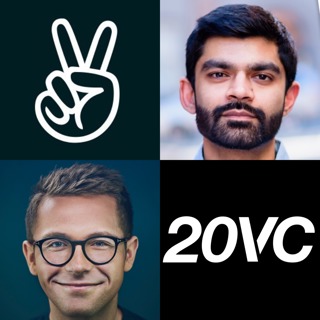
20VC: WTF Is Going On In Venture Capital; Seed Round Pricing Will Remain High, Series B & C Has Gone Completely, Downrounds Are Coming | Why Defensibility is BS on Day 1, Why Market is More Important Than Founder & Why Being First To Market Doesn't Matter
Avlok Kohli is the CEO @ AngelList. Under his leadership, Avlok has taken AngelList from an SPV provider to a company that is becoming the software platform for the entire industry. Today, AngelList supports over $15BN in assets and 40% of US unicorns have had a GP invest in them through AngelList. Prior to becoming CEO @ AngelList, Avlok founded 3 companies, all of which were acquired including by the likes of Square and eBay. In Today's Episode with Avlok Kohli We Discuss: 1. From 3x Founder to Scaling AngelList to $15BN in AUM: How did Naval convince Avlok to join AngelList and be CEO? Does Avlok believe in startups having defensibility in the early days? How important does Avlok believe it is for companies to be "first to market"? Why does Avlok believe all the last-mile grocery delivery companies will go bust in the downturn? 2. What is Going On in Venture: New Funds, LPs, Secondaries: Are we seeing the amount of net new funds reduce in the downturn? Are we seeing the size of new funds being raised, being smaller? Is the time to first close increasing in time? Does AVlok agree that the fund segment hit hardest by the downturn is micro fund managers? Which LP class has pulled back from fund investing most significantly? Why does Avlok believe institutions have returned to fund investing more than ever right now? Are we seeing an increase in fund secondary positions? 3. What is Going on in Startups: Rounds, Valuations, Party Rounds Are we seeing the number of startups able to close their round reduce? Are we seeing the size of startup funding rounds reduce? How does this depend on the stage? What are we seeing for startup valuations? Why is seed as high as ever? What is the most hit? How is the composition of funding rounds changing? More or fewer party rounds? When does Avlok believe we will see down rounds and pay-to-play, really come into effect? 4. The Business of AngelList and its Future: What are the margins on AngelList products today? What is the best margin AngelList product? What is the worst? What product did AngelList do that in hindsight, Avlok wishes they had not done? Why did AngelList back out of Europe? Was it a mistake? How does Avlok think about AngelList's fierce competition with Carta today?
24 Huhti 202351min
20VC: Who Wins in AI; Startup vs Incumbent, Infrastructure vs Application Layer, Bundled vs Unbundled Providers | From 150 LP Meetings to Closing $230M for Fund I; The Fundraising Process, What Worked, What Didn't and Lessons Learned with Tomasz Tunguz
Tomasz Tunguz is the Founder and General Partner @ Theory Ventures, just announced last week, Theory is a $230M fund that invests $1-25m in early-stage companies that leverage technology discontinuities into go-to-market advantages. Prior to founding Theory, Tom spent 14 years at Redpoint as a General Partner where he made investments in the likes of Looker, Expensify, Monte Carlo, Dune Analytics, and Kustomer to name a few. Tom also writes one of the best blogs and newsletters in the business which can be found here. In Today's Episode with Tomasz Tunguz We Discuss: Founding a Firm: The Start of Theory: Why did Tom decide to leave Redpoint after 14 years to found Theory? What are 1-2 of his biggest lessons from Redpoint that he has taken with him to his building of Theory? What does Tom know now that he wishes he had known when he started investing? 2. From 150 LP Meetings to Closing $230M: Raising a Fund I How would Tom describe the fundraising process? How many meetings with LPs did he have? How many did he know previously? What documents did he share with LPs? Did he have a dataroom? How did he use it? How did Tom create a sense of urgency to compel LPs to come into the fund? How does Tom feel about the debate between one close and multiple closes? What was the #1 reason LPs said no to investing? What worked and Tom would do again for the next raise? What did not work and he would change for the next raise? 3. Where Will Value Accrue in the Next Decade of AI: Startup vs Incumbent: Will incumbents embrace AI before startups are able to acquire distribution? Infrastructure vs Application Layer: Where will the majority of value accrue in the next decade; infrastructure or application layer? Bundled or Unbundled: Will bundled services be the dominant consumer and enterprise choice or will unbundled specialized solutions win? 4. AI and The World Around It: How does Tom believe AI could save the US economy? Why does Tom believe Google are the losers in the AI race? Which incumbents have responded best to AI? Why does Tom believe we will be in a worse macro place at the end of the year than we are now?
21 Huhti 202353min

20Sales: Why You Should Never Hire a VP Sales First, How To Create Urgency in a Sales Process, How to Do Traditional Outbound 10x Better, Why Revenue Doesn't Matter with Your First Customers | Mark Goldberger, Head of Enterprise Sales @ Ramp
Mark Goldberger is Head of Enterprise Sales at Ramp, the fastest-growing corporate card and bill payment software in America, and recently named Most Innovative Company in North America by Fast Company. Prior to joining Ramp, Mark was the first enterprise rep at TripActions (now Navan), where he helped bring in more than $100m of ARR as an IC and sales leader. Before TripActions, Mark worked at Highfive, a video conferencing company since acquired by Dialpad. In Today's Episode with Mark Goldberger We Discuss: 1. From Wine Industry to Sales Leader: How Mark made his way into the world of enterprise sales having been in the wine industry? Mark sent out 100 CVs for his first sales role, why did they not respond? How should companies think differently about the people they hire? What could he have done better with the outreach? What does Mark know now that he wishes he had known when he entered the world of sales? 2. The Sales Playbook and Why You Should Never Hire a Sales VP First: Why does Mark believe that you should never hire a Sales VP as the first sales hire? What does Mark mean when he says product-customer-fit is more important than product-market-fit? Why does Mark believe that revenue does not matter with your first customers? If revenue does not matter, what should you be trying to get out of them? When should the founder handover sales to either a junior or more senior hire? 3. How to Hire 10x Sales Teams: The Process: How does Mark structure the process for hiring 10x sales reps? What questions are most revealing in identifying a 10x sales rep? How do they respond? Why does Mark want candidates to pitch his own product back to him? How does Mark make the hiring process more challenging to really test the quality of candidates? What is the core difference between losers and winners in sales? 4. Discounting, Champions, Creating Urgency: Why does Mark not like discounting? Where do many sales teams use it poorly? How does Mark like to create urgency in a sales process? What works? What does not? How can sales reps know whether they truly have a deal champion within a buyer? What is the right way for sales reps to ask to meet the exec buyer? When is the right time to ask to meet the exec buyer? What are some clear signs that you are not speaking to a decision-maker? 5. Building a High-Functioning Sales Org: What is the right way to do deal reviews? How often? Who should be invited? What is the right way to do sales onboarding for all new reps? Why is traditional outbound still the most important thing in a sales process? Why do so many people get pipeline qualification so wrong?
19 Huhti 202349min
20VC: Scooter Braun on Being Enough, Insecurity, Wealth, Investing, Fame, Marriage and so much more...
From college party promoter to managing global stars to CEO and investor. Scott "Scooter" Braun is one of the most powerful people in media and one of the most multi-faceted entrepreneurs we have ever met. As the founder of media company SB Projects and the co-founder of TQ Ventures, he has backed prominent companies such as Pinterest, Spotify and Uber and managed some of the world's biggest names in music including Justin Bieber, Ariana Grande, and Demi Lovato. Braun's other accolades include founding Ithaca Ventures (acquired by HYBE for $1BN+) in 2021, and philanthropic efforts such as being a Make-A-Wish board member, raising $55M+ for Hurricane Harvey and Irma relief and continuing to instill the value of social good wherever possible. In Today's Episode with Scooter Braun We Discuss: 1. From College Party Promoter to Managing The World's Biggest Superstars: What was the single most catalytic moment of Scooter's career? What was Scooter's most painful professional mistake, and what did he learn from it? What was the decision-making behind Scooter's HYBE deal? What is the biggest challenge in scaling the trajectories of the people Scooter works with? If Scooter could change one thing about the music industry, what would it be? 2. College Party Promoter Turned Venture Investor: How did Scooter originally get into investing? How did Scooter's party promoting business almost lead to an early investment in Facebook? Do people approach Scooter differently as an investor because of his success in the music industry? Why is vulnerability helpful for investing? 3. Scooter's Lessons on Success (And How to Deal With It): Why does Scooter believe happiness and success are not aligned? How does Scooter approach deal-making? Is work-life balance bullshit? Does Scooter think you have to break your back to become as successful as Jeff Bezos? Is Scooter scared of mediocrity? Why does Scooter think all entrepreneurs are bad at having faith? 4. The Secrets to Being a Better Parent, Child, and Partner: How does Scooter approach trust? How did having kids impact Scooter's mindset? Why was divorce the biggest catalyst in Scooter's entire life? Does Scooter worry that money will negatively influence how his children are brought up? What is the most important thing a child can hear from a parent? 5. Finding the "Scott" Buried Inside "Scooter": It's easy to become the brand you create. How does Scooter prevent losing himself when that happens? What does Scooter need to unlearn in the future? What has Scooter changed his mind on in the past 12 months? How does Scooter approach his relationship to regret? What single lesson you most would Scooter most want a young person listening to this conversation to take away?
17 Huhti 20231h 32min
20VC: Biggest Challenge Facing Crypto Today & The Winners and Losers of the Next 10 Years | Why AI Will Lead to More Wealth Equality Than Inequality | Why The Current State of the US Feels Like the End of an Empire with David Marcus, CEO @ Lightspark
David Marcus is the co-founder and CEO of Lightspark, building infrastructure that extends the capabilities and utility of Bitcoin. Prior to Lightspark, David led all payment and crypto efforts at Facebook/Meta and scaled Messenger to 1.5BN users. David previously founded three other companies: Zong (acquired by eBay/PayPal for $240M), Echovox (acquired by MBO), and GTN (acquired by World Access). In Today's Episode with David Marcus We Discuss: 1. From Losing Everything to Becoming Changing the World of Fintech: How did seeing his family lose everything lead to David starting his first company, GTN? Does David believe that great companies can be built in Europe? What are the biggest mistakes David made with Zong? How did they impact his mindset? 2. The Secret to Building a Great Company from Mark Zuckerberg's ex-Right Hand Man: Where does David think Paypal lost its way? How did David "brutally" change PayPayl's company culture when he came in? What worked and what didn't in scaling Messenger to 1.5BN users? Why did Diem (formerly Libra) fail? How did David know when to give up that fight? What is David's biggest lesson from working with Mark Zuckerberg? 3. Crypto & AI's Ripple Effect on The Rest of The World: What will be the fallout from the de-banking of crypto? How does David think the future of AI will impact income equality? If David was in charge of the SEC, what would he do first? What worries David most about the next 1-5 years in the crypto industry? What are the most significant signs that the tea leaves not looking great for the US dollar? 4. How The Best Leaders Hire The Best Talent: Why does David believe that naivety is good for entrepreneurs? Does David believe we'll be in a worse macro position by the end of the year? How has David changed most as a leader over time? What is David's biggest piece of advice in regard to hiring across many different companies?
14 Huhti 202336min
20Growth: How AI Will Change the Game For Content Creation and SEO, The Secret to Mastering SEO, When and How To Invest in SEO Most Effectively & The Best and Worst SEO Strategies with Joost De Valk, Founder @ Yoast
Joost De Valk is one of the OGs of SEO. As the Founder of Yoast, he scaled what was a side project plugin into a multi-million dollar business, used by 13 million sites and selling to Newfold Media in 2021. As one of the early SEO pioneers he is also an extremely coveted angel investor and invests through his company, Emilia Capital. In Today's Episode with Joost De Valk We Discuss: 1. From Side Project to Multi-Million Dollar Business: Why and how did Joost create the first version of Yoast? When did he realise that this was not a side project and could be a big business? What does he know now that he wishes he had known when he started Yoast? 2. When, How and Why To Invest in SEO: When is the right time to invest in SEO? How should one determine how much budget to allocate to SEO? Once decided on budget, what are the first steps to investing in SEO? Which part of the org should SEO team specialists sit in? What are the biggest mistakes founders make when investing in SEO/ 3. AI Changes The World of Context: How does AI change the way businesses create content? How can startups leverage AI to create and distribute more content for SEO? What are the biggest challenges/problems to leveraging AI for content creation? 4. Creating a Developer-Led Brand and Mastering PLG: What is the secret to creating the best developer-led brand? What are the biggest mistakes people make when marketing to developers? How does Joost navigate the balance between having enough value in a freemium product but also retaining enough value to be able to charge for the premium product? Is Joost concerned that budgets will revert back to CFOs and away from individual contributors with the financial downturn that is ensuing?
12 Huhti 202345min

20VC: Why Signalling Risk is Real, What Founders Need to Know About Taking Multi-Stage Money vs Seed Fund Money, Lessons Scaling to $600M AUM, The Secret to Hiring in VC; Hire People with No VC Experience & How Venture Will Be Disrupted with Rob Lacher
Rob Lacher founded Visionaries Club in 2019, in just 3 years he has scaled the firm to $600M AUM and backed some of Europe's best including Xentral, Personio, Miro, and Ledgy. Prior to Visionaries, Rob founded the fashion platform AMAZE in 2014 which he sold to Zalando, and founded the European seed and growth stage venture capital fund La Famiglia in 2016. In Today's Episode with Rob Lacher We Discuss: 1.) From Novice Tennis Player to Investing on a Global Stage: When Rob realized beating Federer wasn't an option, how did he make his way into the world of venture capital? When did Rob know he wanted to be a VC? What did Rob learn about himself after leaving La Famiglia? What characteristics make business partners compatible? 2.) The Secret to Building a Fund? Hire People With No Experience: What does Rob think is the hardest element of building a firm? What advice would Rob give to emerging managers when starting their firms? What is the single biggest mistake that Rob sees hiring managers make? Why does Rob prefer to hire people with no VC experience? 3.) The Red Ocean of European Venture: Does Rob think the Series A product in Europe is any good? How would Rob advise founders debating a US multi-stage fund or a European offer? If Rob could choose one European board member, who would it be and why? In Rob's dream, what would the Europe venture ecosystem look like in 2028? How does Rob think Europe's family institutions can become Europe's Google? 4.) Lessons on Investing From a Pro: Where does Rob think VCs, founders, and boards are misaligned? When Rob invests, how central of a role does price actually pay? What is Rob's single biggest investing mistake? How did it impact his mindset and approach? What are the three ways reserve management strategy has changed? What does Rob absolutely hate about VC?
7 Huhti 202340min
20VC: The Memo: Scaling to $600M Revenues with No Venture Funding, The Most In Detail Breakdown of Consumer Subscription Unit Economics & Why D2C and Consumer Subscription is Not a VC Backable Model with Mike Salguero, Founder @ ButcherBox
Mike Salguero is the Founder and CEO @ ButcherBox, the meat delivery subscription service that he has scaled to $600M in revenue, 215 employees and the national leader in the space. All of this achieved while raising $0 of venture capital. Prior to ButcherBox, Mike was the Founder & CEO @ CustomMade, an online marketplace that, unlike ButcherBox, raised millions in venture funding from prominent VCs. In Today's Episode with Mike Salguero We Discuss: 1.) The Makings of a Great Entrepreneur: How did Mike's father not being present in his childhood impact the type of leader he is today? How does Mike's fear of abandonment show itself in his leadership style? What does Mike know now that he wishes he had known when he started? 2. Consumer Subscription is Not a VC Backabale Business Model: Why does Mike believe consumer subscription D2C businesses are not VC backable? What are the biggest challenges of running a consumer subscription business? Why did all the D2C food prep and delivery companies fail? What did they do wrong? What happens to all the heavily funded D2C subscription companies of the last 5 years? Why does Mike believe now is the hardest time ever to do D2C consumer subscription? 3. The Secret to Efficient Marketing: How did ButcherBox scale to $50M in revenue with just one marketing channel working? When should founders think about the second channel? How should they choose which one? Why does Mike not like "brand marketing"? How did ButcherBox burn $8.5M on brand marketing? What are Mike's biggest lessons from doing this? What emerging channel does Mike see as having the biggest potential over the coming years? Why does customer acquisition increase with time? Why do elections cause it to increase? 4. The Economics of a $600M Revenue ButcherBox: How much does it cost ButcherBox to acquire a customer? What is their payback period on that customer? How has this change with time? What is the single metric that drives the profitability of ButcherBox? What are the single biggest points of margin in the business? What is the lifetime value of a ButcherBox subscriber? What are the single biggest points of churn in the customer lifecycle? 5. Venture Capital: To Raise or Not to Raise: Why did Mike never raise venture capital for ButcherBox? Has Mike ever sold secondary? Why not? What would Mike most like to change about the world of venture capital? What are his biggest lessons from raising VC with CustomMade? How did that impact how he approached building ButcherBox? What does Mike believe all founders need to know about raising VC?
5 Huhti 20231h 18min